• About
  • The Poetry of Protest

Show Me Progress

~ covering government and politics in Missouri – since 2007

Show Me Progress

Tag Archives: deposition

Ambassador David Hale, Under Secretary of State for Political Affairs

19 Tuesday Nov 2019

Posted by Michael Bersin in Uncategorized

≈ 2 Comments

Tags

corruption, David Hale, deposition, Donald Trump, impeachment, Ukraine

“…I found it at the beginning very — I found it very hard to understand why a President of the United States would do it that way when he can just — I mean, all Ambassadors are Presidential appointees, they serve at the pleasure of the President, so it didn’t — it didn’t add up to me. I didn’t understand why that would be…”

It’s not a smoking gun, it’s more than that. It’s a smoldering crater.

From the deposition of Ambassador David Hale, Under Secretary of State for Political Affairs:

PERMANENT SELECT COMMITTEE ON INTELLIGENCE,
joint with the
COMMITTEE ON OVERSIGHT AND REFORM,
and the
COMMITTEE ON FOREIGN AFFAIRS,
U.S. HOUSE OF REPRESENTATIVES,
WASHINGTON, D.C.

DEPOSITION OF: AMBASSADOR DAVID MACLAIN HALE

[….]

Q Did you have any discussion about any complaints that had been made by any other Americans related to her role there and her job?

A I don’t remember that it came up there.

Q When you were there in March, did you have a discussion with Ambassador Yovanovitch about extending her stay there?

A Yes, I did. I remember that we had a conversation, as the — later in the program, after I had some time with her, I felt that I could make an assessment that she was doing a very good job, and I asked her if she was — because we had a gap coming, we didn’t have an Ambassador lined up and confirmed to be there when she was due to leave in the summer, I asked her if she would consider staying longer. She said she wanted to think about it. She got back to me after the trip and indicated that she was prepared to stay longer. So I turned it over to our head of the European Bureau to work it and see if there would be agreement on that.

[….]

Q You said that Mayor Giuliani’s role was — around this time in Ukraine matters, was, I think you said, quote “hard to believe?” unquote. What did you mean by that?

A There was an email from George Kent that Phil Reeker forwarded to me right at the beginning of this — well, some time in the late March period, and in it, Mr. Kent conveyed information from two journalists, so Ukranian journalists that he had talked to who made a number of allegations, including that the President — they were quoting Giuliani saying to a Ukranian that the President really wants Ambassador Yovanovitch to go. And this seemed to be — the implication was that this was a roundabout way the President was trying to get rid of the Ambassador through this smear campaign.

I found it at the beginning very — I found it very hard to understand why a President of the United States would do it that way when he can just — I mean, all Ambassadors are Presidential appointees, they serve at the pleasure of the President, so it didn’t — it didn’t add up to me. I didn’t understand why that would be.

[….]

Q Did you receive a memo to file written by George Kent related to that letter and the State Department’s response to the subpoena from the committees?

A Mike McKinley forwarded to me an email from George. It was a memo to the record in September in which — I’m sorry, October 3rd, George wrote for the record, a memo describing a meeting that he and other officials of the European Affairs Bureau had had with a lawyer from the legal adviser’s office and a representative of the congressional relations office in which George said that the lawyer had behaved in an intimidating and unprofessional way. There was a lot of detail in there.

I don’t remember if the letter — the Secretary of State’s letter was referenced there. It may well have been. My focus was really on the issue of an officer who ultimately reported to me being intimidated, by his account, from the Legal Affairs Office. Mike forwarded this to me — George had not sent it to me — late on a Friday, I believe. I discussed it with the Under Secretary for Management Affairs and we kind of went back and forth. It was inconclusive. The next morning on a Saturday I spoke to a number of officers about this matter. I talked to the head of our European Affairs Bureau, the acting head. I spoke to the Legal Affairs adviser. I spoke to the Under Secretary for Management again, and I spoke to my chief of staff.

I directed that the legal adviser remove that lawyer from the file of George Kent, and assign a different lawyer. My impression from the conversation was that he may have already been moving in that direction, but in any event, I wanted to make sure that that was the case and there was no argument about it.

And we had a back and forth on the appropriateness of my going to meet with George and these officers to make amends and introduce them to the new lawyer. I decided I was going to do that on that Saturday, so we came back to the office on Monday morning. By midday Monday when I asked the status of the effort to get the meeting together, I was told that because George had an attorney, a private attorney, that the legal adviser had to deal with the attorney and not with George directly. And so that was what was causing the delay.

And then I was told either late that Monday or the next day, Tuesday, that the attorney on behalf of George had declined the offer of a meeting with me.

Q Our time is up, so we will circle back to that. But just before we do, one last question, if I could. Did you get the sense from any career members of the State Department that they felt bullied by the committee’s requests for them to testify?

A Bullied by the committee, no, I had not heard that, no.

[….]

Bad combover. Check. Too long red tie. Check. Orange spray tan. Check. Tiny hands. Check. Cluelessness. Check…

David Holmes, Political Counselor at the U.S. Embassy in Kyiv, Ukraine

18 Monday Nov 2019

Posted by Michael Bersin in Uncategorized

≈ 1 Comment

Tags

corruption, deposition, Donald Trump, impeachment, phone call, Ukraine

“…This was an extremely distinctive experience in my Foreign Service career. I’ve never seen anything like this, someone calling the President from a mobile phone at a restaurant, and then having a conversation of this level of candor, colorful language. There’s just so much about the call that was so remarkable that I remember it vividly…”

It’s not a smoking gun, it’s more than that. It’s a smoldering crater.

From the deposition of David Holmes, Political Counselor at the U.S. Embassy in Kyiv, Ukraine:

PERMANENT SELECT COMMITTEE ON INTELLIGENCE, joint with the
COMMITTEE ON OVERSIGHT AND REFORM
and the
COMMITTEE ON FOREIGN AFFAIRS,
U.S. HOUSE OF REPRESENTATIVES,
WASHINGTON, D.C.

DEPOSITION OF: DAVID A. HOLMES

[….]

THE CHAIRMAN: Okay. During the meeting, you said President Zelensky stated that during the July 25th call, President Trump had three times raised some very sensitive issues and that he would have to follow up on those issues when they met in person. Now having read the call record, do you understand what he meant by the very sensitive issues he had raised three times?

MR. HOLMES: There were only a couple issues that the President raised in that call, and so, I assume those are the issues he meant.

THE CHAIRMAN: And those involve the investigations that the President wanted Zelensky to do?

MR. HOLMES: Yes, sir.

THE CHAIRMAN: So Zelensky here is saying he’ll have to follow up with those issues when he gets his White House meeting, is that the import ?

MR. H0LMES: Yes, sir.

THE CHAIRMAN: So Zelensky is communicating that he wants this meeting, and if the President wants to talk further about this, he needs to give him the meeting. Is that right?

MR. HOLMES: I think that’s a reasonable interpretation.

THE CHAIRMAN: On page 6, you mentioned how you were excluded from the meeting between Ambassador Sondland and Mr. Yermak, and that you waited outside with a member of Ambassador Sondland’s staff. Was there a member of Ambassador Sondland’s staff that accompanied him on most of the Ukraine trips?

MR. HOLMES: There was a member of his staff on this trip. I don’t know if his standard practice — I don’t recall- if he had a staff member accompany him on his other trips. I don’t recall.

THE CHAIRMAN: Do you recall who that staff member was?

MR. HOLMES: Yes. It’s a State Department officer in the U.S. mission to the EU. Her name is [redacted].

THE CHAIRMAN: Let me move ahead to the call that you overheard at the restaurant. You said Ambassador Sondland placed this call on his mobile phone?

MR. HOLMES: Yes, sir.

THE CHAIRMAN: Did that cause you any concern about the security of that phone call?

MR. HOLMES: It was surprising to me that he — yes. In my experience, generally, phone ca11s with the President are very sensitive and handled accordingly.

THE CHAIRMAN: And making a cell phone call from Ukraine, is there a risk of Russians listening in?

MR. HOLMES: I believe at least two of the three, if not a11 three of the mobile networks are owned by Russian companies, or have significant stakes in those. We generally assume that mobile communications in Ukraine are being monitored.

THE CHAIRMAN: And, in fact, Ambassador Nuland’s communications at one point had been monitored and released for political effect?

MR. HOLMES: Yes, sir.

THE CHAIRMAN: So there was not only the concern with the ownership of the telecommunication companies, but past practice?

MR. HOLMES: Yes, sir.

THE CHAIRMAN: Now, you said the President’s voice was loud and recognizable, and Ambassador Sondland held the phone away from his head. Is that night?

MR. HOLMES: Yes, sir. He sort of was waiting for him to come on, and then when he came on, he sort of winced and went like that for the first couple exchanges. And then —

THE CHAIRMAN: Now, the reporter can’t record that.

MR. HOLMES: I’m sorry. He sort of winced —

THE CHAIRMAN: He moved his head away from the phone?

MR. H0LMES: — winced and then moved the phone away from his ear, because the volume was 1oud, and then — for the first portion of the cal1, and then he stopped doing that. I don’t know if he turned the volume down on got used to it or if the person, the President, I believe, on the other line moderated his volume. I don’t know what happened, but for the first part, he was pulling it away from his head.

THE CHAIRMAN: And you heard Ambassador Sondland greet the President and say he was calling from Kyiv, and then you could hear President Trump wanting to clarify that Ambassador Sondland was, in fact, in Ukraine?

MR. HOLMES: Yeah. Yes. You mean, Ukraine? Yes, Ukraine.

THE CHAIRMAN: And then you said President Zelensky or Ambassador Sondland went on to say that “President Zelensky loves your ass, ” meaning that he loves the President?

MR. HOLMES: Yes, sir.

THE CHAIRMAN: And then you could hear President Trump say, so he’s going to do the investigation?

MR. HOLMES: Yes, sir.

THE CHAIRMAN: And Sondland replied, He’s going to do it?

MR. HOLMES: Yes. He said, Oh yeah, he’s going to do it.

THE CHAIRMAN: And then he went on to say, President Zelensky will do anything you ask him to?

MR. HOLMES: Yes.

THE CHAIRMAN: And those are the words you heard, to the best of your recollection?

MR. HOLMES: Yes, sir.

THE CHAIRMAN: And, you know, I think you said you have quite a clean recollection of that. It left an impression on you, did it?

MR. HOLMES: This was an extremely distinctive experience in my Foreign Service career. I’ve never seen anything like this, someone calling the President from a mobile phone at a restaurant, and then having a conversation of this level of candor, colorful language. There’s just so much about the call that was so remarkable that I remember it vividly.

THE CHAIRMAN: I won’t go though the conversation about the rapper, but let me ask you about after the call ended. Anything else you can recall about the Ukraine portion of the conversation?

MR. HOLMES: It was very brief. It was exactly as I have described it, three sentences on whatever. It was — and then it was immediately, what about Sweden and then the rapper portion.

THE CHAIRMAN: So the call ends. You’re still at the restaurant. You take the opportunity to ask Ambassador Sondland for his candid impression of the President’s views on Ukraine and, in particular, you ask him, is it true the President doesn’t give a shit about Ukraine?

MR. HOLMES: Yes, sir.

THE CHAIRMAN: Now, what 1ed you to believe that the President didn’t give a shit about Ukraine? That’s an interesting way to start a question asking for feedback.

MR. HOLMES: Yeah. I’m not proud of my language. But the informal tone of the lunch and the language I had heard him using in his call with the President, we were just sort of, you know, two guys oven lunch talking about stuff, and it seemed to me that was the kind of language that he used. And so I was — I, at that point, believed that it had been very difficult for us to get the President interested in what we were trying to do in Ukraine. Those are the words I chose.

THE CHAIRMAN: And Sondland agreed with you that the President did not give a shit about Ukraine. So his answer was to you, the President doesn’t give a shit about Ukraine?

MR. HOLMES: My recollection, he said, Nope, not at all, doesn’t give a shit about Ukraine.

THE CHAIRMAN: And you asked him why not, and what did the President say?

MR. HOLMES: Sondland?

THE CHAIRMAN: I’m sorry. What did Ambassador Sondland say?

MR. HOLMES: Yeah. He said, he only cares about big things.

THE CHAIRMAN: Big things on big stuff?

MR. HOLMES: Big things. Big stuff. Big.

THE CHAIRMAN: And you noted that there was big stuff going on in Ukraine, like a war with Russia?

MR. HOLMES: Yes.

THE CHAIRMAN: And what did Ambassador Sondland say in reply?

MR. HOLMES: He said, no, big stuff that matters to him, like this Biden investigation that Giuliani is pushing.

THE CHAIRMAN: So Ambassador Sondland conveyed that the big stuff the President cared about was stuff that benefited the President, like the investigation into the Bidens?

MR. HOLMES: That was my understanding, yes.

THE CHAIRMAN: And then after that, the conversation moved in other directions?

MR. HOLMES: Yes.

THE CHAIRMAN: When you returned to the Embassy, you told the Deputy Chief of Mission about this conversation?

MR. HOLMES: Yes. So she’s my direct supervisor.

THE CHAIRMAN: And who is your Deputy Chief of Mission?

MR. HOLMES: Kristina Kvien, K-v-i-e-n.

THE CHAIRMAN: And how much detail did you go into with the Deputy Chief of Mission?

MR. HOLMES: I believe I told her the whole thing. I said, You’re not going to believe what I just heard, and then I just went through — every element of this was extraordinary.

THE CHAIRMAN: What was her reaction?

MR. HOLMES: You know, on the one hand, she was shocked, as I was, that that just happened. It was pretty exceptional. She thought parts of it were funny. Parts of it, I think, she — confirmed some of the things we thought were the case, as I said, because for months, we’d been hearing about things like the Biden investigation and having trouble trying to get traction on the meetings we were seeking. So it had a ring of truth to it. So that was the kind of reaction that I got.

[….]

A phone call on a non-secure mobile phone, carried by a service owned by Russians. What could possibly go wrong?

But her emails…

Bad combover. Check. Too long red tie. Check. Orange spray tan. Check. Tiny hands. Check. Cluelessness. Check…

Jennifer Williams, Special Advisor to the Vice President

17 Sunday Nov 2019

Posted by Michael Bersin in Uncategorized

≈ 2 Comments

Tags

bribery, corruption, deposition, Donald Trump, impeachment, Jennifer Williams, Mike Pence, transcript

“Again, I would say that it struck me as unusual and inappropriate.”

“Ms. Williams, that’s not the question. How did it make you feel?”

“I guess for me it shed some light on possible other motivations behind a security assistance hold.”

It’s not a smoking gun, it’s more than that. It’s a smoldering crater.

A deposition transcript of Jennifer Williams, Special Advisor to the Vice President, was released last night:

PERMANENT SELECT COMMITTEE ON INTELLIGENCE, joint with the
COMMITTEE ON OVERSIGHT AND REFORM
and the
COMMITTEE ON FOREIGN AFFAIRS,
U.S. HOUSE OF REPRESENTATIVES,
WASHINGTON, D.C.

DEPOSITION OF: JENNIFER WILLIAMS

[….]

Q Was there any discussion of the reason for the hold in that small group?

A No.

Q No. I mean, it seems a litt1e odd that there’s this hold in place that’s been in place since July 3, as you said, the entire interagency supports lifting the hold, the Vice President anticipates getting questions about it from President Zelensky, but there’s no discussion of like why are we even doing this, like why is this hold in place?

A That’s correct.

Q Okay. Are you familiar with a firsthand on first-person cable that Ambassador Taylor drafted and sent to Secretary Pompeo, and that we believe was further distributed possibly to the White House?

A I am. I’ve read the cable.

Q Were you on the distribution of the cable?

A I received it, I believe, from State Department colleagues, but not on the original distribution, since it was a limited cable that went straight to the Secretary’s office.

Q Do you remember who sent it to you or how you got it?

A I don’t recall, to be honest. It might have been from NSC colleagues.

Q Do you recall what the cable said?

A It was a cable outlining Ambassador Taylor’s rationale on the importance of our U.S. security assistance to Ukraine, and why it was important for the security assistance to continue to flow.

Q Do you recall him saying that the hold was folly?

A Yes.

Q Do you recall anything else that he said, on any other recommendations that he made?

A It was a lengthy cable. I don’t remember it verbatim, but I thought it was a very persuasive case.

Q Do you remember approximately when you received a copy of it, on obtained a copy of it? Was it before the Warsaw bilat?

A It was certainly before the Warsaw trip, because I recall reading it in the process of preparing for the trip. I don’t recall the precise date, but it would have been around that timeframe, end of August.

[….]

Q And I believe you testified that prior to the July 25 call, you had listened in on about a dozen other calls between President Trump and other foreign heads of state. Is that night?

A Probably, around that number.

Q Okay. During the July 25 call, did you have any concerns about the conversation that you heard between President Trump and President Zelensky?

A I certainly noted that the mention of those specific investigations seemed unusual as compared to other discussions with foreign leaders.

Q And why were they unusual?

A I believed those references to be more political in nature and so that struck me as unusual.

Q Were you involved in preparing talking points for President Trump for that July 25 call?

A No.

Q Okay. Did you see the call package on talking points in advance of the call?

A No.

Q So you just — you learned about the call and were asked to participate in it?

A Correct.

Q Okay. As you were sitting in the Situation Room and you were taking notes, did you notice whether other people were taking notes?

A Yes, others were taking notes as well.

Q Do you recall who took notes during the call?

A I believe everybody in the room was taking notes, yes.

Q Okay. Prior to the July 25 call, you said that these things, the investigations that you said were political and unusual, had you even heard President Trump or anybody else in the Office of the Vice President on the White House raise the issue of CrowdStrike or the Ukrainian server?

A. No.

Q. I mean, on the DNC server?

A. No.

Q So that was — that struck you as — that was something new?

A I had never heard the word “CrowdStrike” before, so that’s why it struck me as noteworthy.

Q Okay. And what about the — President Trump’s raising the issue of the 2016 election during the call? Had there been discussion in the Office of the Vice President or the White House, to your knowledge, about concerns about possible Ukrainian interference in the 2O16 U.S. Presidential election? Had you heard anything —

A No, not to my knowledge.

Q Okay. So that wasn’t anything that was part of the official U.S. policy channel?

A No.

Q What about investigating the Bidens?

A I had never heard discussion of that issue prior to that phone call.

Q Okay. Do you recall what language President Zelensky was speaking during the phone call?

A I don’t. My understanding, he’s more comfortable in Russian. But not speaking either Ukrainian on Russian, I can’t confirm that.

Q Well, was he speaking English —

A No.

Q — the whole time?

A No. The call was interpreted on both sides.

Q So in your other calls with — that you listened in on between President Trump and foreign heads of state, had any other issues that you would describe as political been raised, on domestic political issues been raised in those calls?

A No.

Q How did General Kellogg react when President Trump raised these political issues on the July 25 call?

A I didn’t sense any reaction. We were all really just focused on taking notes.

Q Did you notice a reaction from anyone in the room?

A No. Honestly, we were all petty busy taking notes in the moment, and we didn’t have any follow-on conversations about it.

Q And I believe you testified you never spoke to General Kellogg about the call afterwards?

A I did not.

Q Did you speak to anybody about the fact that you found these — the call unusual on that political issues had come up in a call with a foreign leader?

A No, I did not.

Q Were you aware of whether Ambassador Vo1ken on Ambassador Sondland had prepared the Ukrainians to expect President Trump to raise these political issues on the call? Were you aware of that?

A I was not aware of that.

Q So you weren’t aware of like text messages and phone conversations they were having with Andrey Yenmak behind the scenes?

A No.

Q Okay. Were you aware, after the Warsaw bilat in September, of a proposal to have President Zelensky do a televised interview during which he would announce the investigations into 2016 election interference, Burisma, on the Bidens? Were you aware of that?

A No, I was not aware of that.

Q So there was no discussions of that in the official Ukraine policy — policymaking channel?

A No.

Q No, okay. Now, I believe minority counsel had asked you that — or maybe it was Mr. Meadows had asked about the fact that after the bilat in Warsaw, Vice President Pence was going to call President Trump to relay, I guess, the positive feedback he got from President Ze1ensky. Did you participate in that phone call that night?

A No, I didn’t.

Q Okay. Do you know that a phone call did occur though between the Vice President and the President?

A I believe he did have a phone call with the President, but, again, I don’t know what topics they discussed.

Q Okay. But President Trump didn’t — after that phone call did not immediately release the hold on the security assistance, did he?

A No.

Q It wasn’t until about 10 days later that the hold was lifted?

A That’s connect.

Q And I believe you testified that it was on September 9, so 2 days before the hold was lifted, that you became aware that the Congress had launched an investigation into the freeze and the Ukrainian issues more generally. Is that night?

A I believe so. I can’t recall if it was the 9th or the 10th, but, yes it was before the hold was lifted

Q Was that investigation discussed within the Office of the Vice President?

A No.

Q Did you have any discussions with General Kellogg about the investigation?

A No. I’m trying to remember where I learned of it, but, no, I didn’t have any conversations.

[….]

Q Okay. Are you aware of the call between Vice President Pence and President Zelensky on September 18?

A Yes.

Q What was the purpose of that call?

A The purpose was to follow up on his successful meeting with President Zelensky on September 1, and to reiterate the news that the security assistance hold had been lifted, and that the security assistance would be provided. We knew at that point that President Zelensky was already aware that the security assistance would be
released. But because the Vice President had a successful meeting with President Zelensky, it was a good opportunity for them to have a follow-on conversation.

Q And did you listen in on the call?

A Yes.

Q Can you describe the conversation for us?

A Sure. It was a very positive discussion, again, kind of following up on their successful meeting from September 1, as well as, at that point, I believe it was just prior to President Trump’s first meeting with President Zelensky in New York, which, I believe, took place the following week. So it was a good opportunity to kind of bridge that gap and to convey that the President — President Trump was looking forward to meeting President Zelensky in New York the following week, and the Vice President reiterated the news that the security assistance had been released.

[….]

MR. RASKIN: Some people would say that diplomacy itself is inherently political, and so everything diplomatic is, by definition, political a1so, but you had a strong reaction to that. Can you spe1l out what you saw as improperly political about those mentions?

MS. WILLIAMS: I believe I found the specific references to be — to be more specific to the President in nature, to his personal political agenda, as opposed to a broader —

MR. RASKIN: Do you mean related to a campaign?

MS. WILLIAMS: Potentially, as opposed to a broader foreign policy objective of the United States.

MR. RASKIN: Okay. Thank you, Mr. Chainman.

[….]

MR. HECK: Thank you, Mr. Chainman. Ms. Wi11iams, thank you again very much for being here. I actually want to briefly follow up on a question that Congressman Swalwell asked. He asked you how it made you feel when you heard the President in the July 25th call invoke the specter of investigations for which you’ve now characterized as personal political interest. And your response to that was that you found them unusual and political. But the question was how did it make you feel? Given that what you’ve just said, would it be fair to infer that it made you
uncomfortable?

MS. WILLIAMS: I guess I would say, as a diplomatic professional, I try to keep my own personal feelings out of, you know, the day-to-day work, but —

MR. HECK: You had no personal feeling response to that, given how you’ve characterized it?

MS. WILLIAMS: Again, I would say that it struck me as unusual and inappropriate.

MR. HECK: Ms. Williams, that’s not the question. How did it make you feel?

MS. WILLIAIMS: I guess for me it shed some light on possible other motivations behind a security assistance hold.

[….]

Q The information you received from Marc Short’s assistant on May 13th — was that the day?

A Correct.

Q You were told by Marc Short’s assistant that the VP was not going on the trip?

A Correct.

Q And did the assistant — I think you said it was a she, right?

A Yes.

Q Did she explain why on how she came to learn that?

A My best recollection is that she informed me that the VP would not be traveling to Ukraine for the inauguration. And I asked her, why not? And my best recollection is that she then let me know that the President had determined that the Vice President should not go.

[….]

Bad combover. Check. Too long red tie. Check. Orange spray tan. Check. Tiny hands. Check. Cluelessness. Check…

Catherine Croft, Foreign Service Officer: Mr. Livingston, we presume

13 Wednesday Nov 2019

Posted by Michael Bersin in Uncategorized

≈ 1 Comment

Tags

Catherine Croft, corruption, deposition, Donald Trump, impeachment, Ukraine

That Robert Livingston.

Almost twenty-one years ago:

Livingston Quits as Speaker-Designate
By Eric Pianin
Washington Post Staff Writer
Sunday, December 20, 1998; Page A1

[….]

Livingston was first elected to Congress in a 1977 special election and rose to power as a member of the House Appropriations Committee. He was handpicked by Gingrich to become committee chairman after the GOP takeover in 1994, and he quickly locked up GOP support for his bid for the speakership when Gingrich announced that he would resign after the Republicans’ dismal showing in last month’s elections.

While many had high hopes that Livingston, an affable and highly popular lawmaker, would lead the House into a new era of comity, his relations with Democrats quickly soured when he recently sided with conservatives in blocking a House vote on censure as an alternative to Clinton’s impeachment.

Tension turned to crisis Thursday evening when Livingston announced to his fellow Republicans that he had occasionally “strayed from my marriage” after learning that Hustler magazine was preparing an article reporting that he had had several extramarital relationships.

[….]

How…ironic.

It’s not a smoking gun, it’s more than that. It’s a smoldering crater.

The recent deposition:

PERMANENT SELECT COMMITTEE ON INTELLIGENCE,
U.S. HOUSE OF REPRESENTATIVES,
Washington, D.C.

DEPOSITION OF: CATHERINE CROFT

Wednesday, October 30, 2O19

[….]

During my time at the NSC, I received multiple calls from lobbyist Robert Livingston who told me that Ambassador Yovanovitch should be fired. He characterized Ambassador Yovanovitch as a, quote, “Obama holdover,” end quote, and associated with George Soros. It was not clear to me at the time, or now, at whose direction or at whose expense Mr. Livingston was seeking the removal of Ambassador Yovanovitch.

I documented these calls and told my boss, Fiona Hill, and George Kent, who was in Kyiv at the time, I am not aware of any action that was taken in response…

[….]

On Ju1y 18 I participated in a sub PCC video conference where an OMB representative reported that the White House chief of staff, Mick Mulvaney, had placed an informal hold on security assistance to Ukraine. The only reason given was that the order came at the direction of the President.

[….]

Q You said in your opening statement — let me ask you this: How aware were you in real time of the issues that arose in March and April of this yean with Ambassador Yovanovitch?

A To the extent those events were reported in the media, I was tracking that.

Q Did you speak to anybody at the State Department about what was going on?

A Not that I recall.

Q Did you speak to Ambassador Yovanovitch?

A I sent her one email just telling hen I was sorry for what was happening.

Q And you said in your opening statement that when you were at the NSC, you received some messages that were critical of Ambassador Yovanovitch. Is that right?

A That’s correct.

Q From Bob Livingston. Is that right?

A That’s correct.

Q And who is Bob Livingston?

A I had never met Bob Livingston, I understood him to being a lobbyist.

Q Prior to being a lobbyist, do you know what he did?

A By virtue of googling, I did, yes.

Q And what was that?

A That he had served in Congress.

Q And do you recall when he first contacted you?

A Not specifically, no.

Q And how many times did you hear from him?

A I can say with certainty at least twice, but I believe more times than that.

Q What exactly do you necaI1 him saying to you?

A As I reported in my opening statement, I recall him saying that she had to go, she should be fired, that she was an Obama holdover, and made mention of her somehow being connected with George Soros.

Q Other than being an Obama holdover, or an alleged connection to George Soros, did he — did he mention anything about her performance, on any positions that she had taken?

A I don’t specifically recall.

Q Anything else you can remember about what he had said to you?

A Not without looking at the notes that I took contemporaneously but no longer have access to.

Q And what did you do after he — after you spoke to him?

A I reported the conversations both to my then-boss Fiona Hill, and then to George Kent who was then deputy chief of mission at our embassy in Kyiv.

Q What was thein reaction?

A They were, I think, dismayed at the maligning of her character, but no direct action was taken that I was aware of.

Q You had — you knew Ambassador Yovanovitch from your work on the Ukraine desk?

A Yes.

Q And at the NSC?

A That’s correct.

Q And what was your assessment of her competence and capabilities as a diplomat?

A I assessed her to be an extraordinarily competent and skillful diplomat, and a pleasure to work for and with.

Q What did you understand the allegations about George — related to George Soros to be?

A At the time, conspiracy theories were floating in the media about George Soros, including allegations that Fiona Hill was affiliated, in some fashion, with George Soros. So I understood this to be part of a broader narrative used to malign public officials that somebody of some interest disagreed with.

Q And you indicated the conspiracy theory. Did you understand that there was any validity to any of the concerns that Mr. Livingston raised?

A Not that I was aware of, no.

Q Did you receive any other complaints about Ambassador Yovanovitch while you were at the National Security Council?

A Not that I can specifically recall without reviewing my notes from the time.

Q Do you know if there were any other complaints made by anyone else on to anyone else? Did you hear anything about that?

A Not that I can specifically recall night now.

Q Were you aware of a letter written by Representative Pete Sessions in the middle of 2018?

A I don’t have a recollection of that letter night now.

Q Why are you smiling?

A Because I simply don’t remember it. It seems like I should, but I don’t.

Q 0kay. So, you said that you were following the issues related to Ambassador Yovanovitch earlier this year from the media

A That’s connect.

Q And based on your knowledge and expertise about Ukraine and your working relationship with Ambassador Yovanovitch, were you aware of any factual basis for any of the allegations that were made against her?

A No.

[….]

Q Just so we understand, what role does OMB have in making foreign – – official foreign policy?

A I think, typically, its role is usually limited to the budget a side of things. So it was rather unusual to have OMB expressing concerns that were purely policy-based and not budget-oriented.

Q And your experience, either on the Ukraine desk at the State Department or at the National Security Council, were you aware of OMB, in any other circumstance, expressing policy reservations?

A At the beginning of the Ukrainian Javelin process, I had been told that OMB was taking a policy interest. And OMB began sending working level officials to attend meetings, even at the sub PCC level, which was very unusual at the time. And they weren’t just attending Ukraine-related meetings, they were coming to all of our meetings, which, as an aside, is quite taxing on a very small organization.

Q Small organization being the National Security Council?

A No, on OMB to staff that number of meetings.

[….]

A I had a conversation with Ambassador Taylor before he went to Ukraine as he was considering taking the position.

Q And can you describe for us that conversation?

A As he’s — as I understand from media reports that he has testified before, he had come to the Department with concerns that the U.S. policy on Ukraine might change and wanted to get the Department’s views on that. I sat down with him and shared my very frank assessment that the White House was not likely to change its policy on Ukraine except in the event that the President viewed it — the — that Biden was going to be a credible rival for him in the upcoming election, and that he — that furthering the narrative that Russia was for the Republicans and Ukraine was for the Democrats would be in his interest, and that might push him to change the policy on Ukraine. But I said that, otherwise, I saw no reason that our policy would change.

Q And were you aware at that — well, when was that meeting with Ambassador Taylor, do you recall?

A That would have been in May, very shortly before I headed out to Kyiv.

Q So just before May 29th?

A Yeah. a And were you aware by that point that Vice President Biden had announced his candidacy for President?

A I don’t remember when he announced his candidacy for President.

[….]

Q Okay. I mean, he wasn’t enthusiastic about Rudy Giuliani’s involvement, was he?

A Not that I understood, no.

Q Was Ambassador Sondland enthusiastic about Rudy Giuliani’s participation?

A I couldn’t tel1 you. I don’t know.

Q Was anyone?

A Not that I ever heard.

Q So nobody at the State Department, to your knowledge, was enthusiastic by about Mr. Giuliani’s role?

A I — no, not that I ever heard.

[….]

THE CHAIRMAN: Now, you said that these two Ukrainian Embassy officials – – and I’m not going to ask you to identify them either – – you understood they had no interest in this becoming public. Is that right?

MS. CROFT: That’s correct. That’s connect.

THE CHAIRMAN: And why would they not want this to become public?

MS. CROFT: Because I think that if this were public in Ukraine it would be seen as a reversal of our policy and would, just to say sort of candidly and colloquially, this would be a nea1ly big deal, it would be a really big deal in Ukraine, and an expression of declining U.S. support for Ukraine.

THE CHAIRMAN: So Ukraine had every interest in this not coming out in the press?

MS. CROFT: As long as they thought that in the end the hold would be lifted, they had no reason for this to want to come out.

THE CHAIRMAN: So as long as they thought that they could work through whatever was causing the hold, they wanted this to remain out of the public attention?

MS. CROFT: Exactly.

[….]

Bad combover. Check. Too long red tie. Check. Orange spray tan. Check. Tiny hands. Check. Cluelessness. Check…

Laura Cooper, Deputy Assistant Secretary of Defense for Russia, Ukraine, Eurasia

12 Tuesday Nov 2019

Posted by Michael Bersin in Uncategorized

≈ 1 Comment

Tags

corruption, deposition, Donald Trump, impeachment, Laura Cooper, Ukraine

It’s not a smoking gun, it’s more than that. It’s a smoldering crater.

On the day Republicans staged their theatrics and ate pizza:

PERMANENT SELECT COMMITTEE ON INTELLIGENCE, joint with the
COMMITTEE ON OVERSIGHT AND REFORM
and the
COMMITTEE ON FOREIGN AFFAIRS,
U.S. HOUSE OF REPRESENTATIVES,
WASHTNGTON, D.C.

DEPOSITION OF: LAURA KATHERINE COOPER

[….]

THE CHAIRMAN: The House Parliamentarian will be delivering a statement about the House rules, stating that any Members that remain will be in violation of the House rules. We’ve already dispensed with enough time of this witness, so I’m going to forego my opening statement. I would urge the minority to do the same so we can begin the questioning.

Mr. Goldman, you are recognized.

MR. GOLDMAN: Thank you, Mr. Chainman. This is a deposition of Launa Cooper conducted by the House Permanent Select Committee on Intelligence, pursuant to the impeachment inquiry announcement by the Speaker of the House on
September 24th.

Ms. Cooper, we apologize to you for the 5-hour delay as a result of some unauthorized Republican Members being present, but we appreciate that you are here today and that you waited to take your testimony.

[….]

Q How important is security assistance to Ukrainians?

A Security assistance is vital to helping the Ukrainians be able to defend themselves.

Q Can you explain a little bit more?

A Well, if you go back to 2014, when Ukraine found itself under attack by Russia, the state of the Ukrainian Armed Forces was significantly less capable than it is today, and that capability increase is largely the result of U.S. and allied assistance. And now what you see is a Ukrainian armed force that is able to
better deter Russian aggression, and you’ve seen a drop in the kinetic action, although not — not a complete lack of hostilities, certainly. We still have casualties on a regular basis.

Q So the security assistance that’s provided by the U.S. is within the Ukrainians’ national interest, obviously. Is that night?

A Absolutely.

Q And what about within the U.S. national interest?

A It is also within the U.S. national interest to provide security assistance to Ukraine.

[….]

A Ukraine, and also Georgia, are the two front-line states facing Russian aggression. In order to deter further Russian aggression, we need to be able to shore up these counties’ abilities to defend themselves. That’s, I think, pure and simple, the rationale behind our strategy of supporting these countries. It’s in our interest to deter Russian aggression elsewhere around the world.

Q And would you also agree that the U.S. security assistance to Ukraine is also helpful to Europe as a whole with regard to thwarting any sort of Russian aggression?

A Absolutely.

Q In 2018 and 2019, has Ukrainian security assistance received bipartisan support?

A It has always received bipartisan support, in my experience.

Q And that’s both in the House and the Senate?

A Absolutely, in my experience.

Q And what about at the interagency level?

A I have witnessed, even in the recent past, overwhelming consensus in favor of providing Ukraine security assistance.

Q And when you say “within the recent past,” you mean even oven the course of this year?

A Even over the course of the summer.

[….]

Q And would you agree or disagree that Ukraine has generally made forward progress, again, oven the course of your tenure when you have been monitoring these benchmarks?

A Yes. I see significant forward progress.

[….]

Q And what was the — I guess, what was the effect of this release on June t8th by DOD?

A Well, one effect was that the Ukraine Embassy and the Ukraine Government thanked us for making that public. They had been looking for a public acknowledgement of the assistance, not because this was unusual, just they appreciate it when allies publicly note what kind of support we’re providing Ukraine.

So that was an immediate reaction. We got a thank you phone call from the — my staff did, anyway — from the Ukraine Embassy; and our team in Kyiv, in the Defense Attache Office, heard appreciation.

But the second potential effect — and I want to be clean that I am speculating here – – was that a few days later, we got a question from my chain of command forwarded down from the chief of staff, I believe, from the Department of Defense, asking for follow-up on a meeting with the President.

And it said, there are three questions. I believe it was — I think it was three questions for follow-up from this meeting, no further information on what the meeting was.

And the one question was related to U.S. industry. Did U.S. — is U.S. industry providing any of this equipment? The second question that I recall was related to international contributions. It asked, what are other countries doing, something to that effect.

And then the third question, I don’t recall — I mean, with any of these I don’t recall the exact wording, but it was something to the effect of, you know, who gave this money, on who gave this funding?

So when my office responded to these questions, we speculated that perhaps someone in the White House had seen our press release and then seen an article that came out after the press release. And the article that came out afterwards had a headline that could have been a little bit misleading, because the headline said something like, you know, U.S. gives 25O million to Ukraine, something that didn’t explain this is equipment and it’s, you know, U.S. industry and all that sort of thing.

So, again, I’m speculating here a little bit, but we did get that series of questions just within a few days after the press release and after that one article that had the headline.

[….]

A Okay. So the meeting on the 31st, the expectation I think at least of my participation in the meeting was that we would talk about security assistance, but the agenda that was prepared by the NSC was largely focused on just routine Ukraine business, post election follow up. Those sorts issues.

So it wasn’t — security assistance was not actually an explicit agenda item, but because we had left the deputies without clarity on the legally available mechanisms, this was a topic that I raised at the PCC. And I shared with the PCC my understanding that for USAI, not speaking to FMF — I left that for the State Department — but for USAI, my understanding was that there were two legally available mechanisms should the President want to stop assistance.

And the one mechanism would be Presidential rescission notice to the Congress and the other mechanism, as I understood it and articulated it in that meeting was for the Defense Department to do a reprogramming action. But I mentioned that either way, there would need to be a notification to Congress.

Q And did that occur?

A That did not occur.

[….]

A So the other — the other kind of theme during that time period was — that was when various folks in the Department started to get phone calls from industry. And the firm I referenced earlier all of these U.S. firms that were implementing USAI they were getting concerned. So during that timeframe, I don’t remember exact dates but it was kind of mid- to late August, a number of people my front office, in the Assistant Secretary office just the staff we’re getting phone calls from industry. I received a call from the Chamber of Commence.

So before the kind of press broke on it, we were hearing that there were signs of concern. And from my part, I think — I think I started to get questions from staff from congressional staff probably, you know, it was around that timeframe. It was late August, late August. And so I had prepared, and my staff had prepared here draft responses. There wasn’t much we could say other than OMB has placed a hold on this and we, you know, sent those replies up — up the chain. And I never — I never got authorization to be able to send anything oven here, and then you did start to see the news break.

[….]

Q During this timeframe, did you have any communications with Ukrainians?

A I would have to say I’m sure I did, but I don’t recall —

Q About this?

A But not about this. No, no, I did not speak with them about this. And no Ukrainians raised this issue with me on my team.

Q Okay. So to the best of —

A To my knowledge, to my knowledge.

Q To the best of your knowledge, they didn’t know that this funding was possibly being held up until —

A Oh, that’s not what I’m saying.

Q Okay. What are you saying?

A So I personally was not — sorry, I apologize. I did not mean to be interrupting you. So I personally did not have Ukrainian ministry — I deal with the ministry of defense, none of them raised this issue with me. But I knew from my Kurt Volker conversation and also from sort of the alarm bells that were coming from Ambassador Taylor and his team that there were Ukrainians who knew about this.

Q Okay.

A They just weren’t talking to me.

[….]

Q Okay. What were your communications with the embassy during this time period on this topic?

A WeI1, my staff were mostly the folks communicating with our defense attache office. I can’t recall specifically, but it was fairly routine. We have email communications with the embassy that are fairly
routine.

Q Okay. And what was the general information you were getting from the embassy?

A The embassy was expressing clearly and consistently that we needed to get the security assistance funds released and that this would cause a major major challenge in our relationship in the Ukraine security, and that the President had sent an invite to President Zelensky much earlier, I want to say May, it might have been May on June timeframe, and that the fact that the President hadn’t followed up on that was causing a lot of concern. Those were the consistent themes from our embassy.

[….]

MR. MEADOWS: So let me come back to the obligated, unobligated funds. One, thank you for your service. And it is refreshing to have people who are experts on thein topic, and so I want to just say thank
you for that.

So your staff, they didn’t — they didn’t know that unobligated funds well typically that happens, end of fiscal year there’s always unobligated funds and there was — they were not aware of not only what happened in this case, but it had happened previously. Is that correct?

MS. COOPER: No, sir. My staff and I am aware that there are frequently unobligated funds at the very end of the year. What we were worried about in this case was that, you know, the bulk of the funds on a significant amount of funding would be unobligated. So absolutely we do understand that, you know, sometimes you can’t actually obligate everything. And I believe last year USAI did not have 100 percent obligation.

[….]

Bad combover. Check. Too long red tie. Check. Orange spray tan. Check. Tiny hands. Check. Cluelessness. Check…

Previously:

Rep. Vicky Hartzler (r): While you’re at it, a few questions… (October 23, 2019)

George P. Kent, Deputy Assistant Secretary of State, Bureau of European and Eurasian Affairs: “Mr. Piggy” and the list

11 Monday Nov 2019

Posted by Michael Bersin in Uncategorized

≈ 3 Comments

Tags

corruption, deposition, Donald Trump, George Kent, impeachment, Ukraine

“…There were about 15 names, and I remember it was very odd. It included the country’s leading rock star, Slava Vakarchuk, who is now the leader of one of the parties in parliament. It included very bizarrely a person who was a friend of the current — the ex-President Poroshenko and was head of the overseer of the defense industry named Gladkovskiy, and in parentheses it had his previous name, Svinarchuk. The reason why that’s memorable is because it means a pig or a pig farmer, and he changed his name before he went into government so he didn’t have a name that said basically Mr. Piggy. But no one knew that that was really — knew that was his name when the list allegedly was created in 2015. That was a story line from 2019…”

It’s not a smoking gun, it’s more than that. It’s a smoldering crater.

Oh, yeah, that “do not prosecute” list was a fabrication.

From page 70 onward in the deposition, questioning by the Minority (Republican) Counsel:

PERMANENT SELECT COMIITTEE ON INTELLIGENCE, joint with the
COMMITTEE ON OVERSIGHT AND REFORM
and the
COMMITTEE ON FOREIGN AFFAIRS,

U.S. HOUSE OF REPRESENTAT]VES,
WASHINGTON, D.C.

INTERVIEW OF: GEORGE KENT

Tuesday, 0ctober 15, 2019
Washington, D. C.

[….]

BY MR. CASTOR:

Q At any point in time were names of officials, whether it was for any reason, shared with the prosecutor’s office in connection with do not prosecute?

A Well, again, we don’t go in and say do not prosecute. The types of conversations that we have that might be construed are different.

Q You mentioned the name Sytnyk earlier?

A Artem Sytnyk who is the still and the first head of the so-ca11ed NABU, National Anti-Corruption Bureau of
Ukraine.

Q And was he ever in the cross hairs of Lutsenko?

A He was.

Q Was he being investigated?

A To the best of my knowledge, yes, there were open prosecutor general investigations on Mr. Sytnyk.

Q Do you know if anyone at the embassy ever asked Lutsenko not to investigate Sytnyk?

A What I would say, I would characterize the interactions as different because what we warned both Lutsenko and others that efforts to destroy NABU as an organization, including opening up investigations of Sytnyk, threatened to unravel a key component of our anticorruption cooperation, which had started at the request of Petro Poroshenko.

Q I mean, could reasonable people request not to investigate Sytnyk?

A I am sure that Mr. Lutsenko claimed that, but he also claimed that there was a list, and there was no list, and he made a lot of other claims. And so as I said, this is an issue of believability about someone who routinely lies.

Q You’re familiar with the name Shabunin?

A Vitali Shabunin perhaps? Is that —

Q Yeah. And could you identify him for us?

A He is one of the leaders of the NGO known as AnTAC, ‘It’s the anticorruption center in Ukraine.

Q What’s AnTAC’s role?

A AnTAC is an advocacy group that is designed to both publicly bring attention to issues related to corruption, to advocate for better laws and better prosecutions, and on occasion it has also participated in some of the capacity-building activitjes that were funded by the U. S. Government.

Q Who funds AnTAC?

A AnTAC is an organization, has funding that, to the best of my knowledge, includes primarily funds from the European Union and the U.S. Government. It has also received grants from the International Renaissance Foundation, which is the Ukrainian name and arm of the Open Society Institute.

Q And who runs the Open Society institute?

A The Open Society Institute was initiated 20-odd years ago by George Soros.

Q Can you remember — sorry. Do you know if the name Vitali — I apologize for these pronunciations.

A That’s okay.

Q I’m not familiar with how to do this properly, and I apologize. I mean no disrespect.

A I’m not Ukrainian, so —

Q Vitali Shabunin, do you know if he was ever the subject of a prosecution in Ukraine by Lutsenko?

A I do not know. To the best of my knowledge, he was subject to harassment by the securities service known as the Security Bureau of Ukraine. There was an incident where someone threw what’s known as bright green, it’s iodine-based disinfectant, and they actually threw it on his face near his house. It can damage eyes but is oftentimes done as a form of intimidation in the former Soviet Uni on. So because Shabunin was outspoken, he was certainly the target of harassment. But I don’t know for certain whether there was an active criminal investigation by the prosecutor general’s office.

Q Was he ever up on charges of hooliganism or something to that effect?

A I believe when the person who was picketing his house and throwing this green material on him, and claiming to be a journalist even though he wasn’t, provoked him, and Shabunin pushed him near his house. Yes, he was then — I think there was a charge of alleged hooliganism.

Q Do you know if anyone ever tried to communicate with Lutsenko’s office that this was not a worthwhile charge to pursue?

A I think, you know, if we’re going back I don’t know specifically about that particular incident or charge, but as a matter of conversation that U.S. officials had with Ukrainian officials in sharing our concern about the direction of governance and the approach, harassment of civil society activists, including Mr. Shabunin, was one of the issues we raised, yes.

Q Was Shabunin on this list that you described as fake?

A I don’t know if that list has been provided to the committee. You could show me the list and I might have some recollection. But I —

Q Okay. Do you have any recollection of who was on that list?

A There were about 15 names, and I remember it was very odd. It included the country’s leading rock star, Slava Vakarchuk, who is now the leader of one of the parties in parliament. It included very bizarrely a person who was a friend of the current — the ex-President Poroshenko and was head of the overseer of the defense industry named Gladkovskiy, and in parentheses it had his previous name, Svinarchuk. The reason why that’s memorable is because it means a pig or a pig farmer, and he changed his name before he went into government so he didn’t have a name that said basically Mr. Piggy. But no one knew that that was really — knew that was his name when the list allegedly was created in 2015. That was a story line from 2019.

There were a couple of young so-called Euro optimist MPs where friends had joined Poroshenko’s party but then become sort of critics of President Poroshenko. Their names include Mustafa Nayyem, Svitlana Zalishchuk, and Serhiy Leshchenko. I believe the former defense minister, who was running for President at the time, Anatoliy Hrytsenko, was at the list. There was a judge I’d never heard of. And there may have been other people on that list. I just don’t remember the full list.

Q What do you know about Leshchenko?

A Serhiy Leshchenko was a journalist for Ukrainskaya Pravda, which is an online — the leading online news source in Ukraine. He ran for parliament as one of the young pro-western members of then-President Poroshenko’s party. He continued to act as an investigative-style public figure even as a member of parliament. He did not get reelected in the parliamentary elections in September. And because he was an active parliamentarian, because he had been an investigative journalist, he was someone that the U.S. Embassy had known for years.

Q What was his role in the Manafort issue?

A To the best of my recollection he was one of the individuals who helped popularize the information that came out of the black book. I believe Andy Kramer from The New York Times was the first person to write a story in English about it. Andy came and talked to me sometime in late 2015, 2016. I do not recall. He was based in Moscow, so he was not there in Kyiv that often. But at some point Andy shared with me where he had heard the first information. And so I believe, although I cannot say for sure, that Mr. Kramer may have shared that he had talked to Leshchenko as one of his sources for that early article.

Q Were there other sources of information regarding Manafort pushing out of Ukraine?

A About — well, Mr. Manafort operated in Ukraine for over a decade. So are you specifically saying about his entire time, or what’s the specific —

Q Around that timeframe, which of course is you know, mid-2016 is when he became involved with the President’s campaign.

A Right. Because Mr. Manafort had spent a decade in Ukraine, Ukrainians followed his reemergence as a U. S. figure very closely.

Q And was Leshchenko the primary person bringing that to the attention of The New York Times and the other —

A No. I think, alt Ukrainians, they didn’t need a single person doing it. Because Mr. Manafort first appeared in Ukraine in 2005 when he was hired by former Prime Minister Yanukovych who tried the steal the election that became the 0range Revolution, that was the end of 2004. To the best of my recollection, in this case it’s actually quite good because I was with Ambassador Herbst at the time when Yanukovych told us that he’d hired Manafort, and that was the spring of 2005. So Mr. Manafort’s time in Ukraine started in 2005, and according to public records, he participated up through the campaigns of 2014.

Q Now, the allegation that the embassy shared an animus about Manafort or was interested in pushing information to the forefront, is that an accurate description of the second narrative that was pushed in the March 2019 time frame?

A That is part of what Yuriy Lutsenko in that narrative pushed, yes.

Q Okay.

A It’s, again, inaccurate, not accurate characterization.

Q Okay. Is it accurate that somebody in the Ukraine, not from the embassy, but somebody, maybe Ukrainians, were pushing this narrative?

A I think it would be accurate to say, given what President Yanukovych did to the country, which was loot tens of billions of do11ars, that there were many Ukrainians who in part blamed Paul Manafort for that success because he proved to be a brilliant political technologist in giving Yanukovych advice that helped him win the presidency.

Q And do you think people in the U.S., supporters of President Trump that saw this information come out of the Ukraine may have wondered if this was an effort to attack the President or the President when he was a candidate?

THE CHAIRMAN: Counsel, are you asking what the American public — an opinion about what the American public might
believe?

BY MR. CASTOR:

Q No. Is it reasonable — I’ll restate it.

A Well, I will just say, I was in Ukraine at the time so I don’t know what the reaction was.

Q Is it reasonable to conclude that if you are in President Trump’s world and you’re seeing these stories coming out of the Ukraine that it appears to have the look of a politica1 attack?

[….]

Q Do you think the second narrative that either Lutsenko is pushing or the journalist he was dealing with in the United 5tates were pushing, do you think that related to trying to spin up President Trump’s supporters?

A You’re asking me to speculate on what Yuriy Lutsenko, Rudy Giuliani, and John Solomon were doing, and I would suggest that’s a question for those three individuals.

Q Did it have the effect of that though?

A It’s hard for me to make an assessment since there were so many story lines put in play at the same time to assess how any one of those story lines had an effect on any given audience.

[….]

A Our primary concern was that our Ambassador and our embassy were being subjected to inaccurate accusations. But as situational awareness, we followed or tried to follow because the volume was intense, the various different
stories.

[….]

Yes, yes, let’s ask Rudy.

It sounds like the Republican minority wants to “rehabilitate” Paul Manafort. How very interesting.

Bad combover. Check. Too long red tie. Check. Orange spray tan. Check. Tiny hands. Check. Cluelessness. Check…

Previously:

George P. Kent, Deputy Assistant Secretary of State, Bureau of European and Eurasian Affairs (November 9, 2019)

Lieutenant Colonel Alexander S. Vindman: “How could it possibly be a good idea …”

10 Sunday Nov 2019

Posted by Michael Bersin in Uncategorized

≈ 2 Comments

Tags

Alexander Vindman, corruption, deposition, Donald Trump, Eric Swalwell, impeachment, John Ratcliffe, Michael Volkov, Mike Quigley, Ukraine

“…I’m representing my witness here and this is my client. And for you to — I mean, the insinuation — if you guys want to go down this road, God be with you. But I’m telling you it’s so apparent that — and it’s so — it’s so cynical for you to go down such a road with such a — with such an individual like this. If that’s the game you guys want to play, go at it. Okay? But we’re going to –“

It’s really a simple question.

Do you believe that is legal or acceptable for the President of the United States to extort interference in a U.S. election from a foreign government by withholding previously appropriated military aid?

The following individuals who appear in the deposition transcript hold law degrees:

Michael Volkov, legal counsel for Lieutenant Colonel Alexander S. Vindman
Representative John Ratcliffe (R)
Representative Eric Swalwell (D)
Representative Mike Quigley (D)

From page 157 through 163 in the deposition:

PERMANENT SELECT COMMITTEE ON INTELLIGENCE, joint with the
COMMITTEE ON OVERSIGHT AND REFORM
and the
COMMITTEE ON FOREIGN AFFAIRS,
U.S. HOUSE OF REPRESENTATIVES,
WASHTNGTON, D.C.

DEPOSITION OF: LIEUTENANT COLONEL ALEXANDER S. VINDMAN

Tuesday, October 29, 2Ot9
Washington, D.C.

[….]

MR. RATCLIFFE: Okay. Then let me move on to something that you said earlier that I want you to clarify for me, Colonel Vindman. You said that — I wrote down, in talking about the investigations that they — it was your opinion that they were, quote, “not credible,” end quote, that, quote, “there seemed to be a lot of leaks,” end quote. And then you — and, again, I’m not — I wrote this down. I want to give you an opportunity to address it or clarify it. That you had conversations with Ukrainian officials about what to do regarding Mr. Giu1iani, and I wrote down that your response was that you told them to stay out of U.S. domestic issues, stay out of U.S. politics. Does that sound like what you said earlier today, on words to that effect?

LT. COL. VINDMAN: So yeah. I mean, frankly, Congressman, I think you captured like three on four different responses to three on four different questions there. I don’t think those were all, you know, in the same — same, you know, question. But I think that I guess, as individual sections, that sounds accurate, yes.

MR. RATCLIFFE: Okay. So on the issue of advising Ukrainian officials to stay out of U.S. domestic issues, is that one conversation, multiple conversations?

LT. COL. VINDMAN: I could probably — I would say that it became an increasing theme as the Ukrainians became increasingly concerned about the narrative that was emanating from Mr. Giuliani, that I would continue to get the same types of questions about what — you know, what do we do with regard to these calls for an investigation and things of that nature.

My answer would be consistent. I am not a — you know, a political individual. I’m not a political operative. I’m a professional military officer, a — you know — as designated by the National Security Council, a kind of foreign policy expert, though that might be extreme.

I would counsel them that this is outside of my wheelhouse and, frankly, you know, I don’t fu11y understand all the implications; but I would consistently also counsel them that it’s important to stay out of U.S. politics. Because if you recall, Congressman, we have Ukraine’s neighbor, who is actively engaged in war with them, was involved in 2016 election meddling, and that did not work well for the U.S. – Russian bilateral relationship. If anything, that significantly retarded that relationship.

MR. RATCLIFFE: So —

LT. COL. VINDMAN: And in order to — Congressman, I apologize. In order to avoid that kind of pitfall for what I considered to be an important ally to the United States and certainly an ally in the struggle to push back against Russian aggression, I counseled them to stay out of U.S. politics.

MR. RATCLIFFE: So after this July 25th phone call, how many of those conversations did you have and with what Ukrainian officials?

LT. COL. VINDMAN: So after the July 25th phone call, it was an extremely busy week. I know I didn’t speak to any of the Ukrainians that week. I believe in order — just for good housekeeping — I was getting ready to go on vacation. I went on vacation — I was supposed to go on vacation from the 3rd through the 18th of July. That didn’t happen. I got called back early. And I believe, in terms of good housekeeping, there was probably a conversation with the Ukrainians. My recollection is, best recollection is about the 31st of July. It’s the middle of that week right before I went on vacation, you know, we had a conversation.

MR. RATCLIFFE: Okay. Who’s “we”?

LT. COL. VINDMAN: It would be my standard counterpart, which would be the Deputy Chief of Mission for Ukraine.

MR. RATCLIFFE: And who is that?

LT. COL. VINDMAN: Oksana Shulyar. It’s in the record, Congressman.

MR. RATCLIFFE: Okay. And were you having that conversation in the course of your responsibilities and duties at the NSC?

LT. COL. VINDMAN: Absolutely.

MR. RATCLIFFE: All right. And you had authority to have those conversations?

LT. COL. VINDMAN: Absolutely.

MR. RATCLIFFE: So you — a week following you listening in on a phone call with the President of the United States making a request of the Ukrainian Government to assist in ongoing investigations, a member of his National Security Council subsequently told Ukrainian officials to do just the opposite and to ignore his request and stay out of U.S. politics. Is that what we’re to understand from your testimony today?

LT. COL. VINDMAN: That’s an interesting characterization, Congressman. I was certainly not going against the orders of my Commander in Chief. What I was suggesting is that very superficial — on at the basic 1evel, staying out of U.S. domestic politics is not a good idea. Congressman, I apologize, do you think this is —

MR. RATCLIFFE: Let me ask the question.

LT. COL. VINDMAN: Congressman, do you think this is a good idea to get involved —

MR. SWALWELL: Let him finish.

MR. RATCLIFFE: He has a lawyer here, President Swalwell.

LT. COL. VINDMAN: How could it possibly be a good idea —

MR. QUIGLEY: [Presiding.] Hold on, gentlemen. Gentlemen, let the witness finish answering this question.

LT. COL. VINDMAN: Congressman, how could it possibly be a good idea to counsel at my 1evel — I’m certainly not the President of the United States. The President of the United States has the authority to do this, I guess, I don’t know. I didn’t think it was right. And that is not a criticism against the President. I just don’t know how — a better way to put it, so I apologize.

But I, as a Director on the National Security Council, would certainly not counsel my counterpart to somehow involve themselves into U.S. domestic politics. You could take that as — I mean, I guess you could twist that into some sort of specific —

MR. RATCLIFFE: I’m not trying to twist anything.

LT. COL. VINDMAN: I guess I misunderstood the question.

MR. VOLKOV: I object to that characterization. It’s pretty obvious what you’re trying to do, sir.

MR. RATCLIFFE: Let me ask the question.

MR. VOLKOV: I’m representing my witness here and this is my client. And for you to — I mean, the insinuation — if you guys want to go down this road, God be with you. But I’m telling you it’s so apparent that — and it’s so — it’s so cynical for you to go down such a road with such a — with such an individual like this. If that’s the game you guys want to play, go at it. Okay? But we’re going to —

MR. RATCLIFFE: Let me ask my question, because what I heard —

MR. VOLKOV: You don’t have a jury here, sir. You don’t have the public here.

MR. RATCLIFFE: I understand that. I’m making a record.

MR. VOLKOV: And eventually you will and you can do it then.

MR. RATCLIFFE: I will.

MR. VOLKOV: Right now we’re going to object.

MR. RATCLIFFE: Well, you can object, but I’m going to ask this question, because the witness just testified —

MR. VOLKOV: Well —

MR. RATCLIFFE: Are you going to let me ask a question, Mr. Volkov?

MR. VOLKOV: Yes, I will. Ask a proper question.

MR. RATCLIFFE: All night. Colonel Vindman, You have spent a lot of today talking about the fact that you reported to national security lead counsel that you thought there was something wrong with respect to the conversation between President Trump and President Zelensky, correct?

MR. VOLKOV: Asked and answered. How many times are we going to go through this? I’m asking the chair, how many times are we going to go through this? Are we going to go through this over and over and over again?

MR. RATCLIFFE: Do You have an answer?

MR. VOLKOV: Wait a minute. He hasn’t had an instruction from the chain yet. Remember when you’re in front of a judge, you wait for the judge.

MR. QUIGLEY: So the question has been asked and answered, the ruling of the chair.

MR. RATCLIFFE: All night.

Colonel Vindman, on July 25th, 2O19, the President of the United States asked for the assistance of the Ukraine in connection with criminal investigation or investigations.

Your testimony a few minutes ago was that during the week of July 31, following that ca11, you advised Ukrainian officials to stay out of U.S. politics. Is that connect? I want an answer.

MR. VOLKOV: We’ve already been down this road.

MR. RATCLIFFE: No, you haven’t.

MR. VOLKOV: I object.

MR. QUIGLEY: Just one second.

MR. CICILLINE: May I raise a point of inquiry or point of order?

MR. QUIGLEY: Hold that for a second. So I believe you asked the question in terms of it being criminal, and I’m not sure that was even anywhere in the President’s comments, that he said, I’m asking you to help in a criminal investigation. The rest of the question has been asked and answered. And the time is up.

MR. CASTOR: You guys got to give him a few more minutes after all the —

MR. QUIGLEY: No, I don’t.

[….]

Mr. Ratcliffe (R) is quite a piece of work, eh?

Addressing another member of Congress (Eric Swalwell) as he did tells us all a lot about his views on comity and decorum.

Bad combover. Check. Too long red tie. Check. Orange spray tan. Check. Tiny hands. Check. Cluelessness. Check…

Previously:

Lieutenant Colonel Alexander S. Vindman (November 9, 2019)

Lieutenant Colonel Alexander S. Vindman

09 Saturday Nov 2019

Posted by Michael Bersin in Uncategorized

≈ 3 Comments

Tags

Alexander Vindman, corruption, deposition, Donald Trump, impeachment, Ukraine

It’s not a smoking gun, it’s more than that. It’s a smoldering crater.

Excerpts from a deposition:

PERMANENT SELECT COMMITTEE ON INTELLIGENCE, joint with the
COMMITTEE ON OVERSIGHT AND REFORM
and the
COMMITTEE ON FOREIGN AFFAIRS,
U.S. HOUSE OF REPRESENTATIVES,
WASHTNGTON, D.C.

DEPOSITION OF: LIEUTENANT COLONEL ALEXANDER S. VINDMAN

Tuesday, October 29, 2Ot9
Washington, D.C.

[….]

0n July 10th, 2019, Oleksandr Danylyuk, the Secretary of the National Security and Defense Council for Ukraine, visited Washington, D.C., for a meeting with National Security Advisor Bolton. Ambassadors Volker and Sondland and Energy Secretary Rick Perry attended.

The meeting proceeded well until the Ukrainians broached the subject of a meeting between the two Presidents. The Ukrainians saw this meeting as critically important in order to solidify the support for their most important international partner. Ambassador Sondland started — when Ambassador Sondland started to speak about Ukraine delivering specific investigations in order to secure the meeting with the President, Ambassador Bo1ton cut the meeting short.

Following the meeting — this meeting — there was a scheduled debriefing during which Ambassador Sondland emphasized the importance that Ukraine deliver the investigation into the 2016 elections, the Bidens, and Burisma. I stated to Ambassador Sondland that the statements — that his statements were inappropriate, that the request to investigate the Bidens and his son had nothing to do with national security, and that such investigations were not something that the NSC was going to get involved in on push. Dr. Hill entered the room shortly thereafter and assented to Ambassador Sondland that his statements were inappropriate.

Following the debriefing, I reported my concerns to NSC’s 1ega1 counsel, Lead legal counsel. Dr. Hill also reported the incident to lead legal counsel.

[….]

Q And are you aware of any factual basis for that narrative, based on your training, experience, and knowledge of Ukraine?

A I am unaware of any factual basis for the accusations against Ambassador Yovanovitch, and I am, frankly, unaware of any authoritative basis for Ukrainian interference in 2016 elections, based on my knowledge.

[….]

Q Was this the first time that you had heard about these investigations in connection with a White House meeting?

A This ls the first time that it didn’t come from, you know — this wasn’t a — this had developed mainly — my situational awareness into this developed initially through open source and then, you know, professional communications to determine what was the substance behind some of this. But this was the first time that it emerged kind of with a government official discussing it.

[….]

Q Did Ambassador Sondland — were the Ukrainian officials in the room when he was describing the need for these investigations in order to get the White House meeting?

A So they were in the room initially. I think, once it became clean that there was some sort of discord amongst the government officials in the room, Ambassador Sondland asked them to step out of the room.

Q What was the discord?

A The fact that it was cl-ear that I, as the representative — I, as the representative of the NSC, thought it was inappropriate and that we were not going to get involved in investigations.

Q Did you say that to Ambassador Sondland?

A Yes, I did.

[….]

Q Why did you think it was not appropriate?

A I just — I thought it was inappropriate to have — to call for an investigation — to call a foreign power to investigate a U.S. citizen. In my mind, I had spent quite a bit of time in that part of the world. I understand how the justice system works. It’s not a rule of law that governs. These could all be orchestrated to achieve some sort of objective. And, in my mind, I thought it was, you know — if they thought that this was in their national security interests and they could potentially get away with it — you know, I’m not talking about the Ukrainians; I’m talking about foreign powers in general — and if they thought that it was in their national security interests — and this is a country that’s fighting a wan against Russia — and they could get away with it, I mean, why should they really care that much about domestic politics at a different country? They’re going to do what they need to to protect and advance thein own national security interests. And, you know, this would not be — if they chose to do it, they could potentially tip the scales, and this would not be a fair investigation, and it would provide, you know, compromising on maybe even fabricated information, if need be. So these things, these thoughts were all going through my mind.

[….]

And a Republican member tells a Democratic member to “shut up.”

[….]

THE CHAIRMAN: Excuse me. Excuse me. Let me just state this for the record. The whistleblower has a statutory night to anonymity. There are concerns about — and I’m –

MR. MEADOWS: Mr. Chainman, point of order.

MR. SWALWELL: Hey, Mr. Meadows, he’s the chainman. He finishes.

THE CHAIRMAN: Mr. Meadows, when I’m finished.

MR. MEADOWS: I have a point of order.

THE CHAIRMAN: Mr. Meadows, you may make your —

MR. SWALWELL: He’s the chainman. He finishes.

MR. MEADOWS: Shut up.

THE CHAIRMAN: Hey, Mr. Meadows, you –

MR. MEADOWS: I have a point of order. Mr. Chairman, I have a point of order.

THE CHAIRMAN: Mr. Meadows, you’11 be recognized after I finish what I have to say.

[….]

[….]

MR. JORDAN: Why are you instructing him that way, counsel?

MR. VOLKOV: Because –

MR. JORDAN: I don’t cane what you say Mr. –

THE CHAIRMAN: Excuse me, Mr. Jordan, you’re not recognized.

MR. JORDAN: It’s our time.

THE CHAIRMAN: You are not recognized, and your time has expired.

MR. JORDAN: You told us you were going to give us extra time, what you took from us.

THE CHAIRMAN: And you’ve used it. And you’ve used it.

MR. JORDAN: There’s a question on the table, Mr. Chairman.

THE CHAIRMAN: It is the ruling of the chain that the witness shall not identify employees, detailees, on contractors of the intelligence agency, or provide information that may lead to the revelation of the identity of the whistleblower, someone whose life has been put at risk. The majority canes about this, and we are determined to protect the night of that whistleblower to remain anonymous. And we will not allow bad faith efforts to out this whistleblower.

[….]

There’s a whole lot more.

Bad combover. Check. Too long red tie. Check. Orange spray tan. Check. Tiny hands. Check. Cluelessness. Check…

George P. Kent, Deputy Assistant Secretary of State, Bureau of European and Eurasian Affairs

09 Saturday Nov 2019

Posted by Michael Bersin in Uncategorized

≈ 4 Comments

Tags

deposition, Donald Trump, George Kent, impeachment, transcript, Ukraine

It’s not a smoking gun, it’s more than that. It’s a smoldering crater.

Excerpts from a deposition:

George P. Kent
Deputy Assistant Secretary of State
Bureau of European and Eurasian Affairs

Conducted on October 15, 2019

House Permanent Select Committee on Intelligence
House Committee on Oversight and Reform
House Committee on Foreign Affairs

[….]

Q: In your belief, in your understanding, in your experience, why was the Ambassador recalled?

A: Based on what I know, Yuriy Lutsenko, as prosecutor general, vowed revenge, and provided information to Rudy Giuliani in hopes that he would spread it and lead to her removal. I believe that was the rationale for Yuriy Lutsenko doing what he did. Separately, there are individuals that I mentioned before, including Lev Parnas and Igor Fruman, who started reaching out actively to undermine Ambassador Yovanovitch, starting in 2018 with a meeting with former Congressman Pete Sessions on May 9th, 2018, the same day he wrote a letter to Secretary Pompeo impugning Ambassador Yovanovitch’s loyalty and suggesting that she be removed. And others also in 2018 were engaged in an effort to undermine her standing by claiming that she was disloyal. So that’s the early roots of people following their own agendas and using her as an instrument to fulfill those agendas.

[….]

Q: Following this January 9th meeting, when is the next time that you learned about any involvement of Rudy Giuliani in Ukraine matters?

A: On February 11th, there was a seminar hosted at the U.S. Institute of Peace, about the conflict in Donbas, and the Minister of Interior, Arsen Avakov, came and participated presenting his plans for what he calls a plan of small steps. We had a separate meeting, since I’m the leading policymaker focused on the region. And during that meeting, he let me know that Yuriy Lutsenko, the then-prosecutor general of Ukraine, had made a private trip to New York in which he met Rudy Giuliani. I said, did he know what the purpose was, and the Minister of Interior Avakov said it was to throw mud. And I said, throw mud at whom? And he said, a lot of people. I asked him, whom? And he said, towards Masha, towards you, towards others.

Q: Masha is Marie Yovanovitch?

A: Former Ambassador Yovanovitch, yes.

[….]

So I would say the breaking point of our disillusionment with Yuriy Lutsenko came in late 2017, by that point he had been in office for a year and a half, and there was a specific case, and it was as emblematic as the diamond prosecutor case had been for Shokin. The National Anti Corruption Bureau, NABU, became aware because of [a] complaint that there was a ring of Ukrainian state officials that were engaged in selling biometric passports, Ukrainian passports, to people who did not have the right to the passports, including foreigners. And the ring included [the] deputy head of the migration service, a woman named Pimakova (ph), as well as people collaborating in the security service of Ukraine. And, obviously, for our own integrity, you know, we want to know that a passport from a country is issued to the correct person. And as this case was developing, Lutsenko became aware of it, and this corrupt official who was sort of the apex of the scheme went to him or to the prosecutors and became essentially a cooperating witness for them. And so they basically busted up the ring or they busted up the investigation by NABU. And then he went further and exposed the undercover agents that had been a part of this case. So that’s obviously a fundamental perversion of law and order to expose undercover agents. They were actually engaged in pursuing an actual crime, whereas, he was essentially colluding with a corrupt official to undermine the investigation. And so this case was critical to us because when we searched the database it turned out that a number of the passports that had been issued as part of these schemes had gone to individuals who had applied for U.S. visas. So we were very angry and upset because this threatened our security, and it potentially also threatened their ability to retain their visa free status in the European Union.

[….]

Q: So what else did the State Department do? I mean, this seems like it is a major threat to the Ambassador, and major threat to the State Department. What type of additional full-throated maneuvers did the State Department take here?

A: The request from the embassy endorsed by the European Bureau, there should be a high-level endorsement of Ambassador Yovanovitch.

Q: And then what happened there?

A: There was no high-level Department endorsement of Ambassador Yovanovitch.

Q: What did the State Department do? You described a series of complete falsehoods in your words.

A: Yes.

Q: Fabrications, a fake list, that is going to the heart of the ability of the Ambassador to serve effectively.

A: Correct.

Q: And so is it fair to say this was a big league crisis for the Ambassador?

A: This particularly after there were Tweets by members of the Presidential family, it was clearly a crisis for Ambassador Yovanovitch and a crisis that was threating to consume the relationship. So our recommendation to our superiors was that there should be a clear statement of support for Ambassador Yovanovitch.

[….]

Q: And what does the State Department do? It didn’t seem like the efforts were sufficient.

A: There were exchanges at this point with officials, including, to the best of my recollection, Under Secretary Hale. It may have included the Counselor of the Department, Brechbuhl, at that point. And there was a suggestion made, and I can’t remember by whom, initially, but eventually, Gordon Sondland, our Ambassador to the E.U. also joined some of the back and forth that Ambassador Yovanovitch should issue a statement, or do a video or tweet declaring full support for the foreign policy of President Trump, essentially asking her to defend herself as opposed to having the State Department defend her.

[….]

Q: On April 29th, Bill Taylor sent a WhatsApp message to Kurt Volker describing a conversation that you had with Bill Taylor in which you talked about two, quote, two snake pits, one in Kyiv, and one in Washington. And then Mr. Taylor went on to say that you, Mr. Kent, described much more than he knew, and it was very ugly. Do you recall having that conversation along these lines with Mr. Taylor?

A: I had many conversations with Chargé Taylor, and my reference to the snake pits would have been in the context of having had our Ambassador just removed through actions by corrupt Ukrainians in Ukraine as well as private American citizens back here. Q: And what corrupt Ukrainians in the Ukraine were you talking about? A: The series of corrupt former—or still current prosecutors who engaged former Mayor Giuliani and his associates, and those included former Prosecutor General Shokin, the then Prosecutor General Yuriy Lutsenko, who no longer is, the special anticorruption prosecutor, Nazar Kholodnytsky, and another deputy prosecutor general named Kostiantyn Kulyk.

[….]

Q: Did you have any discussions with anyone else at the State Department by midJuly, and time up to mid-July or prior to, about Mr. Giuliani’s potential influence on the President and the fact that what he was advocating may be contrary to official U.S. policy?

A: I did not, in part because after Giuliani attacked me, as well as Ambassador Yovanovitch and the entire embassy, in his late May interview, I was told to keep my head down and lower my profile in Ukraine.

Q: Who told you that?

A: The message was relayed from my supervisor, Acting Assistant Secretary Reeker message relayed [sic] from Under Secretary Hale.

Q: Do you know if it became [sic] from above Under Secretary Hale?

A: All I know is that Assistant Secretary Reeker, after a meeting with Under Secretary Hale said that Under Secretary Hale had directed me to keep my head down and a lower profile in Ukraine.

[….]

Q: Following that meeting you said that Secretary Perry, Ambassador Sondland and Ambassador Volker had asserted that they were leading Ukrainian policy efforts? Did I get that right?

A: Correct.

Q: Who had asserted that?

A: Well, the three of them asserted that. And citing the fact that they had briefed the President coming out of that meeting, they felt they had the mandate to take the lead on coordinating efforts to engage the new Ukrainian leadership.

[….]

I do not recall whether the follow-on conversation I had with Kurt about this was in Toronto, or whether it was subsequently at the State Department. But he did tell me that he planned to start reaching out to the former Mayor of New York, Rudy Giuliani. And when I asked him why, he said that it was clear that the former mayor had influence on the President in terms of the way the President thought of Ukraine. And I think by that moment in time, that was self-evident to anyone who was working on the issues, and therefore, it made sense to try to engage the mayor. When I raised with Kurt, I said, about what? Because former Mayor Giuliani has a track record of, you know, asking for a visa for a corrupt former prosecutor. He attacked Masha, and he’s tweeting that the new President needs to investigate Biden and the 2016 campaign. And Kurt’s reaction, or response to me at that was, well, if there’s nothing there, what does it matter? And if there is something there, it should be investigated. My response to him was asking another country to investigate a prosecution for political reasons undermines our advocacy of the rule of law.

[….]

A: It was described as a hold, not a freeze. There was a representative of the Office of Management and Budget. I was at the State Department in a secure video conference. I did not recognize the face. And I believe the individual representing OMB at the time was not normally the person who did. It was the summer vacation cycles. And he just stated to the rest of the those [sic] participants, either in person or video screens, that the head of the Office of Management and Budget who was the acting chief of staff, Mick Mulvaney, at the direction of the President had put a hold on all security assistance to the Ukraine.

Q: Mulvaney had put a hold at the direction of the President. Is that what you heard?

A: That is what the representative of the Office of Management and Budget stated in the sub-PCC on July 18th, yes.

Q: Was there any discussion following that announcement?

A: There was great confusion among the rest of us because we didn’t understand why that had happened. …

Q: Did OMB provide any reasoning beyond simply it was at the direction of the President?

A: Not to my recollection, no.

Q: So they didn’t describe why the President had placed this hold?

A: There was a lack of clarity.

Q: What do you mean by that?

A: The participants who up until that point had thought that there was unanimity that this was in our national interest did not receive an explanation for why this particular action was taken.

[….]

Q: What did he tell you to the best of your recollection?

A: It was different than any read-out call that I had received. He felt—I could hear it in his voice and his hesitancy that he felt uncomfortable. He actually said that he could not share the majority of what was discussed because of the very sensitive nature of what was discussed. He first described the atmospherics and compared it to the previous call, which was April 21st. That had been a short, bubbly, positive, congratulatory call from someone who had just won an election with 73 percent. He said this one was much more, the tone was cooler, reserved. That President Zelensky tried to turn on the charm, and he is a comedian and a communicator, but that the dynamics didn’t click in the way that they had on April 21st. Again, he did not share the majority of what was said. I learned the majority of the content after reading the declassified read-out. He did share several points. He mentioned that the characterization of the Ambassador as bad news. And then he paused, and said, and then the conversation went into the direction of some of the most extreme narratives that have been discussed publicly. That’s all he said. Later on, he said that he made reference to a back and forth about the prosecutor general, that would be Lutsenko, saying, you’ve got a good guy, your prosecutor general, and he’s being attacked by bad guys around you, is how I recall Lieutenant Colonel Vindman characterizing it. And then he, in summation, he said in his assessment, Zelensky did not cross any line. He said that Zelensky said, if anything bad had happened in the past, that was the old team. I’m a new guy, I’ve got a new team, and anything we do will be transparent and honest.

Q: And is that as much as you can remember from your—

A: And then there was—I think the last thing that Lieutenant Colonel Vindman mentioned was there about a brief mention by Zelensky about U.S.—interested in working on energy-related issues. Previously, I should have said, at the front earlier in the conversation, that he said that[,] Lieutenant Colonel Vindman told me that President Zelensky had thanked the U.S. for all of its military assistance. That the U.S. did a lot for Ukraine. And Lieutenant Colonel Vindman told me that the President replied, yes, we do, and it’s not reciprocal.

[….]

Q: I want to ask you actually about what the President said, because he didn’t talk generically about corruption. He asked for a favor involving an investigation into CrowdStrike and that conspiracy theory and for an investigation into the Bidens. Is it appropriate for the President of the United States in the context of an ally seeking military support to ask that ally to investigate his political rival?

A: The first time I had detailed knowledge of that narrative was after the White House declassified the transcript that was prepared—not transcript, the record of conversation that was prepared by staff at the White House. As a general principle, I do not believe the U.S. should ask other countries to engage in politically associated investigations and prosecutions.

Q: Particularly those that may interfere with the U.S. election?

A: As a general principle, I don’t think that as a matter of policy the U.S. should do that period, because I have spent much of my career trying to improve the rule of law. And in countries like Ukraine and Georgia, both of which want to join NATO, both of which have enjoyed billions of dollars of assistance from Congress, there is an outstanding issue about people in office in those countries using selectively politically motivated prosecutions to go after their opponents. And that’s wrong for the rule of law regardless of what country that happens.

Q: And since that is really U.S. policy to further the rule of law and to discourage political investigations, having the President of the United States effectively ask for a political investigation of his opponent would run directly contrary to all of the anticorruption efforts that we were making. Is that a fair statement?

A: I would say that request does not align with what has been our policy towards Ukraine and many other countries, yes. …

A: I believe it is a matter of U.S. policy and practice, particularly since I have worked in the area of promoting the rule of law, that politically related prosecutions are not the way of promoting the rule of law, they undermine the rule of law.

Q: But is that written as a policy somewhere or is that just standard practice?

A: I have never been in a position or a meeting where I’ve heard somebody suggest that politically motivated prosecutions are in the U.S. national interest.

[….]

Frankly, what a private citizen tweets is an exercise in one way of First Amendment rights, but when you have U.S. Government employees, or in this case, a special U.S. Government employee potentially seemingly to align to that view, that’s when it became real for me and a matter of concern. And that was, as I said, I said the 15th or the 16th, because the next day, I had a conversation with Chargé Taylor in which he amplified the same theme. And he indicated that Special Representative Volker had been engaging Andriy Yermak; that the President and his private attorney, Rudy Giuliani, were interested in the initiation of investigations; and that Yermak was very uncomfortable when this was raised with him, and suggested that if that were the case, if that were really the position of the United States, it should be done officially and put in writing, essentially what I described to Catherine the day before, which is the Mutual Legal Assistance Treaty option. And I told Bill Taylor, that’s wrong, and we shouldn’t be doing that as a matter of U.S. policy.

[….]

A: And so after having had these two conversations, I wrote a note to the file saying that I had concerns that there was an effort to initiate politically motivated prosecutions that were injurious to the rule of law, both Ukraine and the U.S. I informed the senior official still present and the European Bureau at 7:30 on a Friday night in the middle of the summer, which was Michael Murphy, and informed him of my intent to write a note to the file, which he agreed was the right thing to do.

Q: And when you say politically motivated investigations, are you referring to investigations that were also referenced in that July 25 call record?

A: At the time, I had no knowledge of the specifics of the call record, but based on Bill Taylor’s account of the engagements with Andriy Yermak that were engagements of Yermak with Kurt Volker, at that point it was clear that the investigations that were being suggested were the ones that Rudy Giuliani had been tweeting about, meaning Biden, Burisma, and 2016.

Q: And I understand you didn’t know the contents of the call record, but now being able to read the call record as you have, you are referring to the Biden investigation that the President mentioned, as well as the CrowdStrike 2016 investigation. Is that right?

A: Those align with the Rudy Giuliani tweet. I think it was June 21, as well as some of the other story lines from earlier in the spring before President Zelensky was elected.

[….]

A: I came back after Labor Day. The next communication or data point that I can recall was a WhatsApp message that Chargé Taylor sent me on September 7, which would have been, I think, the Saturday after Labor Day.

Q: And what did that WhatsApp message say?

A: Chargé Taylor indicated that he had talked to Tim Morrison, who is the senior director for Europe, who replaced Fiona Hill. And Tim indicated that he had talked to Gordon. And Gordon had told him, Tim, and Tim told Bill Taylor, that he, Gordon, had talked to the President, POTUS in sort of shorthand, and POTUS wanted nothing less than President Zelensky to go to microphone and say investigations, Biden, and Clinton.

… Q: Okay. Moments ago you referenced the name Clinton?

A: What I said—

Q: Could you just go through that again?

A: Right. Q: I haven’t heard that name lately.

A: That was a message—that was described in the shorthand of the desire to have— this was the Gordon Sondland messaging of what the Ukrainians need to say in shorthand 2016. And in shorthand, it was suggested that the Ukrainians needed— Zelensky needed to go to a microphone and basically there needed to be three words in the message, and that was the shorthand.

Q: Clinton was shorthand for 2016?

A: 2016, yes.

[….]

A: I did have several interactions with other State Department officials on Tuesday, October 1st.

Q: With whom?

A: With the director general of the Foreign Service, and with the acting L [Acting Legal Adviser], so to speak, Marek [Marik] String.

Q: And what was the purpose of those conversations?

A: I approached the director general late in the afternoon—mid-afternoon on October 1st, because I had not had any contact from any member on the leadership of the Department. And there was a letter sent to these committees that characterized interactions that I do not feel was accurate.

Q: Can you explain what you didn’t feel was accurate?

A: Well, there was a line in there that the committees had been attempting to bully, intimidate, and threaten career foreign service officers. And I was one of two career foreign service officers which had received letters from the committees, and I had not felt bullied, threatened, and intimidated. There was another line in there that suggested that the career Foreign Service officers had requested the committees to route all communications through House liaison and I think your colleague who—[Committee staff], who sent the initial email on Friday night received my reply, which indicated that I acknowledged receipt, and that our congressional liaison had requested that the information be routed to them. So I was concerned that the letter itself did not accurately characterize the interaction.

Q: When you’re talking about the letter, you’re talking about the letter from Secretary Pompeo?

A: Correct.

[….]
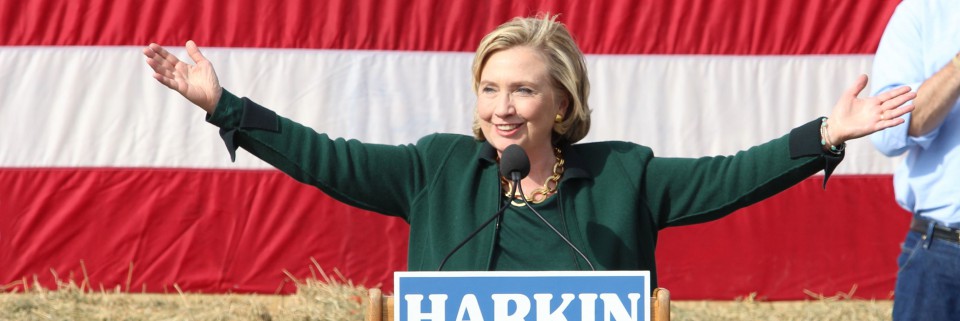
Bad combover. Check. Too long red tie. Check. Orange spray tan. Check. Tiny hands. Check. Cluelessness. Check…

Dr. Fiona Hill, Former Deputy Assistant to the President and Senior Director for Europe and Russia, National Security Council

08 Friday Nov 2019

Posted by Michael Bersin in Uncategorized

≈ 2 Comments

Tags

corruption, deposition, Donald Trump, Fiona Hill, impeachment, Ukraine

Forget the smoking gun, it’s way beyond that. It’s a smoldering crater.

Dr. Fiona Hill Former Deputy Assistant to the President and Senior Director for Europe and Russia, National Security Council

Conducted on October 14, 2019

House Permanent Select Committee on Intelligence
House Committee on Oversight and Reform
House Committee on Foreign Affairs

[….]
A: And Ambassador Sondland, in front of the Ukrainians, as I came in, was talking about how he had an agreement with Chief of Staff Mulvaney for a meeting with the Ukrainians if they were going to go forward with investigations. And my director for Ukraine was looking completely alarmed. And I came in again as this discussion was underway. … And I said: Look, I don’t know what’s going on here, but Ambassador Bolton wants to make it very clear that we have to talk about, you know, how are we going to set up this meeting. It has to go through proper procedures. And he started to basically talk about discussions that he had had with the chief of staff. He mentioned Mr. Giuliani, but then I cut him off because I didn’t want to get further into this discussion at all. …

Q: So it was you personally who heard Ambassador Sondland mention Burisma—

A: Correct.

Q: —in the Ward Room?

A: Correct. And Wells had been sitting with me in Ambassador Bolton’s office when the initial meeting took place, and he also understood it was a redirect.

Q: And Mr. Vindman was also there—

A: Correct.

Q: —and heard it?

A: And Kurt Volker.[….]

[….]
A: And I went back to talk to Ambassador Bolton. And Ambassador Bolton asked me to go over and report this to our NSC counsel, to John Eisenberg. And he told me, and this is a direct quote from Ambassador Bolton: You go and tell Eisenberg that I am not part of whatever drug deal Sondland and Mulvaney are cooking up on this, and you go and tell him what you’ve heard and what I’ve said. So I went over to talk to John Eisenberg about this. …

Q: And in that initial brief conversation, do you recall what you said and what he said?

A: Yeah. I told him exactly, you know, what had transpired and that Ambassador Sondland had basically indicated that there was agreement with the chief of staff that they would have a White House meeting or, you know, a Presidential meeting if the Ukrainians started up these investigations again. And the main thing that I was personally concerned about, as I said to John, was that he did this in front of the Ukrainians.[….]

[….]
Q: At my peril, I’m trying to figure out whether this is just complete fiction that was pitched to a reporter and has been completely debunked based on information you have or whether there’s any other explanation for this—

A: It is a fiction that the Ukrainian Government was launching an effort to upend our election, upend our election to mess with our Democratic systems….

Q: I’m just asking you about—

A: Because if you’re also trying to peddle an alternative variation of whether the Ukrainians subverted our election, I don’t want to be a part of that, and I will not be part of it.

Q: I’m not trying to peddle anything. I’m trying to ask you about what information you have regarding these. And, you know, frankly, if we didn’t have such a—

A: But you’re asking me about an article that was written in Politico in January of 2017.

Q: And I probably wouldn’t have returned to it, but it was just such a passionate rebuke of this article that just—

A: Well, it’s the thrust of the question that you’re asking here, which is to basically—you know, what we’re dealing with now is a situation where we are at risk of saying that everything that happened in 2016 was a result of Ukraine in some fashion.

Q: Yeah. I’m not saying that. I’m not—

A: Well, that’s certainly what it sounds like to me. I’m just trying to basically say here that I have very—you know, obviously strong feelings about our national security. And I just want to, if I’ve done anything, leave a message to you that we should all be greatly concerned about what the Russians intend to do in 2020. And any information that they can provide, you know, that basically deflects our attention away from what they did and what they’re planning on doing is very useful to them [….]

Recent Posts

  • Something, something Czar
  • Eric Schmitt (r) lays an egg…again
  • Campaign Finance: Justice is supposed to be free, Conservative Justice costs serious money
  • Campaign Finance: soup lines and gilded plastic
  • Oh, FFS…

Recent Comments

Steve Duane Phipps on Profit!
The price we all pay… on “Up, Up and Away……
HB 2075: Who checks?… on Hey Brandon Phelps (r), we hea…
Campaign Finance: a… on Campaign Finance: Working Peop…
The mail pieces have… on Are you certain it wasn’…

Archives

  • April 2026
  • March 2026
  • February 2026
  • January 2026
  • December 2025
  • November 2025
  • October 2025
  • September 2025
  • August 2025
  • July 2025
  • June 2025
  • May 2025
  • April 2025
  • March 2025
  • February 2025
  • January 2025
  • December 2024
  • November 2024
  • October 2024
  • September 2024
  • August 2024
  • July 2024
  • June 2024
  • May 2024
  • April 2024
  • March 2024
  • February 2024
  • January 2024
  • December 2023
  • November 2023
  • October 2023
  • September 2023
  • August 2023
  • July 2023
  • June 2023
  • May 2023
  • April 2023
  • March 2023
  • February 2023
  • January 2023
  • December 2022
  • November 2022
  • October 2022
  • September 2022
  • August 2022
  • July 2022
  • June 2022
  • May 2022
  • April 2022
  • March 2022
  • February 2022
  • January 2022
  • December 2021
  • November 2021
  • October 2021
  • September 2021
  • August 2021
  • July 2021
  • June 2021
  • May 2021
  • April 2021
  • March 2021
  • February 2021
  • January 2021
  • December 2020
  • November 2020
  • October 2020
  • September 2020
  • August 2020
  • July 2020
  • June 2020
  • May 2020
  • April 2020
  • March 2020
  • February 2020
  • January 2020
  • December 2019
  • November 2019
  • October 2019
  • September 2019
  • August 2019
  • July 2019
  • June 2019
  • May 2019
  • April 2019
  • March 2019
  • February 2019
  • January 2019
  • December 2018
  • November 2018
  • October 2018
  • September 2018
  • August 2018
  • July 2018
  • June 2018
  • May 2018
  • April 2018
  • March 2018
  • February 2018
  • January 2018
  • December 2017
  • November 2017
  • October 2017
  • September 2017
  • August 2017
  • July 2017
  • June 2017
  • May 2017
  • April 2017
  • March 2017
  • February 2017
  • January 2017
  • December 2016
  • November 2016
  • October 2016
  • September 2016
  • August 2016
  • July 2016
  • June 2016
  • May 2016
  • April 2016
  • March 2016
  • February 2016
  • January 2016
  • December 2015
  • November 2015
  • October 2015
  • September 2015
  • August 2015
  • July 2015
  • June 2015
  • May 2015
  • April 2015
  • March 2015
  • February 2015
  • January 2015
  • December 2014
  • November 2014
  • October 2014
  • September 2014
  • August 2014
  • July 2014
  • June 2014
  • May 2014
  • April 2014
  • March 2014
  • February 2014
  • January 2014
  • December 2013
  • November 2013
  • October 2013
  • September 2013
  • August 2013
  • July 2013
  • June 2013
  • May 2013
  • April 2013
  • March 2013
  • February 2013
  • January 2013
  • December 2012
  • November 2012
  • October 2012
  • September 2012
  • August 2012
  • July 2012
  • June 2012
  • May 2012
  • April 2012
  • March 2012
  • February 2012
  • January 2012
  • December 2011
  • November 2011
  • October 2011
  • September 2011
  • August 2011
  • July 2011
  • June 2011
  • May 2011
  • April 2011
  • March 2011
  • February 2011
  • January 2011
  • December 2010
  • November 2010
  • October 2010
  • September 2010
  • August 2010
  • July 2010
  • June 2010
  • May 2010
  • April 2010
  • March 2010
  • February 2010
  • January 2010
  • December 2009
  • November 2009
  • October 2009
  • September 2009
  • August 2009
  • July 2009
  • June 2009
  • May 2009
  • April 2009
  • March 2009
  • February 2009
  • January 2009
  • December 2008
  • November 2008
  • October 2008
  • September 2008
  • August 2008
  • July 2008
  • June 2008
  • May 2008
  • April 2008
  • March 2008
  • February 2008
  • January 2008
  • December 2007
  • November 2007
  • October 2007
  • September 2007
  • August 2007

Categories

  • campaign finance
  • Claire McCaskill
  • Congress
  • Democratic Party News
  • Eric Schmitt
  • Healthcare
  • Hillary Clinton
  • Interview
  • Jason Smith
  • Josh Hawley
  • Mark Alford
  • media criticism
  • meta
  • Missouri General Assembly
  • Missouri Governor
  • Missouri House
  • Missouri Senate
  • Resist
  • Roy Blunt
  • social media
  • Standing Rock
  • Town Hall
  • Uncategorized
  • US Senate

Meta

  • Log in
  • Entries feed
  • Comments feed
  • WordPress.org

Blogroll

  • Balloon Juice
  • Crooks and Liars
  • Digby
  • I Spy With My Little Eye
  • Lawyers, Guns, and Money
  • No More Mister Nice Blog
  • The Great Orange Satan
  • Washington Monthly
  • Yael Abouhalkah

Donate to Show Me Progress via PayPal

Your modest support helps keep the lights on. Click on the button:

Blog Stats

  • 1,036,517 hits

Powered by WordPress.com.


Loading Comments...