• About
  • The Poetry of Protest

Show Me Progress

~ covering government and politics in Missouri – since 2007

Show Me Progress

Tag Archives: Iraq War

The fall of the Roman Empire

26 Tuesday May 2015

Posted by Michael Bersin in Uncategorized

≈ Leave a comment

Tags

Iraq War, polling

Last week:

Catherine Rampell ‏@crampell

In 2003, most Americans favored invading Iraq. Today most people claim they had opposed it. [….] 6:28 AM – 21 May 2015

Polls in 2003 showed most Americans in favor of the invasion of Iraq, but today those who remember backing the war are a minority

Americans’ memories of their own past beliefs about the 2003 Iraq War are tinged with their current feelings about what has taken place there since and what is taking place there now.  In the latest Economist/YouGov Poll, just 38% admit that they supported sending troops to Iraq in 2003.  Less than a month before that U.S-led invasion, more than six in ten Americans* in a Gallup Poll indicated they favored sending in ground troops….

[….]

I wonder how many of those people with memory problems are among those who flipped me off and yelled at me in 2003?

March 20, 2003

[….] and I left Warrensburg at 4:30 p.m. and made it to the J.C. Nichols fountain at 47th and Main in Kansas City by 5:30 p.m. The organizers had planned for some time to have a 6:00 p.m. protest on the Plaza if hostilities broke out. I had been ambivalent about attending given the ugly rhetoric which is now being directed at those who dissent by the purveyors of right wing talk radio, cable television, and “yellow journalism”.  We had to do something positive and affirming rather than sit at home watching the crap on television which passes for real journalism these days, so we were finally resolved to attend.  As we drove up to the fountain we saw that people were already on the picket line and the TV trucks and cameras were in abundance.  At its peak we had 400 to 500 people.

It was overcast, cold and windy – temperature in the 40s.  We took our place on the line. We had decided earlier to only bring our pacifist signs. “Peace on Earth”, “In the Name of God, Stop Killing, In the Name of God”, and my graphic peace sign – it’s getting tattered from so much use…

Somewhat subdued, we quietly spoke on the line.  My favorite new sign: “War is so 20th century”. The response from passing traffic was overwhelmingly positive – a lot of honking and peace signs.  One well pickled Republican matron rolled down her car window and asked, “Don’t you people know the war has already started?”  This kind of cluelessness shouldn’t surprise me anymore.  There were occasional pro-war shouts and one “bird”, though I was surprised that they were not as ugly and aggressive as they were last Sunday – I suppose they’re sated because they are getting their crappy little war.

We stood next to a veteran (there were many there tonight).  We were joined by an old friend and several colleagues.  After a while the organizers called us to the fountain.  Some folk singers sang a witty and satirical “12 days of war” song.  We had brought candles (and plastic cups as wind shields), so we lit them and stood listening to the music.  The singers had us all join in singing “Peace, Shalom, Salaam”.  There were several speakers.  In the most peaceful moment of the day for me, as we stood there with our candles, we were barely aware that a photographer from the Kansas City Star took our pictures (when he finished he asked for our names and where we were from, writing the information down).  After the announcements were finished, the host marched through the Plaza shopping district.

The marchers stayed on the sidewalk, chanting in a call and response “Tell me what democracy looks like. This is what democracy looks like” and “What do we want? Peace! When do we want it? Now!”  As we marched into the Plaza we passed the glassed in front of one of those upscale dining establishments.  Lo and behold, two older women were standing watching us and flashed us peace signs!  We looped back around and passed several clothing establishments.  Some people shopping in the stores or watching us from the doorways flashed peace signs.

After we made it back to the fountain we walked to our car for the hour long drive home.

And Bill Kristol still pontificates on television. The Universe has a sick sense of humor.

Not gonna happen

31 Wednesday Jul 2013

Posted by Michael Bersin in Uncategorized

≈ Leave a comment

Tags

Iraq War

Instructions, apparently from our corporate masters, along a U.S. highway in New Mexico.

Yeah, right, not with people like this:

Jul 30, 2013

Kenneth Pollack: If Only We Could Reinvade Iraq

By Michael Maiello at 1:31PM

….What stands out most in his survey, though, are not his specific policy proposals but the forlorn paragraph where he fantasizes about what he’d like to do if only pesky politics weren’t in the way:

“In an alternative universe, the United States might re-intervene in Iraq, redeploying tens of thousands of soldiers to restore everyone’s sense of safety and allowing the political process to heal again. In this universe, the United States is never going to intervene in Iraq again, nor will the Maliki government ever request that we do so.”

A decade has passed since Pollack’s pre-war advocacy and all Pollack really wants is another run at the cradle of civilization. But don’t worry, he assures us, nobody with any say in the matter will go there….

Fortunately for inside the beltway cocktail weenie circuit pundits most Americans can’t remember anything beyond last week’s faux reality television show.

The GOP deficit con game

22 Friday Apr 2011

Posted by Michael Bersin in Uncategorized

≈ Leave a comment

Tags

Afghanistan, Bush Tax cuts, Deficit, Iraq War, missouri, Roy Blunt, stimulus, TARP, Todd Akin

Here’s Rep. Todd Akin (R-2) wailing about the threat posed by the deficit:

It is imperative that we address the unsustainable growth in entitlement spending and debt service, which is now eating up the entirety of government revenue.  If we fail to address those facts we will be facing a total economic meltdown. …

Here’s Senator Roy Blunt doing his wooden imitation of someone wailing abut the threat posed by the deficit:

I believe we’re facing an historic crossroads in our nation’s long-term financial health. Voters sent a clear message last fall that they expect us to make the tough choices to rein in Washington’s out-of-control spending, and they expect us to do it now.

Keeping in mind that both of these gentlemen were members of Congress during the Bush years, take a careful look at the chart below (from the Center on Budget and Policy Priorities) which outlines the individual drivers of the federal debt:

Let’s see – great big parts of the debt seem to be due to the wars in Iraq and Afghanistan, although the Bush tax cuts are undoubtedly the biggest contributor. Both of these expensive exercises,  may I remind you, were heartily endorsed by Messrs. Akin and Blunt during their years in the GOP ascendancy. The other big piece of deficit pie seems to be the decline in revenue that resulted from the economy going smash. This event, as I am sure you remember, came about as a result of the mismanagement practiced by the regulation averse Bush administration, aided and abetted by a GOP congress heavily in hock to corporate interests that wanted to keep on playing without adult supervision. TARP and the stimulus (labeled “recovery measures” in the chart), favorite targets of GOPers like Akin and Blunt, were small potatoes in the deficit pantry.  

Tell me now, how do these folks who time and time again voted to raise the debt ceiling for Mr. Bush, justify sanctimonious little diatribes like those above? Or, envision putting all our economic welfare on the line in order to play politics with the debt ceiling when it’s the Democratic Mr. Obama in the White House? Of course, I already know the answer. As Jonathan Capehart said today in reference to the  graph above, memories are, lamentably, short, which, I would add, means that con artists like Akin, Blunt and their ilk seem to be able to get away with just about any made-up story they want to tell.  

Seven years ago

20 Saturday Mar 2010

Posted by Michael Bersin in Uncategorized

≈ 2 Comments

Tags

Iraq War

March 20, 2003

We left Warrensburg at 4:30 p.m. and made it to the J.C. Nichols fountain at 47th and Main in Kansas City by 5:30 p.m. The organizers had planned for some time to have a 6:00 p.m. protest on the Plaza if hostilities broke out. I had been ambivalent about attending given the ugly rhetoric which is now being directed at those who dissent by the purveyors of right wing talk radio, cable television, and “yellow journalism”.  We had to do something positive and affirming rather than sit at home watching the crap on television which passes for real journalism these days, so we were finally resolved to attend.  As we drove up to the fountain we saw that people were already on the picket line and the TV trucks and cameras were in abundance.  At its peak we had 400 to 500 people.

It was overcast, cold and windy – temperature in the 40s.  We took our place on the line. We had decided earlier to only bring our pacifist signs. “Peace on Earth”, “In the Name of God, Stop Killing, In the Name of God”, and my graphic peace sign – it’s getting tattered from so much use…

Somewhat subdued, we quietly spoke on the line.  My favorite new sign: “War is so 20th century”. The response from passing traffic was overwhelmingly positive – a lot of honking and peace signs.  One well pickled Republican matron rolled down her car window and asked, “Don’t you people know the war has already started?”  This kind of cluelessness shouldn’t surprise me anymore.  There were occasional pro-war shouts and one “bird”, though I was surprised that they were not as ugly and aggressive as they were last Sunday – I suppose they’re sated because they are getting their crappy little war.

We stood next to a veteran (there were many there tonight).  We were joined by an old friend and several colleagues.  After a while the organizers called us to the fountain.  Some folk singers sang a witty and satirical “12 days of war” song.  We had brought candles (and plastic cups as wind shields), so we lit them and stood listening to the music.  The singers had us all join in singing “Peace, Shalom, Salaam”.  There were several speakers.  In the most peaceful moment of the day for me, as we stood there with our candles, we were barely aware that a photographer from the Kansas City Star took our pictures (when he finished he asked for our names and where we were from, writing the information down).  After the announcements were finished, the host marched through the Plaza shopping district.

The marchers stayed on the sidewalk, chanting in a call and response “Tell me what democracy looks like. This is what democracy looks like” and “What do we want? Peace! When do we want it? Now!”  As we marched into the Plaza we passed the glassed in front of one of those upscale dining establishments.  Lo and behold, two older women were standing watching us and flashed us peace signs!  We looped back around and passed several clothing establishments.  Some people shopping in the stores or watching us from the doorways flashed peace signs.

After we made it back to the fountain we walked to our car for the hour long drive home.

9/11 After the Fall: What if America reacted in a different way?

11 Friday Sep 2009

Posted by Michael Bersin in Uncategorized

≈ Leave a comment

Tags

9/11, Afghanistan, American, diplomacy, Iraq War, military empire, Millenium Development Goals, new foreign policy, United Nations

Eight years have passed since that fateful day, a day which we will all remember; an historical pivot point, stirring the passions of people around the world, and steering the great American ship of state. Many have suggested that the concerted direction that the United States took in response to 9/11 was over-reaching, unwise and shortsighted.  

• Overreaching. We now find ourselves embroiled in a continuing occupation of a nation not directly involved in the attacks (Iraq), and chasing down the fantasy of “nation-building” accompanied by military occupation in Afghanistan. Pentagon budget reaches higher and higher levels (2008: $607 Billion). Hundreds of thousands of lives displaced, lost; over a trillion dollars has been spent on this folly. Lesson? The highest levels of restraint and responsibility must be employed when considering war. Sending American soldiers into harm’s way with the inevitable consequence of lives lost should only be an action of last resort — especially so, after being thrown into a reactionary mode after being assaulted like on 9/11.

• Unwise. Responding to an act of international criminality with traditional massed military deployments and occupations (Afghanistan and Iraq) is like trying to fit a square peg into a round hole. America has fallen victim to one of the most common military blunders: preparing for and fighting the last war (Cold War), instead of meeting the real and present threat on the field with which it resides.

• Shortsighted. Our foes, structurally more akin to drug cartels than state actors, will continue to proliferate beyond the borders of our current occupations in a decentralized and asymmetrical fashion, effectively sidestepping most of our efforts in Afghanistan and Iraq. Meanwhile, America plods down the well-trodden road of waning military empires overextending themselves economically and militarily, depleting our resources, degrading our values and ultimately, losing sight of and defeating our purpose as a nation.

Was the way in which the Bush administration reacted to 9/11 the only option? Was there an alternative path we could explored after the heinous attacks that day?

Criticism of policy in a vacuum of no-solutions is empty, sensational and only instigates unrest, so I’d like to offer some ideas of a different path we could’ve taken after 9/11, and urge the consideration of moving in that direction today. I have always felt that there was a unique opportunity to foster unparalleled transnational cooperation after 9/11 in the formation of an international policing effort to combat criminal acts of terrorism. Needless to say, introducing the possibility of decades-long occupations in the Middle East and Near East would not be part of that alternate strategy. Squandering the sympathies of much of the world, Bush pursued old style war-making and missed this chance for America to rise to a new level of cooperative global leadership.  

When the Heritage Foundation began pumping its “Long War” doctrine in 2003, I recalled some basic war strategy I had learned, that to control your enemy, you make it do what it wants to do. If there was any mystery before 9/11 as to whether US militarism was ever reckless and trigger-happy, after the drum-up to war in Iraq, that was cleared up, playing right into the hands of our detractors.

This was laid out in Heritage’s Long War premise:

But it will take time. Before this is over, the time we spent defeating the Taliban in Afghanistan and Saddam’s forces in Iraq will be to the timeline of the war on terror as the Korean war and the proxy war against the Soviet Union in Afghanistan were to the Cold War — relatively brief flashpoints of action in a long, sustained struggle.

With our current economic recession, is this really a mission we can afford? When factories are being shut down, people losing their jobs, their homes, shouldn’t we re-think where our money’s being spent somewhat?

Counter to ‘Long War’, there is a different path on foreign policy and “global relations” that may benefit America in the long run.  A fraction of the money spent on military spending could be directed towards alleviating extreme poverty in the world; good works would do well to rehabilitate an American image now weighted down by accusations of neo-imperialism.

At a recent gathering of interfaith leaders at Loyola Marymount University, attended by Cardinal Mahony and the Catholic Archdiocese of Los Angeles, Rebecca Tobias, delivered a keynote address on the United Nations Millennium Development Goals, what they are, where they are today, and some examples of humanitarian legislation brought forward in Congress to articulate of different kind of empire; an empire of humanity, compassion and generosity.

On this anniversary of 9/11, let’s take pause and consider the totality of the trajectory we, as one of the most bountifully blessed nations on Earth, are travelling upon.

Does the constant hyper-vigilant maintenance of over 1000 military installations littered across the landscape of the planet truly reflect what we prioritize as a people?  Or is it possible that we have overreached, and that a little pruning and replanting would be healthy for the American orchard.

Here are the beautiful words Rebecca Tobias offered:

In the spirit of humility, I’d like to offer words of St. Francis of Assisi to keep in mind and to hold in our hearts as we travel together between our circles of connection, “You may be the only Gospel your neighbor ever reads.” The power of your presence may hold the key to improving the lives of those you serve more than you may ever come to know.

Thank you for this opportunity to address the current status of the United Nations Millennium Development Goals — and to share some thoughts about Point7’s intention and achievables which embody spiritually sound principles of governance.

As communities of conscience we have been called upon to forward legislation and societal conditions which appeal to our highest sense of right. We recognize that peace, stability and prosperity are indivisible. In today’s globalized economy, all nations are far more closely tied together than ever before. The current global reach of poverty calls for prompt, decisive and coordinated action to address its causes and mitigate its impact-of paramount importance is the strengthening of necessary mechanisms that will support the Point7 initiative especially in this time of global economic challenge. Early indications show that, not surprisingly, the poor have suffered the most from the financial upheaval of the last year — we cannot allow this to undermine the MDG commitments made in 2000.

Faith and moral leadership has a vital role to play in not only stewarding the values of the MDG’s but also in assuring that practical means of support are made available to those in need. The UN system has come to recognize certain limitations in regard its “institutional memory”; to wit, political actors come and go, whether by election or appointment.  Faith leaders on the other hand, have a much broader and lasting influence in society, as the foundational values they impart, nurtured over a lifespan, help shape what it means to be fully human.

Allow me to relay some of the on-going victories and challenges in meeting MDG benchmarks.(Most Statistical citations are from the updated 2009 UN Millennium Development Goals Report).

Goal 1:  Eradicate extreme poverty and hunger.

Prior to the current economic crisis, the depth of poverty had been reduced in almost every region. However bold strides need to be taken to alleviate the suffering of the nearly 1.4 billion people around the world who subsist on less than $1.25 per day.

Goal 2: Achieve universal primary education.

Political will coupled with targeted investments, have yielded widespread primar
y school enrolment (90%) in all but two regions of the world– we have seen great strides in securing universal primary education, but we are still falling short of the 2015 target when we consider that half of the 72 million children out of school have never been inside a classroom.

Goal 3: Promote gender equality and empower women.

Women are slowly gaining ground, but progress is again marked by regional differences. Girls still wait for equal access for primary schools-most women remain in positions of low status and face significant social barriers.

Close to two-thirds of all women employed at all toil in vulnerable or unpaid jobs which add to the already heavy burden carried out by women in households in all regions.

Goal 4: Reduce child mortality.

Some good news here — deaths in children have declined steadily worldwide — but it still remains that a child born in a developing country is 13 times more likely to die before their first 5 years of life than a child born in an industrialized nation.

Goal 5: Improve maternal health.

Giving birth safely is still largely a privilege of the rich, and consequently, little progress has been made in saving mothers lives. The key to improving outcomes relies on the presence of skilled health workers at the time of delivery.

Goal 6: Combat HIV/AIDS and other diseases.

The plight of those affected by AIDS is inspiring new approaches directed to children, their families and their communities. However, knowledge and education about HIV is still unacceptably low. On average only 35% of young men and 19% of young women aged 18 to 24 in developing countries have a thorough and accurate understanding of HIV.

This must change.

Goal 7: Ensure environmental sustainability.

Spreading awareness of global warming and the dangers of climate change have increased over the last nine years, but far more effort is needed to protect all species and ecosystems under threat. It is important to demonstrate that the world can handle the climate change problem even in the midst of the global economic downturn and seize the innumerable opportunities that exist for green job growth in all regions. This I believe is the new economy that will bring the world together in purpose.

Goal 8: Global Partnership for Development.

Advanced communication technologies bring new opportunities for development. Today, more than one-fifth of the world’s population is now online, but the digital divide is still cavernous in terms of insuring access to information and the tools for resource management that internet connectivity provides. Increased connectivity will help realize goals for health, education, employment and overall poverty reduction.

When I consider the gravity of this condition I am reminded of a passage from an article by Dr. Robert Gilman who describes the perpetuation of poverty as the result of structural violence–and how economically driven processes have conspired to constrain individual agency and collective morality. Structural violence is visited upon all those whose social status denies them access to the fruits of scientific and social progress. This is inhumane and our rigorous pursuance of the MDGs  seek to ameliorate this spiritual and ethical dilemma.

Gilman argues with clarity that, “Perhaps the most hopeful aspect of this whole tragic situation is that essentially everyone in the present system has become a loser. The plight of the starving is obvious, but those who exploit their conditions don’t have much to show for their efforts either – not compared to the quality of life they could have in a society without the tensions generated by this continued exploitation. Especially at a national level–what the rich countries need now is not so much more material wealth, but the opportunity to live in a world at peace. The rich and the poor have become each others’ prisoners. Today’s industrialized societies did not invent this structural violence, but it could not continue without our permission.”

A new social ethos, thankfully, is wielding a profound impact on circumstances and societal mechanisms which will help steward the changes we seek as we work together to realize a more humane system of governance and assuage the suffering of those facing extreme poverty.  

It’s an evolution of sorts which promotes thoughtful and compassionate reflection when decisions are made in the marketplace…it’s the concept of the Triple-Bottom Line–the consideration of human, environmental and organizational needs–weighted in equal measure–when decisions are arrived at in every area of progress as they affect people, planet and profits. This lexicon of governance carried forward offers a broader criteria of how we truly define sustainable economic and societal success by those of us who possess the capacity to share much. Introducing and expediting the Triple Bottom Line in our organizational relationships stand to foster conditions which will serve to legitimize our highest ideals; this Copernican shift deserves our attention–as it has been embraced with much success throughout the UN system, civil society and private enterprise.

In essence, we are legislating compassion. Cultivating a plan. Implementing a practical ‘strategy of generosity’.

In the same regard Point7 is the cornerstone of multilateral legislative initiatives which serve to recognize ‘the Other’ as an embodiment of the Sacred, and affirms that that all in the human family are fundamentally valuable for who they are–and not merely instrumentally valuable only for what they do/or for what they consume in the marketplace.

Here in the US, faith and democracy are at their best when in partnership. One of many legislative offerings posited in the spirit of Point7 is HRes 1078 which calls for the adoption of a Global Marshall Plan in express concordance with the UN’s MDG’s and also stands as a noteworthy example of interfaith collaboration which concretizes the highest ideals of our faith traditions. Championed by Rabbi Michael Lerner, the bill was introduced in April 2008 by our first Muslim member of Congress, Keith Ellison and co-sponsored with Jim Moran (Catholic), and Emanuel Cleaver (Protestant) in a campaign to change the direction of American foreign policy. The cornerstone of the Plan invites safety and security wielding the genius of our best and out brightest.

Legislating compassion ministers to the arrested part of our souls–it encourages individuals to express their innate tendencies of generosity and caring, rather than those of domination and control, strengthening human relationships, creating stronger bonds between communities and nations.  

Our call to action is well-defined by Rabbi Tarfon of the Pirkei Avot-Ethics of the Fathers:

‘The time to repair the world is short, the task is great, those engaged in the work are weary-and the Holy One, Blessed be He is impatient’…and so are we.


Marine Corps faulted for failing their men and women in the field

10 Wednesday Dec 2008

Posted by Michael Bersin in Uncategorized

≈ 5 Comments

Tags

Iraq War, MRAPs

Before I was a blogger, before the blogosphere even existed, I was bitching long and loud about the stupidity of going to war in jeeps.   That particular snit started when 18 soldiers got pinned down and killed in Mogadishu in 1993.  I started asking back then ‘why the hell are we going to war in jeeps?’   It became a full-throated hissy-fit four years ago when Rumsfeld was asked “the question” by that Guardsman from Tennessee and testily dismissed the young man’s concerns about inadequate equipment with a breezy “You go to war with the Army you have, not the Army you might want to wish to have at a later time.”

Humvees aren’t troop carriers, they are utility vehicles.   They were made for use in the Cold War, designed to scramble across terrain quickly.  Humvee’s are decidedly ill-suited for use in urban warfare, like they are currently being used in Afghanistan and Iraq.  They have a flat bottom that absorbs the impact of mines and IEDs, where true combat vehicles, (Mine Resistant Ambush Protected vehicles, or MRAPs) have an angled chassis to deflect impact.  When Humvees are armored, they lose their ability to be quick and nimble. And the chassis is light, so when they are armored, they, out of necessity, leave the rear more exposed. (Where are gas tanks located again?)

The risks and vulnerabilities were well known, but they were ignored.  The people charged with delivering Hummers to war zones rarely find themselves relying on them for protection in a war zone.

The Marine Corps and the other military branches were aware of the threat from mines and roadside bombs and of the commercial availability of MRAPs well before U.S. troops invaded Iraq in 2003, the report said. Yet nothing was done to acquire the vehicles.

“As a result, the department entered into operations in Iraq without having taken available steps to acquire technology to mitigate the known mine and IED risk to Soldiers and Marines,” the report said.

There has been much back-and-forth over the procurement of MRAPs throughout the course of the wars.  Orders have been placed, and then scaled back.  Yesterday the IG for the Pentagon released a report that is highly critical of the Marine Corps for failing to deliver the IED resistant vehicles to the troops in the field, and one of my Senators is pissed off about it.  Understandable – he is one of a handful of our elected representatives that has some skin in the game.  Kit Bond’s son is an intelligence officer who has spent his fair share of time in Iraq.  

“It appears that some bureaucrats at the Pentagon have much to explain to the families of American troops who were killed or maimed when a lifesaving solution was within reach,” said Sen. Kit Bond, a Missouri Republican.

Bond and Democratic Sen. Joe Biden of Delaware – the vice president-elect – have been critical of the Pentagon over the vehicles, known as MRAPs. Pronounced em-wraps, it stands for Mine Resistant Ambush Protected.

For two years the senators have pushed to uncover why efforts to obtain safer vehicles and other protective equipment for combat troops have been ignored or delayed. USA Today first reported about the problems getting MRAPS into combat last year.

The acting inspector general’s study dealt specifically with the Marines’ use of MRAPS. The report says that the inspector general also will look into how other military branches – presumably the Army – countered the threat of IEDS.

Pentagon spokesman Geoff Morrell said Tuesday that “great quantities” of MRAPs weren’t available at the early stages of the war.

“As the threat has evolved, so have our force-protection measures,” he said. “Have we done so with the rapidity and the efficiency that we would have liked at all times? No, we haven’t. But to suggest that there was any sort of neglect, or people were sitting on their hands ignoring the urgent request of commanders in the field, is just not accurate.”

Nice try Geoff, and it might work on the masses that haven’t been paying attention, but I ain’t one of ’em.  

Let’s just accept that the administration knew, possibly before the 2000 election, that if George W. Bush became the president, they were going to war. They certainly knew that we were going to war after 9/11 happened. But in 2002, the administration cut the M1117 A.S.V. fighting vehicle from the budget, despite that fact that it had the support of both senators from Louisiana, where it is manufactured. Whereas an armored Humvee can withstand 7.62 mm ammunition fire, the M1117 can stand up to .50 caliber armor-piercing ammunition. The Humvee and the M1117 are both built to take 155-mm artillery airbursts.  But the defining difference is in the back axle.  Whereas the armored Hummer is an improvised afterthought, with a chassis too light to handle full armor, MRAPs do not have this fore-aft disparity. The back end of a Hummer is vulnerable to a 4-pound land-mine. The lightest MRAP can withstand a 12-pound blast to any wheel. This is the smallest, lightest, quickest fighting vehicle in our armament. Why it was more important to give tax-cuts to a few than to build these vehicles for our troops, who we had already committed to battle in Afghanistan by that point eludes my comprehension.

Seventy percent of the casualties in Iraq have been caused by IEDs taking out Hummers, and with them Marines and Soldiers.   Troops in MRAPs had much better protection.  In fact, no American died in an attack on an MRAP for over four years.  That record was broken in May 2007 when two soldiers were killed by a bomb blast that took out the MRAP they were riding in.   At the time those two soldiers lost their lives, over two thousand of their fellow Soldiers and Marines had perished in Hummers that were susceptible to IED blasts.  

Morrell is being disingenuous and spinning like a top when he says the vehicles “weren’t available” at the beginning of the wars, and then deliberately fails to acknowledge the cancellation of the M1117-A after the invasion of Afghanistan.

I guess the wry irony is that people like us go to war with the Pentagon we have, not the Pentagon we might want to wish we had at a later time.

War is not healthy for children and other living things

23 Sunday Dec 2007

Posted by Michael Bersin in Uncategorized

≈ Leave a comment

Tags

internal refugees, Iraq, Iraq War, UNICEF, United Nations

Just in time for Christmas, UNICEF has released their preliminary findings from a report on the status of children in Iraq after nearly five years of warfare.

The findings are grim.

Two million children are threatened by disease, inadequate nutrition and inconsistent education. And making matters worse, children are frequently caught in the crossfire – literally.

“Iraqi children are paying far too high a price,” said Roger Wright, UNICEF’s Special Representative for Iraq. “While we have been providing as much assistance as possible, a new window of opportunity is opening, which should enable us to reach the most vulnerable with expanded, consistent support. We must act now.”

Among the problems highlighted in the report:

  • Only 28 per cent of Iraq’s 17 year olds sat their final exams in summer, and only 40 per cent of those sitting exams achieved a passing grade (in south and central Iraq).
  • Many of 220,000 displaced children of primary school age had their education interrupted, adding to the estimated 760,000 children (17 per cent) already out of primary school in 2006.
  • Children in remote and hard-to-reach areas were frequently cut off from health outreach services.
  • Only 20 per cent outside Baghdad had working sewerage in their community, and access to safe water remains a serious issue.
  • An average 25,000 children per month were displaced by violence or intimidation, their families seeking shelter in other parts of Iraq.
  • By the end of the year, approximately 75,000 children had resorted to living in camps or temporary shelters (25 per cent of those newly-displaced since the Samarra shrine bombing in February 2006).
  • Hundreds of children lost their lives or were injured by violence and many more had their main family wage-earner kidnapped or killed.
  • Approximately 1,350 children were detained by military and police authorities, many for alleged security violations.
  • And still, against all odds and that reality – UNICEF and other aid organizations managed to deliver critical assistance even though they struggled under the yoke of the lowest funding levels since 2003.

    Health care was delivered and house-to-house immunization campaigns were waged, protecting four million children from polio, and three million more from measles, mumps  and   rubella.  Because of dedicated efforts like these, Iraq remains polio-free, and cases of measles dropped from over 9,000 in 2006 to just 156 in 2007.

    Nearly five million children benefited from efforts to deliver educational services.  Materials and textbooks were supplied, schools were rebuilt and restored, classrooms were added to existing structures to accommodate displaced children who were forced to relocate to flee violence and ethnic strife.  (It is estimated that approximately 83% of Iraqi children of primary school age were in school in 2005-2006.  The numbers for 2007 are currently in the crunching process.)


    Shi’ite children in a refugee camp near Najaf

    UNICEF has been instrumental in providing sanitation, hygiene and most importantly – clean, potable water to as many as 500,000 internally displaced refugees.  Currently, at least 200,000 Iraqis only access to clean water is a UNICEF tankering project.  These  are the most desperate and destitute, living in  tent cities that have sprung up, populated with people who fled the violence but had no where to go.

    As security improves, a clearer picture of the  needs of Iraqi children  will emerge, but UNICEF stresses that the challenges will be amplified by repatriating families, who will be some of the most vulnerable citizens in need of help.  Many have exhausted savings and are returning to homes that may or may not be standing, and if standing, they may be standing on an ethnic battleground.

    To meet the coming challenges,  UNICEF and its partners are spearheading IMPACT: Iraq.  IMPACT: Iraq is an initiative that draws together  a network of NGOs and UN teams to rapidly assess and respond when families are vulnerable.  The intent is to facilitate local recovery, because strong families make strong communities.

    To help seize the current opportunity, UNICEF calls for support to:

    1. rapidly increase attention and action to meet the immediate needs of children and families inside Iraq – focusing on all vulnerable groups;

    2. widen humanitarian access to Iraqi children and their families in conflict zones, behind security barriers and in detention centres; and

    3. strengthen Iraq’s capacity and initiatives to improve governance and mobilize its own resources to invest in national recovery.

    “Iraqi children are the foundation for their country’s recovery,” said UNICEF spokesman Wright. “Where children’s lives are protected and revived, community recovery will swiftly follow. We continue to owe them our very best in 2008 and beyond.”

    Filibuster Refresher Course, Part 1

    15 Thursday Nov 2007

    Posted by Michael Bersin in Uncategorized

    ≈ Leave a comment

    Tags

    cloture, filibuster, Iraq War, Missouri Senate, pq, US Senate

    In the Senate (both in the US Senate and here in Missouri), the senators debate a bill until there’s an agreement that the debate’s over. Only then a final vote can be taken. The vote to end debate (called a cloture vote) requires a supermajority, while a final vote generally requires only a simple majority to pass. A filibuster is an attempt to prevent a bill from passing by keeping it from ever coming to a vote.

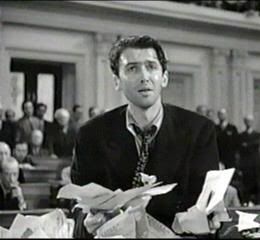
    Jimmy Stewart’s character in “Mr. Smith Goes to Washington” made the filibuster famous by singlehandedly stalling the entire Senate. Fortunately (or unfortunately, depending on how you view the bills being passed) the movie is misleading; a single Senator can’t hold up a bill that way. S/he needs 39 accomplices in the US Senate to go along – otherwise, the rest of the Senate would vote for cloture, bringing the debate to an end.

    Nowadays, a full-fledged filibuster hardly ever happens, with all the images it conjures up of talking to all hours of the night reading from the Federalist Papers, recipe books, the Bible, and letters from home. The filibustering side threatens, and if they have the votes, the bill is usually withdrawn without so much as a cloture vote.

    http://atlanta.creat…

    http://i41.photobuck…

    Recent Posts

    • Stormy Weather
    • Read the country, Mark (r)
    • Winning at losing…again
    • What were they thinking?
    • Reality bites Mark Alford (r)

    Recent Comments

    What good is the 25t… on We are the only people on the…
    Michael Bersin on Wholly War
    Michael Bersin on Wholly War
    Campaign Finance: Ju… on Campaign Finance: Isn’t…
    No Kings – War… on Warrensburg, Missouri – No Kin…

    Archives

    • April 2026
    • March 2026
    • February 2026
    • January 2026
    • December 2025
    • November 2025
    • October 2025
    • September 2025
    • August 2025
    • July 2025
    • June 2025
    • May 2025
    • April 2025
    • March 2025
    • February 2025
    • January 2025
    • December 2024
    • November 2024
    • October 2024
    • September 2024
    • August 2024
    • July 2024
    • June 2024
    • May 2024
    • April 2024
    • March 2024
    • February 2024
    • January 2024
    • December 2023
    • November 2023
    • October 2023
    • September 2023
    • August 2023
    • July 2023
    • June 2023
    • May 2023
    • April 2023
    • March 2023
    • February 2023
    • January 2023
    • December 2022
    • November 2022
    • October 2022
    • September 2022
    • August 2022
    • July 2022
    • June 2022
    • May 2022
    • April 2022
    • March 2022
    • February 2022
    • January 2022
    • December 2021
    • November 2021
    • October 2021
    • September 2021
    • August 2021
    • July 2021
    • June 2021
    • May 2021
    • April 2021
    • March 2021
    • February 2021
    • January 2021
    • December 2020
    • November 2020
    • October 2020
    • September 2020
    • August 2020
    • July 2020
    • June 2020
    • May 2020
    • April 2020
    • March 2020
    • February 2020
    • January 2020
    • December 2019
    • November 2019
    • October 2019
    • September 2019
    • August 2019
    • July 2019
    • June 2019
    • May 2019
    • April 2019
    • March 2019
    • February 2019
    • January 2019
    • December 2018
    • November 2018
    • October 2018
    • September 2018
    • August 2018
    • July 2018
    • June 2018
    • May 2018
    • April 2018
    • March 2018
    • February 2018
    • January 2018
    • December 2017
    • November 2017
    • October 2017
    • September 2017
    • August 2017
    • July 2017
    • June 2017
    • May 2017
    • April 2017
    • March 2017
    • February 2017
    • January 2017
    • December 2016
    • November 2016
    • October 2016
    • September 2016
    • August 2016
    • July 2016
    • June 2016
    • May 2016
    • April 2016
    • March 2016
    • February 2016
    • January 2016
    • December 2015
    • November 2015
    • October 2015
    • September 2015
    • August 2015
    • July 2015
    • June 2015
    • May 2015
    • April 2015
    • March 2015
    • February 2015
    • January 2015
    • December 2014
    • November 2014
    • October 2014
    • September 2014
    • August 2014
    • July 2014
    • June 2014
    • May 2014
    • April 2014
    • March 2014
    • February 2014
    • January 2014
    • December 2013
    • November 2013
    • October 2013
    • September 2013
    • August 2013
    • July 2013
    • June 2013
    • May 2013
    • April 2013
    • March 2013
    • February 2013
    • January 2013
    • December 2012
    • November 2012
    • October 2012
    • September 2012
    • August 2012
    • July 2012
    • June 2012
    • May 2012
    • April 2012
    • March 2012
    • February 2012
    • January 2012
    • December 2011
    • November 2011
    • October 2011
    • September 2011
    • August 2011
    • July 2011
    • June 2011
    • May 2011
    • April 2011
    • March 2011
    • February 2011
    • January 2011
    • December 2010
    • November 2010
    • October 2010
    • September 2010
    • August 2010
    • July 2010
    • June 2010
    • May 2010
    • April 2010
    • March 2010
    • February 2010
    • January 2010
    • December 2009
    • November 2009
    • October 2009
    • September 2009
    • August 2009
    • July 2009
    • June 2009
    • May 2009
    • April 2009
    • March 2009
    • February 2009
    • January 2009
    • December 2008
    • November 2008
    • October 2008
    • September 2008
    • August 2008
    • July 2008
    • June 2008
    • May 2008
    • April 2008
    • March 2008
    • February 2008
    • January 2008
    • December 2007
    • November 2007
    • October 2007
    • September 2007
    • August 2007

    Categories

    • campaign finance
    • Claire McCaskill
    • Congress
    • Democratic Party News
    • Eric Schmitt
    • Healthcare
    • Hillary Clinton
    • Interview
    • Jason Smith
    • Josh Hawley
    • Mark Alford
    • media criticism
    • meta
    • Missouri General Assembly
    • Missouri Governor
    • Missouri House
    • Missouri Senate
    • Resist
    • Roy Blunt
    • social media
    • Standing Rock
    • Town Hall
    • Uncategorized
    • US Senate

    Meta

    • Log in
    • Entries feed
    • Comments feed
    • WordPress.org

    Blogroll

    • Balloon Juice
    • Crooks and Liars
    • Digby
    • I Spy With My Little Eye
    • Lawyers, Guns, and Money
    • No More Mister Nice Blog
    • The Great Orange Satan
    • Washington Monthly
    • Yael Abouhalkah

    Donate to Show Me Progress via PayPal

    Your modest support helps keep the lights on. Click on the button:

    Blog Stats

    • 1,039,117 hits

    Powered by WordPress.com.


    Loading Comments...