• About
  • The Poetry of Protest

Show Me Progress

~ covering government and politics in Missouri – since 2007

Show Me Progress

Tag Archives: health care

Senator Claire McCaskill (D): open forum in Hillsboro – video of the Rosa Parks poster altercation

12 Wednesday Aug 2009

Posted by Michael Bersin in Uncategorized

≈ 8 Comments

Tags

altercation, Claire McCaskill, health care, Hillsboro, missouri, open forum, Rosa Parks poster

via Peter Glickert at HatingNotDebating

This is the only video of what actually happened at the event this afternoon. The news only showed the woman being escorted away by the police. What happened was the women walked in with signs, the crowd booed and yelled at the women. The women rolled up their posters and put them down. A photographer/reporter approached the woman on the end and wanted to see what the poster was. As the woman went to show the photographer/reporter what the poster was, a man from the bleachers stood up and snatched the poster from the woman and photographer/reporter. As the woman went to retrieve her poster the police stepped in and escorted the woman and the man from the building….

One individual decided to take on the physical role of sign enforcer.

…T[hese opponents of health care reform are] pissed that Obama is president. They’re pissed that McCain isn’t. They’re pissed that Jim Talent isn’t their senator. They probably voted for George W. Bush twice (and probably his daddy twice). They’d probably be pissed if you pointed out that dubya is and was a monumental screw-up – it reminds them that they made that particular choice. They didn’t vote for Claire. They’ll never vote for Claire. They’re outraged that their sense of entitlement about calling the shots in what others should believe and even how the open forum should have been run isn’t accepted or catered to…

Outside after the event was over.

Update:

I spoke with Maxine Johnson outside the field house after the event was over:

Show Me Progress: So, what happened? What happened, did, after you sat down?

Maxine Johnson:  When I sat down I put my sign in the chair in front of me. It was rolled up. And the reporter kind of, news reporter crawled over there, she was standing up and she asked could she take a picture of the sign. We unrolled the sign laying down in the chair. And she was taking a picture of Rosa Parks. This man comes out of the crowd, snatch my sign, I stood up, they said he pushed me. I don’t remember anything ’cause you know by that time my adrenaline going everywhere…All I’m thinking about is getting my sign back. I got up in…to proceed, go get my sign back. ‘Cause he was crumbling it up. I said, “Give my sign back!” When I said that, next thing I know I had four police officers on me and one on him. I’m the victim here, [laugh] you know. And then as I say, “I’m pressing charges!”…I said, “Obama, Obama!”  So, you know what, you know like I said Rosa Parks fought for our freedom back then, now I’m fighting for our freedom now…So we’re fighting for the next generation…

Senator Claire McCaskill (D): open forum in Hillsboro – press conference

12 Wednesday Aug 2009

Posted by Michael Bersin in Uncategorized

≈ 2 Comments

Tags

Claire McCaskill, health care, Hillsboro, missouri, open forum

After yesterday’s two hour long open forum on health care at Jefferson College in Hillsboro Senator Claire McCaskill (D) took questions from some of the media in attendance:

Senator Claire McCaskill: Hi guys.

Voice: Hi Senator.

Question: What was your reaction to the crowd today?

Senator McCaskill: You know, I, I wouldn’t, let me say it this way. This is hard, but, I’m proud of, overall, the people that came out today and that most of them wanted to stay through it and ask questions and answer questions. I think it is a healthy thing for Democracy. And I, I wouldn’t want to do it every afternoon for the rest of my life [laughter in room] because it was obviously contentious. But that’s okay….

…Question: Did…[crosstalk]

Senator McCaskill: I just hope that the word goes out that every member of Congress can and should have these kinds of meetings. I don’t think we should shy away from public discourse just because it gets a little rocky…[crosstalk]

Question: Why do you think you’re able to handle it and other members seem to have trouble with these meetings?

Senator McCaskill: I don’t take it, I think [garbled] I don’t take it personal. I think there’s a tendency of, of many people who get into office that sometimes people get to thinking they’re a pretty big deal. And they don’t stay grounded and realize this isn’t personal with me. They’re not angry at me. They’re frustrated and angry about their view of what government is doing and they want a place to vent that. So, I, it’s fine. I think it was great and I hope it gets reported that it was great. It’s unfortunate we had one little incident, but it was over in a nanosecond and we were back to answering more questions.

Question: Is this something new to you in, in town hall meetings where people are so openly skeptical with jeering, with booing sometimes, that they’re just kind of in your face? It seemed like a different climate.

Senator McCaskill: It, It is, not that there haven’t always been people who were upset and there are always some people who shouted out and who were not, didn’t want to listen to the answer. They’ve made their mind up and they didn’t want to hear anything that would confuse their view. And that’s fine. The problem here is that so many people that have made up their mind and they’re not listening. And what I want everyone to stay focused on is that there’s a whole lot of Missourians who haven’t made up their mind, who know something’s wrong with health care and costs going up and insurance companies having their way with them, but they’re not really sure how we can go forward. And I want to make sure those people stay in the conversation.

Question: They tell us they’re afraid you’ve made up your mind and they’re afraid there’s no room for compromise. [garbled] You feel like your position after this tour gets a little softer, things change a little bit? [crosstalk]

Senator McCaskill: Well, I don’t, I, I , well certainly I’m gonna listen. And I haven’t made up my mind. And the people who think I’ve already made up my mind and I’m not capable of independent judgment or compromise don’t know me very well. [crosstalk]

Question: Did I? [crosstalk]

Senator McCaskill: And I think a lot of this folks frankly, probably don’t know me…

Question: Senator, did I hear you promise today that you will vote against any bill that doesn’t give you the same coverage as everybody else?

Senator McCaskill: I think, basically, I think that is something that we should do. I agree that whatever we vote for, in terms of the options that will be available to the general public, they should be no different than the options available to Congress. But I’m confident there’s gonna be options. And I think Congress should have the exact same options as everybody else in America.

Question: I sense that people feel the President, though, is not as open to looking at compromise. [garbled] They think that he’s going to basically create a system that will force [garbled] in ten or fifteen years into a [garbled] program.

Senator McCaskill: I think when the history books are written about this President he will go down as a great pragmatist. This is someone who has appointed a lot of Republicans to his cabinet. I think he’s already shown flexibility in terms of what he’s willing to talk about and consider in the health care bill. I think there are certain things he really wants to get done – which are the things you hear about, heartbreaking stories about pre-existing conditions, someone getting this terrible traumatic illness and all of a sudden the insurance companies say sorry, you’re gonna take bankruptcy and lose your home and [garbled] your life savings, but we’re not gonna cover you anymore. I think he feels very strongly about those things. But I think ultimately this is a very pragmatic President that wants to improve health care in this country. And he is open to various ideas. I think that’s why he’s let Congress kind of try to grow these bills organically. While he’s weighed in and provided leadership he has not said my way or the highway. Ever.

Question: Senator, is there anything that you heard today that might affect how you approach things in Washington after the recess when it comes up again? Is there anything that came up or the way people responded that you thinking oh no, maybe I should consider that?

Senator McCaskill: Well, I think that there were some points made in some of the questions that are of concerns [garbled]. Well,  I think making sure that we don’t incentivize employers to drop health care coverage. That’s important. And that was brought up in one of the questions today and I don’t think there has been enough discussion about that issue. So that’s one issue that I’m gonna drill down on and, and make sure we’ve thought that through.  I had yesterday, a doctor in southeast Missouri bring up something. And that is, if we incentivize doctors on good outcomes is that gonna encourage doctors to dump difficult patients? If they’re gonna get reimbursed based on what your outcomes are, then if you know that you’ve got somebody you’re seeing as a doctor that’s not gonna follow directions, that’s not gonna do what they’re supposed to do, not gonna take their medicine, then aren’t you gonna be tempted to say, sorry, I’m not gonna see you anymore? So, those are two things I’ve heard in the last two days that I think we really need to take a hard look at. And both of those are valid [garbled]. [crosstalk]

Question: [garbled] questions about costs, though. I don’t think it has to do with [garbled] problems.

Senator McCaskill: Well, I, I , I’m,  we’ve already got some costs that we’ve put into the budget. And the, the price tag on the health bill that’s come out of committee is about six hundred billion. Now, how it’s paid for will come out of the Finance Committee. So all of us are waiting with bated breath. How these Republicans and Democrats are gonna come together on how we pay for this. And I’m optimistic that they’re gonna have a way we can pay for it that will not hit the middle class. I can’t support it if there’s any increase in the cost to the middle class. It’s not fair to [garbled].

Staffer: Sorry guys. [crosstalk]

Question: The [garbled] version is six or seven hundred pages long. How much time does Congress reasonably need to, to read it so they can [grabled] [crosstalk]

Senator McCaskill: Well, if they’re prepared they will have read big parts of that already because what will happen is you’ll take parts of one bill and parts of another. So, my ad
vice to members of the Senate is to read every page of the bill that’s come out of the Health Committee and then read every page of the bill that comes out of Finance Committee and then you’ll probably be prepared to be able to review any of the bill. But I think there’s gonna be plenty of time. Can you imagine how long it’s gonna take to debate this bill on the floor?  I mean it will be weeks. So I think there’ll be plenty of time for us to carefully review amendments and the bill’s [garbled].

Staffer: That’s all the time we have guys.

Question: Your comment about the middle class, so, does that mean that you oppose the idea of taxing some health care benefits? I mean that’s been banged around and Baucus [crosstalk]…

Senator McCaskill: I’m opposed to taxing health care benefits that are going to the middle class. I want to make sure that there’s no cost increase to any family that makes less than two hundred fifty thousand dollars.

Voice: Thank you Senator.

Senator McCaskill: Thank you guys.

The Post thinks teabaggers "warmed" to Claire.

12 Wednesday Aug 2009

Posted by Michael Bersin in Uncategorized

≈ 4 Comments

Tags

Claire McCaskill town hall, health care, missouri, Teabaggers

Post-Dispatch:

U.S. Sen. Claire McCaskill has been a prosecutor, a state legislator and Missouri’s chief fiscal watchdog.

But she drew on family to set the tone and win over a potentially antagonistic crowd at a health care forum Tuesday in Jefferson County.

(…)

After several rounds of initial boos and more than a few interruptions, the crowd seemed to warm to McCaskill’s mix of frank talk and tough love.

In the end, McCaskill presided over the two-hour forum mostly without incident – there was one arrest – and left to collegial applause.

The crowd who believe that “Obama is a Nazi who wants to kill your grandma and make you pay for abortions”; who booed Claire for pointing out that states with strong tort reform, like Missouri and Texas, still suffer from rising health care premiums; who jeered when she said that V.A. and Medicare recipients like their care (“It’s a broken system!”) did not, excuse me, “warm” to Claire McCaskill.

She sufficiently defused their fury to prevent a riot. That’s not Kumbaya. About halfway through the event, for example, the euthanasia nonsense came up, and Claire did a masterful job of describing a study done at the Mayo Clinic of people facing end of life issues. The Clinic very consciously made sure that patients and their families knew exactly what was taking place in their bodies and in their treatment. The study compared how satisfied those patients were to patients facing similar circumstances at UCLA and found, of course, that the Mayo Clinic patients were more satisfied. It also found that Mayo Clinic patients spent half as much on end of life care. The sort of explanation that the Mayo Clinic patients got is what the bill provides for. It reimburses doctors for the time spent conferring with patients.

The crowd took Claire’s description pretty calmly, though one man near me yelled, “Then why has Mayo come out against the bill?”

But that subject was a lead in for Claire to talk about fair treatment for seniors:

“One of the groups that’s most important to anybody to get elected, anybody, the most reliable, the most upstanding, the most sought after (inaudible) in America are our seniors. Do you think I would kick seniors in the knees? Really? I would not.”

The wingers went nutballs over that question. After the furor died down, Claire asserted that the public option will not turn into single payer. The teabaggers got hot about that statement, but getting hot is not the same thing as warming to her. Listen for yourself to their reactions on both points. (Please excuse the dizzying camerawork.)

To say that the crowd “warmed” to Claire is like saying that a kindergarten teacher calmed Bobby down. Yesterday, he hit five kids and broke ten toys. Today, he only hit three and broke five toys.

Treat yourself to Angry Black Bitch’s take on yesterday. She’d agree with me. “Warmed” to Claire? Their version of warming to a liberal is not to harm her physically. (And Claire isn’t even that liberal. She’s centrist.)

Senator Claire McCaskill (D): open forum in Hillsboro – photos

12 Wednesday Aug 2009

Posted by Michael Bersin in Uncategorized

≈ 14 Comments

Tags

Claire McCaskill, health care, Hillsboro, missouri, open forum

Rude, loud, and obnoxious. And to think that there wasn’t a dirty anti-war hippy anywhere in sight.

After driving five hundred miles (in eight and a half hours) round trip I had time to reflect and process the event at Jefferson College in Hillsboro. The seemingly impotent rage coming from some of the people in attendance was stunning in its force.

They’re pissed that Obama is president. They’re pissed that McCain isn’t. They’re pissed that Jim Talent isn’t their senator. They probably voted for George W. Bush twice (and probably his daddy twice). They’d probably be pissed if you pointed out that dubya is and was a monumental screw-up – it reminds them that they made that particular choice. They didn’t vote for Claire. They’ll never vote for Claire. They’re outraged that their sense of entitlement about calling the shots in what others should believe and even how the open forum should have been run isn’t accepted or catered to.

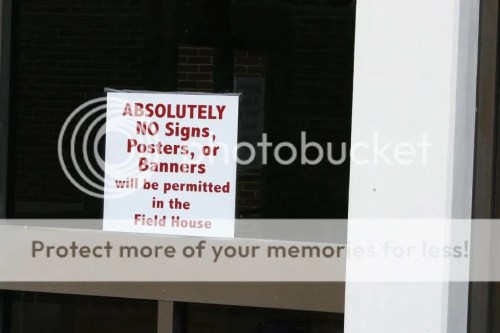
To them a late entering African American woman breaking the “sign rule” is an outrage upon civilized society and is pointed out instantly. It is enough of an outrage so that some jerk can jump out of the stands and try to rip it away (for God’s sake, it was a Rosa Parks poster). Yet, a bunch of people can stand after that with their “Don’t Tread on Me” flags and there’s not a whisper from the crowd.

They’re pissed that Claire asked how many of them were on Medicare (several hundred) and then asking how many wanted off (a handful) – pointing out the crowd’s hypocrisy about government health care. No matter what anyone does they’ll be pissed and stay pissed. And they ain’t voting for any Democrats. Ever.

Not everyone in attendance was opposed to health care reform

“…But there was little she said that didn’t elicit jeers and yelling, usually from the same few loudmouths. Within thirty feet of me, there were half a dozen middle aged males who frequently screamed their displeasure….”

The altercation over an “unauthorized sign”. Law enforcement quickly separated the parties and escorted them outside.

Curiously, after the first “unauthorized sign” incident the crowd didn’t take issue with these signs. I wonder why?

The press conference after the forum.

The obligatory teabagger Hitler/Obama comparison.

Pro-reform activists displayed a number of satirical signs outside after the event.

I asked those carrying the signs if people “got it”. They weren’t sure if people did.

Teabaggers were also well represented with signs after the event.

Evidently insurance company sponsored euthanasia is okay.

The lady from the “unauthorized sign” incident with her Rosa Parks poster.

In traffic on the way back on Highway 21 approaching I-270. I wonder if this driver had one for dubya when gas was $4 a gallon. Nah, *IOKIYAR.

* it’s okay if you’re a republican

Sweet reason and the savage breast

12 Wednesday Aug 2009

Posted by Michael Bersin in Uncategorized

≈ 6 Comments

Tags

Claire McCaskill town hall, health care, missouri, Teabaggers

How do you handle several hundred grown up, angry children? Claire did it with sweet reason and the occasional–but only effective because she hardly ever resorted to it–Mom voice. As Clark pointed out, one of the best quotes of the day was her observation, early on, that “This can’t be about who’s the loudest,” spoken not angrily or condescendingly but with sweet reason.

Ten minutes later, as the right wing noise made speaking nigh impossible, she finally managed to get this argument in: “Do you see how many people want to speak? Do you want to be fair?”

But there was little she said that didn’t elicit jeers and yelling, usually from the same few loudmouths. Within thirty feet of me, there were half a dozen middle aged males who frequently screamed their displeasure.

Generally, Claire stuck to answering the questions, rather than trying to sell the crowd on universal health care. And it was interesting how those questions were selected. She asked those adamantly opposed to reform to raise their hands. Then she selected two women in the front row who had raised their hands to pick questions from two fish bowls for her to answer. In two hours, I don’t think I heard more than two or three questions that didn’t come from critics of reform. I don’t know whether the ladies were tossing aside the questions they didn’t like or whether the right wingers were more prolific question writers–because there were certainly plenty of liberals in the house.

Speaking of the liberals, they did occasional shushing, but they were much more subdued than those who attended the Carnahan event. It was almost as if they had decided en masse to give the wingers all the room they needed to show what kind of people they are. I spoke to a gentleman after the event and asked him whether he was pro-reform, anti-reform or undecided. He said that he was undecided, but that, given the behavior he had seen today, he leaned toward pro-reform.

To give you a sense of what Claire handled for two hours, watch her field a question about how unfair a public option would be to private insurers:

Did you catch that about the co-ops? I’m disgusted with her. The only thing I see that we can do about that is to visit her office in small groups to express our arguments against that. Certainly yelling at a town hall about it would do nothing but show that we’re fools.

She saw that behavior today. We need to get busy with a different tactic.

Roy Blunt (r): Uh, you don't get it, do you? We want the health care plan you have.

06 Thursday Aug 2009

Posted by Michael Bersin in Uncategorized

≈ Leave a comment

Tags

2010, health care, missouri, Robin Carnahan, Roy Blunt, Senate

Missouri Congressman and republican U.S. Senate candidate Roy Blunt (r – lobbyists) gets it bass ackwards (as usual) on Twitter:

I also offered my amendment to require Members of Congress to participate in the new government health care plan. 8:42 PM Jul 31st from mobile web

Uh, Congressman Blunt, we don’t want you to have our health care system. We want the one you have now [pdf].

[September 2007]…Members of Congress and retired Members are entitled to participate in the Federal Employees Health Benefits Program (FEHBP) under the same rules as other federal employees. Members meeting minimum enrollment period requirements who are also eligible for an immediate annuity may continue to participate in the health benefit program when they retire. For an additional fee, incumbent Members can receive health care services from the Office of the Attending Physician in the U.S. Capitol; in addition, Members may purchase care from the military hospitals using their FEHBP benefit. Members must also pay the same payroll taxes as all other workers for Medicare Part A coverage…

But wait, there’s more:

…Financing. The federal government and enrollees jointly pay for the cost, or premiums, of the FEHBP plans. The Balanced Budget Act of 1997 (BBA 97, P.L. 105-33) established the current formula for determining the government’s contribution, which became effective January 1999. The government’s share is an amount equal to 72% of the average premium of all participating plans (weighted by the number of plan participants) but no more than 75% of the premium of any individual plan. This formula is applied separately to self only and family plans. Participants pay an average of 28%, but no less than 25% of premiums…

…Private Sector Comparability

For individual coverage, the employer’s contribution in the private sector is generally more generous than the federal government’s FEHBP contribution for its employees. According to the Department of Labor, private sector employers’ share for coverage is 81% for individual coverage and 71% for family coverage (compared to FEHBP’s payment of 72% of the average premium of all participating plans).

FEHBP’s family coverage includes all families of two or more, while private sector plans may have different premiums for family plans depending on the family size. Under FEHBP’s family coverage, a family of two pays the same premium as a family of four.

Approximately three-fourths of all workers in private industry had no choice in medical insurance plan, either because they were not offered a plan (30%) or because they were offered only one plan (44%), while many FEHBP participants have the advantage of a wide choice of plans.

The number and percentage of people covered by employment-based health insurance has been decreasing. In the private sector, coverage dropped from 69% in 2000 to 60% in 2007. In particular, retiree health coverage has been hit the hardest. Sixty-six percent of all large firms (with 200 or more workers) offered retiree health coverage in 1988, compared with 33% in 2007. FEHBP is available to federal retirees at the same cost and with the same benefits offered to active employees.

In terms of premium increases, the Government Accountability Office (GAO) found that starting in 2003, FEHBP premium rate of growth was generally slower than for other purchasers. According to GAO testimony, since 2003, the average growth rate of FEHBP premiums has been 7.3% compared with 10.5% for the employer-sponsored plans surveyed by the Kaiser Family Foundation/Health Research Educational Trust. Premium rate growth for the 10 largest FEHBP plans (based on enrollment), that accounted for about three-quarters of total enrollment, ranged from 0% to 15.5% for 2007…

Hmmm. Choice and relative cost stability. Go figure. Sounds like a plan…

President Obama: health care reform – blogger conference call

21 Tuesday Jul 2009

Posted by Michael Bersin in Uncategorized

≈ 1 Comment

Tags

bloggers, health care, Obama, Obama.bloggers

Blue Girl and I took part in a conference call for bloggers on health care reform with President Obama and senior members of his staff late this afternoon. The President made a brief opening statement and then took questions from those on the call. The President’s staff continued after he left the call.

The transcript of President Obama’s opening remarks:

Operator:….We have the President of the United States.

President Barack Obama: Hey guys. Uh, it, it is great to talk to you. Thanks, uh, so much for, uh, thanks so much for being on. And I want to just make a couple of quick comments. I want to leave about fifteen minutes for questions to me directly. And then David Axelrod, uh, my senior advisor, as well as Nancy-Ann DeParle who is my chief, uh, uh, member of my health care brain trust, uh, will stay on and she can, uh, answer some additional calls afterwards.

Um, this is a critical time for us who care deeply about changing the health care system and how it’s currently working. We are closer to reform than we’ve ever been. Of course that means that the special interests and some of their representatives in Congress are gonna pull out everything they have to stop it. I want to make sure that all of you and your readers hear from me directly and others on my team about what’s going on. I know that there’s been a lot of focus, uh, from a lot of people on keeping the bill strong and that continues to be a key focus for me as well. But, there’s also a primary point that can’t be lost. The status quo is unacceptable.  Uh, you’ve got forty-six million people without health insurance. You’ve got premiums going up three times faster than wages, out of pocket costs skyrocketing. Uh, so people who would defend doing nothing, uh, I think are defending the indefensible. Uh, so far those who oppose reform have offered no meaningful, uh, alternatives. And one of the things that I know the blogs are best at is debunking myths that can slip through a lot of the traditional media outlets and a lot of the conventional wisdom.

And that’s why you’re gonna to play such an important role in our success, uh, in the weeks and months to come. For example, the idea that the legislation I sign is going to be a source of record deficits is simply not true. It’s a myth that’s been spread by the same people that were responsible for record deficits over the last eight years, a deficit that I inherited. And now we’ve got folks going out there saying that somehow that that should be an excuse for inaction when it comes to health care. Uh, I’ve explained from the v…very beginning that this legislation has to be funded over the course of the next ten years. And I’ve talked about the fact that two thirds of the funding, uh, are gonna come from, uh, ending unwarranted give, giveaways, hundreds of billions of dollars, to insurance companies, and the Medicare and Medicaid system, and other changes that, uh, reallocate tax dollars that are already into the system, uh, and spending those dollars in a more intelligent way.  Uh, so that’s just an example of the, of the kind of, uh, change in the debate that so many of you can drive. And I think that’s absolutely critical.

Uh, I also think it’s important just to keep the pressure on members of Congress, uh, because what happens is there is a, uh, there is a default position of inertia here on, here in Washington. And pushing against that, making sure that people feel that, that the desperation that ordinary families are feeling all across the country every day, uh, when they’re worrying about whether they can pay their premiums or not, or how to, uh, deal with a loss of insurance when they lose their job. Pe.. people have to feel that in a visceral way. And you guys can help, uh, deliver that better than just about everybody.

So, uh, I appreciate you guys being on. Uh, Jesse [Lee – White House Director of Online Programs] why don’t you, uh, tell me who’s gonna be, uh, the first, uh, first caller. The first question….

Hard luck health care tales

10 Friday Jul 2009

Posted by Michael Bersin in Uncategorized

≈ 10 Comments

Tags

Darryl Moore, health care, LaDonna Applebaum, McCaskill, missouri, MoveOn

About 35 people showed up at noon Thursday to Claire McCaskill’s St. Louis office at a rally organized by MoveOn. (There was another event at Bond’s office at the same time. Lotsa luck, folks, making inroads there.) After some of the attendees told the group their own hard luck health care stories, we presented a petition with about 2,000 signatures gathered online to Michelle Sherod, one of Claire’s staffers. The petition urged McCaskill to stand strong for a public option and resist letting it be watered down.

Ironies abounded in two of the stories that people had to tell. LaDonna Appelbaum works in the health care industry. And has no health care. This is a woman who’s not afraid to let her feelings show on the subject. She wants health care NOW.

As we head into the final two or three months of the push to get health care reform, here’s the message I’d like to convey to Claire: Do more than plan to vote for a strong public option. Be active. Beat the drums for it. Speak up at every opportunity. And make opportunities to speak up.

Because a strong public option is a foot in the door that might eventually open onto single payer. A strong public option–none of this co-op nonsense!–is the minimum. Once we have that, perhaps it will be–as it has been for other nations–just the starting point.

Health and Human Services Secretary Kathleen Sebelius: media conference call on health care reform

26 Friday Jun 2009

Posted by Michael Bersin in Uncategorized

≈ 1 Comment

Tags

Health and Human Services, health care, Kathleen Sebelius, Obama administration, reform

Secretary of Health and Human Services Kathleen Sebelius held a conference call on health care reform for regional media early this afternoon. Part of the purpose of the conference call was to promote reports released by HHS on the status quo of health care in each of the fifty states. After her opening remarks Secretary Sebelius took questions from media in on the conference call.

Secretary of Health and Human Services Kathleen Sebelius:  Good afternoon everybody. And, um, I appreciate you joining us today. Um, as you know, here in Washington people are working hard to push forward health reform and we know that there’s some urgency about this from citizens across this country.

Um, since two thousand health insurance premiums have doubled and health care premiums are growing three times faster than wages. But unfortunately quality of care is going down as those costs continue to rise. So, even with, for people who have, uh, access to health care, uh, all it takes is a stroke of bad luck to become one of the nearly forty-six million uninsured or the millions who have health care and are having trouble affording it.

Today, uh, at the Department of Health and Human Services we’ve released fifty new reports on the health care status quo in every state around the country. The new reports are available on our web site, http://www.healthreform.gov. And they pretty clearly outline the challenges that we have. Um, the reports include statistics on the percentage of residents in each state without insurance, the increase in the costs of premiums, and the overall quality for health care in each state. And they use some of the most current data available.

Uh, unfortunately the reports are a clear demonstration that there are problems with health care in every state. Whether they’re rural, urban, East coast, West coast, it really doesn’t matter. The health crisis impacts all of America. The additional reports out today are from our Agency for Health Research and Quality. And frankly states get a pretty mixed review for the quality of care they provide.

Uh, these are more than just numbers and facts, more than statistics on a page. They represent real people and families in states across the country who are struggling. Uh, what we know is every day in America families are being crushed by the high cost of health care that threatens their financial stability, leaves them exposed to higher premiums and deductibles, and puts them at risk for possible loss of health insurance as employers struggle to provide adequate health coverage.

So now Americans are demanding reform that protects what works and fixes what’s broken. And in Congress, um, a number of members of the House and Senators from both sides of the aisle are working hard to make reform a reality. We were encouraged that just yesterday a bipartisan group of leading Senators, including  the top Democrat and the top Republican on the Finance Committee, Max Baucus and Chuck Grassley, recommitted to working together on health reform this year.

So I’m confident that we are gonna get a bill passed and to the President’s desk. And the statistics that we’re releasing today should help to inform people about the serious challenges that we face and why we can’t wait for reform to happen.

Um, again the reports are on our web site healthreform.gov.  And they are a state by state look at what’s going on in quality and cost. So with that I’d, I’d be willing to, um, answer some questions. I think we have about…

Media questions:

…Question: Hi  Secretary, uh, thank you very much for taking the call. Um, I am wondering what the chance are of getting a, um, public option through this year?

Secretary Sebelius: Well Jenna, as you know the President has made it pretty clear that, um, he actually believes in market strategies and feels very strongly that having a public option compete with private insurers is the best way to have cost containment. Um, I’m pleased that the House bill which has been drafted, and I testified to earlier this week, um, the outlines of the Senate bill from the Health Committee, both have public options. Uh, we haven’t seen the specific language from the Finance bill yet, but I, I think it’s clear that, um, with the bill coming forward the public option is definitely part of the strategy.

…Question: [garbled] Secretary, um, we’re, in Virginia particularly small businesses make up seventy-one per cent. And I’m wondering how the health care plan that’s being developed is going to help smaller businesses and people who work with them in developing a health care option for their employees?

Secretary Sebelius: [garbled] That’s a great question. Um, as you know, not only in Virginia, but in every state across the country small business owners are the majority of employers. And it’s the, um, kind of backbone of our economy. And frankly, in the current system they are the ones offering, I mean, often bearing the brunt of, um, the cost curve. Uh, they get squeezed out of the marketplace more quickly if one or two employees have some kind of pre-existing condition. They pay higher costs because they don’t have the volume to leverage, uh, big discounts. And, um, often they, they don’t get to keep or attract the best employees because employees follow health care. And while over close to sixty per cent of small business owners as recently as five years ago provided coverage, we’re now down to thirty-eight per cent. Um, so it’s, uh, they’re at a competitive disadvantage. So health reform I think offers a lot to small business owners. First of all it kind of pool, in the new health exchange, will give some, uh, affordable options, uh, for small business owners that they don’t have now, gives them choice. The elimination of pre-existing condition will mean that they can actually come into the marketplace without their costs, uh, skyrocketing. All of the proposals, and the President has made it very clear his proposal, um, includes some tax incentives for small business owners who offer insurance coverage. And I think that even if, um,  the kind of pay or play employer mandate ends up in either the House or Senate bill, it’s part of the House bill, but there is an exemption, uh, for small businesses. So I think there’s a, there’s a good deal of focus, um, of beneficial outcomes for small business owners. And at the end of the day costs have to go down for everybody, but I think it’s a, it’s a workforce issue that will make them more competitive with their, in this global marketplace.

…Question: In your report [garbled] you document, uh, the number of businesses that are dropping health insurance benefits. Uh, if there’s a public option won’t that cause more businesses to, to drop, uh, offer, offering health insurance benefits and just tell their employees to go the public option?

Secretary Sebelius: Well, Eric, the way that the public option is, is being crafted it really is available for, um, those who do not have coverage right now. And, um, I think there, there is concern about the so called dumping, but, uh, frankly the President has made it pretty clear that he really wants to encourage a system that builds on what we have. That if people have coverage that they like, that’s affordable, a relationship with a doctor that, um, is good for you and your family [garbled] want to keep it. So the, the exchange, the new marketplace is really for, uh, those Americans who have no insurance coverage at all or who are, um, un, underinsured at this point, uh, because of the cost prohibitive nature of the coverage.

…Question: Yes Secretary, is there any form of ranking here? How do we know how our states are comparing to other states, for example, in the number of uninsured, um, the costs of premiums etcetera?

Secretary Sebelius:  Um, at this point Mary Joe, there isn’t a, a, you know, comparison. These are
really state by state reports. So, there wasn’t an attempt to, um, either on the quality reports or the, uh, cost in coverage side to rank these, uh, in order of one to fifty. Uh, but really give a snapshot for citizens, business owners, policy makers in that state an idea of, of really what’s happening within the borders. Be a good math project for somebody to go through and, you know, calculate this, but, um, that wasn’t part of the, what we do here at the department.

…Question: Madame Secretary, there’s a lot of talk about bipartisanship. I’m just wondering, if the Democrats have the votes to pass what they want, why don’t you just do it? The Republicans have said that they want to kill this project, a lot of them have. Why don’t the Democrats pass what they think is the best proposal and to hell with bipartisan…, bipartisanship?

Secretary Sebelius: Well, I, I, I think, um, while the, the votes may be there because the majority is, is pretty hefty in the House, um, of Democratic support. The reality in the Senate is basically you need sixty votes, uh, in order to move procedurally to a vote of anything, so there’s more of a, a kind of procedural requirement for bipartisanship. But I think at the end of the day health care is probably the most personal issue to every American. It, it really, uh, affects businesses and governments and families. Um, and I would hope, and I think the President is very hopeful and keeps pushing for this, that this, uh, doesn’t break down along partisan lines, but it, it’s an American issue. It’s the one that we really have to figure out a strategy that’s uniquely American. We have a, uh, an insurance system right now that doesn’t look like any other country in the world. We want to build on what we have and fix what’s broken. But, um, I’m still hopeful that, uh, Republicans will be engaged and involved, as they are right now in the Senate Finance Committee. I mean, I think that sets a great example. I’m hopeful we’ll have some House Republicans who end up, uh, becoming part of this solution in moving forward on health reform. This isn’t really a Democratic issue and it shouldn’t be a Democratic bill. It should be a bill that really finds a solution to this challenge for all Americans.

…Question: Yes, Madame Secretary, you spoke about a number of, uh, countries, how we’re different than those, uh, countries. Yet many of these, uh, industrialized countries around the world do better with their health care plans than the United States. Which countries, uh, systems are you specifically looking at in developing a better system for the United States?

Secretary Sebelius: Um, I did not suggest that we were looking to other nations to develop a better system. I said I thought we needed kind of an American solution because our, our health system is different than most countries around the world. I do think we have a lot to learn from other countries about health outcomes and cost effective, uh, strategies that produce better outcomes. So, um, one of the efforts in health reform is really to help promote, incentivize higher quality care for each and every American. It exists in some pockets of the country. Uh, some systems work enormously well, with doctors and hospitals in a collaborative strategy. Others don’t work very well at all. And though we spend twice as much as any nation on Earth, and yet our health outcomes don’t, um, show it, don’t show those results. So I think we, we will continue to learn from what is cost effective and, more importantly, what’s effective for patients in terms of medical strategies and try to use Medicare and the payment system and the incentives we have here in the Department of Health and Human Services to, uh, improve the quality of care for everyone.

…Question: Yes, thank you Madame Secretary. One alternative to the public option that’s been proposed is regional cooperatives. Uh, isn’t that a little bit like putting all the sheep in separate pens to keep them from ganging up on the wolves?

Secretary Sebelius: [laughter] Um, well, I think the, uh, there was a discussion, I think early on in the Senate about, um, actually multiple cooperatives being one alternative, uh, to look at for competition. Uh, my understanding is that recently the, the CBO, the Congressional Budget Office has suggested that they don’t think that’s, um, either a feasible idea or an effective strategy, so I, I think that the conversation going on right now is, is a national, um, option. As you know the President and the administration very strongly support, um, not a cooperative strategy, but a, a true public option that would be a, um, a benefit program run by the government that can compete side by side with private insurers and help hold down costs and offer some choice to consumers.

…Question: Is making it mandatory for all Americans to purchase health insurance being seriously considered? If so, will there be a waiver for those whose religious beliefs preclude them from going to doctors or hospitals, or for individuals who believe in natural or holistic to health and are taking preventative measures such as healthy diet or regular exercise, making them less likely to need medical assistance than someone with risky behaviors?

Secretary Sebelius: Um, the, I, I think there is discussion in both the House and Senate, um, of some kind of an individual mandate. Um, it was part of the Massachusetts strategy when they passed their proposal. I know that there, um, in the House version of the bill is a specific exemption for, um, economic hardship for, uh, the ability of someone to opt out based on, um, the fact that they, whatever the price, they still can’t afford it. I have not seen the specific language, particularly about the religious issue I assume [garbled] Christian Science, Scientists and others who don’t access the traditional health care system. Um, but that’s a very good point. I, I don’t know if that language is in the bill. I, I can take a look at it, but I think that’s one we can share with the committee members….[end]
Health Care Status Quo in Missouri

26 Friday Jun 2009

Posted by Michael Bersin in Uncategorized

≈ Leave a comment

Tags

health care, missouri, White House

The White House has a health care reform site where you can check the status quo of access to health care in your state on-line.

The facts on the ground in Missouri:

THE HEALTH CARE STATUS QUO:

Why Missouri Needs Health Reform

Congress and the President are working to enact health care reform legislation that protects what works about health care and fixes what is broken. Missourians know that inaction is not an option. Sky-rocketing health care costs are hurting families, forcing businesses to cut or drop health benefits, and straining state budgets. Millions are paying more for less. Families and businesses in Missouri deserve better.  

MISSOURIANS CAN’T AFFORD THE STATUS QUO

   * Roughly 3.5 million people in Missouri get health insurance on the job [1], where family premiums average $12,925, about the annual earning of a full-time minimum wage job.[2]

   * Since 2000 alone, average family premiums have increased by 92 percent in Missouri.[3]

   * Household budgets are strained by high costs: 20 percent of middle-income Missouri families spend more than 10 percent of their income on health care.[4]

   * High costs block access to care: 15 percent of people in Missouri report not visiting a doctor due to high costs.[5]

   * Missouri businesses and families shoulder a hidden health tax of roughly $400 per year on premiums as a direct result of subsidizing the costs of the uninsured.[6]

AFFORDABLE HEALTH COVERAGE IS INCREASINGLY OUT OF REACH IN MISSOURI

   * 13 percent of people in Missouri are uninsured, and 72 percent of them are in families with at least one full-time worker.[7]

   * The percent of Missourians with employer coverage is declining: from 69 to 61 percent between 2000 and 2007.[8]

   * Much of the decline is among workers in small businesses. While small businesses make up 76 percent of Missouri businesses,[9] only 42 percent of them offered health coverage benefits in 2006 — down 4 percent since 2000.[10]

   * Choice of health insurance is limited in Missouri. WellPoint Inc. (BCBS) alone constitutes 68 percent of the health insurance market share in Missouri, with the top two insurance providers accounting for 79 percent.[11]

   * Choice is even more limited for people with pre-existing conditions. In Missouri, premiums can vary based on demographic factors and health status, and coverage can exclude pre-existing conditions or even be denied completely.

MISSOURIANS NEED HIGHER QUALITY, GREATER VALUE, AND MORE PREVENTATIVE CARE

   * The overall quality of care in Missouri is rated as “Average.”[12]

   * Preventative measures that could keep Missourians healthier and out of the hospital are deficient, leading to problems across the age spectrum:

         o 14 percent of children in Missouri are obese.[13]

         o 23 percent of women over the age of 50 in Missouri have not received a mammogram in the past two years.

         o 39 percent of men over the age of 50 in Missouri have never had a colorectal cancer screening.

         o 69 percent of adults over the age of 65 in Missouri have received a flu vaccine in the past year.[14]

The need for reform in Missouri and across the country is clear. Missouri families simply can’t afford the status quo and deserve better. President Obama is committed to working with Congress to pass health reform this year that reduces costs for families, businesses and government; protects people’s choice of doctors, hospitals and health plans; and assures affordable, quality health care for all Americans…

[emphasis in original][footnotes follow]

Very interesting. The contrast in content with Roy Blunt’s plan is jarring.

…(1) U.S. Census Bureau, Current Population Survey. HIA-4 Health Insurance Coverage Status and Type of Coverage by State–All Persons: 1999 to 2007, 2007.

(2) Center for Financing, Access and Cost Trends, AHRQ, Medical Expenditure Panel Survey – Insurance Component, 2006, Table X.D.

Projected 2009 premiums based on Centers for Medicare and Medicaid Services, “National Health Expenditure Data,” available at http://www.cms.hhs.gov/nationa…

(3) Center for Financing, Access and Cost Trends, AHRQ, Medical Expenditure Panel Survey – Insurance Component, 2000, Table II.D.1.

Center for Financing, Access and Cost Trends, AHRQ, Medical Expenditure Panel Survey – Insurance Component, 2006, Table X.D.

Projected 2009 premiums based on Centers for Medicare and Medicaid Services, “National Health Expenditure Data,” available at http://www.cms.hhs.gov/nationa…

(4) Center for Financing, Access and Cost Trends, Agency for Healthcare Research and Quality, Medical Expenditure Panel Survey, 2006.

(5) Behavioral Risk Factor Surveillance System Survey Data. Atlanta, Georgia: U.S. Department of Health and Human Services, Centers for Disease Control and Prevention, 2007.

(6) Furnas, B., Harbage, P. (2009). “The Cost Shift from the Uninsured.” Center for American Progress.

(7) U.S. Census Bureau, Current Population Survey. Annual Social and Economic Supplements, March 2007 and 2008.

(8) U.S. Census Bureau, Current Population Survey. HIA-4 Health Insurance Coverage Status and Type of Coverage by State–All Persons: 1999 to 2007, 2007.

(9) Center for Financing, Access and Cost Trends, AHRQ, Medical Expenditure Panel Survey – Insurance Component, 2006, Table II.A.1a.

(10) Center for Financing, Access and Cost Trends, AHRQ, Medical Expenditure Panel Survey – Insurance Component, 2001, 2006, Table II.A.2.

(11) Health Care for America Now. (2009). “Premiums Soaring in Consolidated Health Insurance Market.” Health Care for America Now.

(12) Agency for Health Care Research and Quality. 2007 State Snapshots. Available http://statesnapshots.ahrq.gov…

(13) Child and Adolescent Health Measurement Initiative. 2007 National Survey of Children’s Health, Data Resource Center for Child and Adolescent Health.

(14) Behavioral Risk Factor Surveillance System Survey Data. Atlanta, Georgia: U.S. Department of Health and Human Services, Centers for Disease Control and Prevention, 2007.


← Older posts
Newer posts →

Recent Posts

  • Eric Schmitt (r): Now for the rest of the story….
  • Quinton Lucas (D): Exploratory Committee – Governor in 2028
  • Josh Hawley (r): just another ladder to climb…
  • Johnson County Democrats – Celebrating the Blue Tsunami – Warrensburg, Missouri – November 19, 2026
  • Mark Alford (r): downward spiral toward irrelevance

Recent Comments

Steve Duane Phipps on Johnson County Democrats…
Eric Schmitt (r): fl… on Eric Schmitt (r): maybe nobody…
Education: showing u… on A lack of imagination…
Eric Schmitt (r): ma… on Eric Schmitt (r): “somet…
Eric Schmitt (r):… on Perfect timing

Archives

  • November 2026
  • October 2026
  • September 2026
  • August 2026
  • July 2026
  • June 2026
  • May 2026
  • April 2026
  • March 2026
  • February 2026
  • January 2026
  • December 2025
  • November 2025
  • October 2025
  • September 2025
  • August 2025
  • July 2025
  • June 2025
  • May 2025
  • April 2025
  • March 2025
  • February 2025
  • January 2025
  • December 2024
  • November 2024
  • October 2024
  • September 2024
  • August 2024
  • July 2024
  • June 2024
  • May 2024
  • April 2024
  • March 2024
  • February 2024
  • January 2024
  • December 2023
  • November 2023
  • October 2023
  • September 2023
  • August 2023
  • July 2023
  • June 2023
  • May 2023
  • April 2023
  • March 2023
  • February 2023
  • January 2023
  • December 2022
  • November 2022
  • October 2022
  • September 2022
  • August 2022
  • July 2022
  • June 2022
  • May 2022
  • April 2022
  • March 2022
  • February 2022
  • January 2022
  • December 2021
  • November 2021
  • October 2021
  • September 2021
  • August 2021
  • July 2021
  • June 2021
  • May 2021
  • April 2021
  • March 2021
  • February 2021
  • January 2021
  • December 2020
  • November 2020
  • October 2020
  • September 2020
  • August 2020
  • July 2020
  • June 2020
  • May 2020
  • April 2020
  • March 2020
  • February 2020
  • January 2020
  • December 2019
  • November 2019
  • October 2019
  • September 2019
  • August 2019
  • July 2019
  • June 2019
  • May 2019
  • April 2019
  • March 2019
  • February 2019
  • January 2019
  • December 2018
  • November 2018
  • October 2018
  • September 2018
  • August 2018
  • July 2018
  • June 2018
  • May 2018
  • April 2018
  • March 2018
  • February 2018
  • January 2018
  • December 2017
  • November 2017
  • October 2017
  • September 2017
  • August 2017
  • July 2017
  • June 2017
  • May 2017
  • April 2017
  • March 2017
  • February 2017
  • January 2017
  • December 2016
  • November 2016
  • October 2016
  • September 2016
  • August 2016
  • July 2016
  • June 2016
  • May 2016
  • April 2016
  • March 2016
  • February 2016
  • January 2016
  • December 2015
  • November 2015
  • October 2015
  • September 2015
  • August 2015
  • July 2015
  • June 2015
  • May 2015
  • April 2015
  • March 2015
  • February 2015
  • January 2015
  • December 2014
  • November 2014
  • October 2014
  • September 2014
  • August 2014
  • July 2014
  • June 2014
  • May 2014
  • April 2014
  • March 2014
  • February 2014
  • January 2014
  • December 2013
  • November 2013
  • October 2013
  • September 2013
  • August 2013
  • July 2013
  • June 2013
  • May 2013
  • April 2013
  • March 2013
  • February 2013
  • January 2013
  • December 2012
  • November 2012
  • October 2012
  • September 2012
  • August 2012
  • July 2012
  • June 2012
  • May 2012
  • April 2012
  • March 2012
  • February 2012
  • January 2012
  • December 2011
  • November 2011
  • October 2011
  • September 2011
  • August 2011
  • July 2011
  • June 2011
  • May 2011
  • April 2011
  • March 2011
  • February 2011
  • January 2011
  • December 2010
  • November 2010
  • October 2010
  • September 2010
  • August 2010
  • July 2010
  • June 2010
  • May 2010
  • April 2010
  • March 2010
  • February 2010
  • January 2010
  • December 2009
  • November 2009
  • October 2009
  • September 2009
  • August 2009
  • July 2009
  • June 2009
  • May 2009
  • April 2009
  • March 2009
  • February 2009
  • January 2009
  • December 2008
  • November 2008
  • October 2008
  • September 2008
  • August 2008
  • July 2008
  • June 2008
  • May 2008
  • April 2008
  • March 2008
  • February 2008
  • January 2008
  • December 2007
  • November 2007
  • October 2007
  • September 2007
  • August 2007

Categories

  • campaign finance
  • Claire McCaskill
  • Congress
  • Democratic Party News
  • Eric Schmitt
  • Healthcare
  • Hillary Clinton
  • Interview
  • Jason Smith
  • Josh Hawley
  • Mark Alford
  • media criticism
  • meta
  • Missouri General Assembly
  • Missouri Governor
  • Missouri House
  • Missouri Senate
  • Resist
  • Roy Blunt
  • social media
  • Standing Rock
  • Town Hall
  • Uncategorized
  • US Senate

Meta

  • Log in
  • Entries feed
  • Comments feed
  • WordPress.org

Blogroll

  • Balloon Juice
  • Crooks and Liars
  • Digby
  • I Spy With My Little Eye
  • Lawyers, Guns, and Money
  • No More Mister Nice Blog
  • The Great Orange Satan
  • Washington Monthly
  • Yael Abouhalkah

Donate to Show Me Progress via PayPal

Your modest support helps keep the lights on. Click on the button:

Blog Stats

  • 1,107,118 hits

Powered by WordPress.com.

Loading Comments...