• About
  • The Poetry of Protest

Show Me Progress

~ covering government and politics in Missouri – since 2007

Show Me Progress

Tag Archives: David Plouffe

White House blogger conference call on President Obama's economic speech: Q and A

18 Monday Apr 2011

Posted by Michael Bersin in Uncategorized

≈ Leave a comment

Tags

bloggers, Brian Deese, conference call, Dan Pfeiffer, David Plouffe, Obama, White House

Previously: White House blogger conference call on President Obama’s economic speech (April 13, 2011)

“….This is about what kind of country we’re gonna live in, what kind of country we believe we can, uh, we can make here. And, uh, the notion that somehow we can, uh, you know, cut education by a third, the notion that we can ask seniors to pay six thousand more dollars in Medicare costs, I don’t know many seniors that can even begin to think they could afford a fraction of that, the notion that we’re gonna cut energy research, at a time of high gas prices, by seventy percent, you know, that’s not, uh, the America I think most people believe, uh, we need to build….”

Last Wednesday we participated in a White House blogger conference call after the President’s speech on the economy which included David Plouffe, Dan Pfeiffer and Brian Deese from the National Economic Council and a whole bunch of A-list bloggers. And Z-list us. The transcript of the question and answer session follows:

[….]

Question: …Um, in his speech today President Obama said that he would refuse to, to extend the tax cuts for millionaires and billionaires again. I was wondering if this would be the case even if no deal could be struck with Republicans to do so and thus the only path of, of keeping them from being extended would be to have all of Bush tax cuts expire, including for those making under two hundred fifty thousand dollars.

David Plouffe:  Well, there’s, I, I think that, uh, the President’s view on this is clear that the, you know, middle class, obviously, particularly given that we have a healing economy but we have a long way to go, middle class people are obviously feeling the effect of, of gas prices and food prices right now. Obviously, the tax bill that was struck carries forward to the end of, uh, two thousand and, and twelve. Um, you know, the President’s been, been very clear, uh, on this, and restated it today. He’s not gonna renew, uh, those tax cuts. And, uh, you know, particularly if the economy hopefully continues to strengthen, um, uh, you know, he believes that the wealthiest in this country, uh, you know, are gonna have the ability, uh, to contribute both to deficit reduction and obviously, uh, to go to tax rates where they’ve been very successful in the past. So, uh, you know, under what scenario that comes up we obviously don’t know now. Uh, but, but as he said back in December of last year, uh, and restated today, he, he’s not gonna renew that. And, and I think in the future, uh, there’ll obviously be a debate about the middle class tax cut. There’s some people who don’t think that those should continue. Uh, I think the President, uh, believes that, uh, uh, he’s, you know, cut a lot of taxes for the middle class over the last two years. He thinks it’s one of the reasons, uh, that the economy is, uh, is growing, the tax bill that was struck in December. Uh, and, but, but, you know, the notion that somehow the only way to do middle class tax relief, uh, is to have the wealthiest in this country, uh, once again, uh, come along for the ride, uh, you know, the President doesn’t support that. So, uh, you know, that’ll be a debate. Obviously, uh, you know, again, it’s the law through next year, uh, so, uh, you know, I assume this’ll be part of, uh, whatever political discourse happens next year. Um, you saw some of the reaction to the President’s speech today. Uh, and, you know, that’s a debate the President’s comfort, comfortable having. Uh, more than comfortable having.  And, you know, we, we’ve had it, uh, you know, in two thousand and eight, certainly. But, not in a campaign context as we, as we go into the, the next few weeks here. You know, I, I  think we’re gonna have a debate here in the country and here in Washington about the best way to go about deficit reduction. Uh, and the President believes that, uh, uh, an answer that asks so much of the middle class and so much of seniors and so much of the poor, and not only just doesn’t ask something of the very wealthy, but lavishes them huge tax breaks. Again, think about that. The average, as the President said in his speech today, uh, he’s been very fortunate in his life, uh, at least lately, so he would get a two hundred thousand dollar tax cut that would get paid, essentially, by thirty-three seniors in America paying six thousand more dollars, uh, for their health care costs. And he said today, uh, you know, not on his watch. It’s not gonna happen as he’s President. Uh, so, uh, you know, I think the President’s gonna be clear that, uh, as we look at these tax issues down the line, um, uh, you know, uh, what happened in December, uh, is he said in December, uh, is not something he’s in favor of going forward…

…Question: Okay, so, just to be clear, the answer is yes, he’s not gonna renew them again under any circumstances.

David Plouffe:  Well, I would say again, what, what he said today is he’s not gonna renew them. Uh, and he does not believe, first of all, that that makes fiscal sense. Uh, and we can’t hold, you know, sort of middle class tax, uh, cuts down the, again, I know, you know, there’s a long time between now and that, so exactly what form and when, but the notion, uh, that the only way we’re gonna get middle class tax [inaudible], particularly if the economy is, is healing now, uh, uh, is to connect them to the wealthy, uh, the wealthy tax cut, the Bush tax cuts, he’s not gonna be in favor of that.

Question: …Simpson Bowles mentioned a robust public option as one of the proposals that they would put out there for cutting health care costs. Is that something the White House would consider being on the table?

[crosstalk]

Brian Deese: …The framework that the President put out today included a set of proposals, uh, and [inaudible] will be sensible and important and build on the framework that was put in place, uh, with true health reform. And it would both, uh, increase some of the cost saving measures that actually bring down the rate of heath care costs, uh, growth through that, uh, uh, through that legislation and also incorporate new reforms, including on Medicaid by strengthening the federal state partnership, increasing the efficiencies for states, and asking more accountability of states as well. Uh, I think our view is that those steps taken together would really [inaudible] the deficit reduction potential of the Affordable Care Act and have the potential to actually double, uh, the, uh, deficit reduction savings, add another trillion, uh, in deficit reduction, uh, in, uh, the second decade of the [inaudible] reforms. So we think that the, the framework that we put down today would really, uh, be good for the health care system overall and helping further bend, uh, bend the cost curve. Uh, but, also for, uh, for, uh, reducing the deficit as well. So, that’s, uh, that’s the, that’s the approach that we’re putting forward, uh [crosstalk]…

Question: [inaudible] the approach put forward. I asked you a question about the public option. I mean, you simply restated what your proposal was. So are you saying the White House would not be amenable to considering the public option?

Brian Deese: Uh, I think, I think, I think that we’re gonna go into a negotiation here and the president was putting forth what he thinks is a sensible balanced approach. Um, obviously, when you go into a negotiation, um, nobody’s going to, uh, you know, set preconditions on what others can put onto the table, but the President’s putting on the table what he thinks makes sense in moving forward on our, on health care reform.

Question: Okay. All right, thanks.

[….]

Question: …I had a question about the baseline, um, that you’re using for part of the tax, um, plan on a call earlier. I, I, basically it’s just reconfirming something that, uh, was s
aid on the call that you guys did earlier today for media. Um, there is, one part of the plan says that, uh, I think a quarter, uh, no more than a quarter of deficit reduction, um, will come from tax reform, from increased revenues from tax reform. And what I wanted to verify is that what, what was said on the previous call is that the baseline assumption is the expiration of the upper income tax, uh, cuts. So therefore, that twenty-five percent, the additional savings, tax reform, or the additional revenue generated by tax reform would be above and beyond the, um, expiration of the tax, uh, of the tax cuts for the wealthy. So, I just wanted to verify that that understanding is in fact what you all are proposing.

Brian Deese: Yes. Yes, that’s right. Uh, you know [inaudible] we had with our budget, uh, assumed the expiration of the Bush high income tax cuts. So, the four trillion dollar framework and the, uh, the one in four, uh, uh, dollar steps to reduction [inaudible] tax reform is, uh, in addition to the revenue impact of allowing the Bush tax cuts to expire.

Question: Do you have, uh, a sense, generally speaking, um, if you, if you were to, if you were able to break out what the, um, revenue impact of allowing those tax cuts to expire, how that would compare with the, uh, tax reform revenue?

Brian Deese: Yeah, I , over a, over a ten year budget window, uh, the full cost of allowing, uh, the, the Bush high income tax cuts to expire, uh, as well as returning the estate tax to its two thousand nine parameters, uh, which is the, you know, uh, the administration’s, uh, uh, policy, uh, is nearly a trillion dollars including interest, uh, or interest savings. [crosstalk]

Question: So, so, it would be roughly equal to the tax reform, uh, uh [crosstalk]…

Brian Deese: Yes.

[….]

Question: …There’s some confusion stemming from the, the meeting, uh,  with the congressional leaders this morning. Uh, Speaker Boehner left and said that, uh, he’s heard from the White House that, uh, they would be open to a, uh, debt ceiling raising bill that had various reform elements attached to it, so, in other words, not a clean bill that was, uh, discussed by the White House, um, and by you David on, on Sunday. I’m wondering if, uh, that, if the Speaker has the facts correct. And, secondly, related to it, is, uh, it a possibility that the, uh, debt fail safe, uh, option that you talked about in the speech today, if that is something that could theoretically be attached to a, the, uh, uh, the ceiling being raised?

[crosstalk]

Speaker unknown: [inaudible] …to the second half of your question, it’s too early to get into, uh, where this [inaudible] We’re just beginning the process the President announced today. [inaudible] congressional leaders, um, and then from kickoff, um, the leaders gonna go, are gonna go, are gonna work on it, uh, [inaudible] come back to us with recommendations out of the board [inaudible] getting something done by June. Uh, [inaudible]…

Uh, our view on this, uh, [inaudible] has always been the fact that the debt ceiling is gonna get raised. Every, every member of Congress, uh, every leader in Congress that [inaudible] they said they’re gonna raise the ceiling. Uh, they’re, uh, it is, uh, but, it is our belief that they do not want to play chicken with the economy, uh, on this ’cause it would have, uh, calamitous effect. We are, we do not believe you need to, uh, you do not need the debt ceiling to deal with the deficit. [inaudible] done separately, um, and that’s our hope.

[….]

David Plouffe: …You know, listen, and I, I do think this is important, I mean, we’re at the point now where, you know, it’s not just the leadership, although that’s most important, but, you know, a lot of rank and file members of Congress in both parties. I mean, everyone’s been clear.  We’re not gonna play chicken with the full faith and credit of the United States and risk an economic catastrophe. Uh, particularly just as we’re recovering from the last economic catastrophe.  So, the debt limit is going to pass. Um, you know, uh, obviously exactly when, uh, what the process is, uh, will, uh, will be revealed. But, you know, now at the same time, and we’ve been clear about this, there’s gonna be important bipartisan discussions about reducing our deficit. Um, and that, there was a good discussion about that today with the President and the leadership. So, um, you know, we need to do the responsible thing in the coming weeks, which is passing the debt limit. But that doesn’t mean we shouldn’t start to make progress in reducing the deficit in a smart way. And, uh, and in terms of the, the fail safe, again, as Dan said, it’s too early. Uh, I think that was an important part of a proposal, it should give people confidence and if, uh, the projections aren’t right or if Congress doesn’t do all it should on the front end in terms of putting us on the right pathway, uh, you know, there’s gonna be a, uh, hard backstop. Uh, that forces Congress to, uh, to, uh, you know, to, to make decisions or be at the whim of the trigger. So, um, I think that’s important part of this and my sense is that something that should have some, um, you know, some bipartisan support.

Question: …One of the major concerns fro, uh, progressive community, uh, off of the speech with this three to one ratio of, uh, spending cuts to tax revenue that you outlined in the fact sheet, wondering if you could just sort offer a, uh, an explanation of how you settled on that and whether, and why you think that’s, uh, the best way to move forward.

Brian Deese: …I would just make one point going back to the, the question, uh, two questions ago. Um, when, when thinking about three to one ratio I think it is important to recognize that that is, uh, that is on a baseline that already assumes the, uh, expiration of the Bush high income tax cuts. So, uh, there is nearly a trillion dollars in revenue, uh, from allowing a, uh, Bush high income tax cut to expire, uh, that is not part of that [inaudible] framework. So, I think that’s, uh, that’s important, that’s important context of, and, you know, with respect to the question of, uh, balancing the need to have tax reform that, uh, that [inaudible] package. I think the, the balance of two dollars in spending cuts, a dollar in interest savings, and a dollar from, uh, uh, from revenues, which, you know, is three dollars in spending, including interest, plus revenue is a, uh, you know, is a, a, is, is, is an approach that has, uh, has economic logic but also, uh, uh, it is, is a framework that people, uh, could get around, particularly when [inaudible] we’re working off, working, we’re working off a starting point where we’ve already, uh, we’ve already gotten, uh, gotten rid of [inaudible].

David Plouffe: And I would just add, you know, to what Brian said is, you know, obviously the way this works is you don’t decide what the ratio should be and then get into the details. I mean this was built off of, you know, the President and his, uh, budget and economic team doing a lot of work about what the, you know, what the best pathway here is for the country, for the economy, for the people in the country. And, uh, you know, I think the President’s view is as it relates to, uh, uh, taxes, uh, you know, the middle class, people trying to get in the middle class, uh, you know, can’t afford, uh, additional taxes right now. Uh, you know, uh, they are, uh, still trying to, [inaudible] still trying to find work, obviously, some are trying to find better work, uh, obviously, uh, you know, people’s home prices, uh, the value of their, uh, you know, uh, savings account. Now, that’s come back a little bit. You’ve got, uh, you know, uh, consumer price pressure now. So the notion that somehow the solutions, uh, to our long term deficit reduction, uh, is to ask the middle class to pay more is something the President rejects. So, this is a smart composition that allows us to invest in the things that allow us to win the future, uh, uh, and,
uh, ask those that have the greatest ability to contribute who are doing, you know, remarkably well in this economy, uh, again, and it’s a choice. I mean, I think if you had to sum up the difference between the President’s approach and the approach of the Congressional Republicans, there’s many differences, [inaudible] certainly the approach to health care, uh, is, is an important one, but if that, you know, uh, senior citizens, uh, you know, the disabled, the poor, the middle class are asked to shoulder the burden. Uh, and not just for deficit reduction, they have to shoulder the burden for enormous tax relief for millionaires and even billionaires. Uh, and I think that’s a pretty stark contrast and I think it’s one the President, uh, was very eloquent in, uh, in laying out [inaudible] today.

[….]

Question: …I’m very interested in how this plays out politically in terms of, you know, how do you make this happen. Just listening to NPR in the last half an hour, you know, the, the Republicans are already out in front saying tax cuts completely of the table, which represents from what I’m hearing, roughly forty percent of, uh, of the, the formula [inaudible] we’re talking about. How do you, uh, how do you, you and the administration foresee this playing out so that, you know, we’re not in the hostage taking situation, you know, like we’ve been in, you know, two, three times here in the last year?

David Plouffe: Well, first of all, I mean, uh, you know, in terms of what we just, uh, completed on Friday night, um, I, you know, uh, we, uh, we’re very comfortable. Uh, we have the package that was agreed upon and that will eventually become law. Um, you know, we, uh, you know, the notion that somehow, you know, the Republicans got thirty eight million of their sixty million in cuts, I mean, that’s not what happened. Um, they got some of their cuts, mostly cuts that we were already, in our two thousand twelve budget that got carried, uh, forward. Uh, and the, to, the composition is what matters, not a numbers exercise it’s the composition. Uh, you know, does, and, and we believe that we’re able to maintain a lot of our important priorities and obviously make sure that some of the social policy they were trying to litigate, you know, on family planning and on clean air and clean water issues, uh, was, uh, was defeated. So, uh, and you know, they started that process, obviously, saying a sixty-one or bust and anything below sixty-one has to be all of our, you know, composition. That’s not where these things end up. So, uh, I think everyone, uh, you know, John Boehner said last week on ABC that, uh, you know, he was not gonna let revenues keep him from the negotiating table. So, there’ll be a process that will be worked on over the next couple weeks and starting in early May the Vice President will begin working with leaders, uh, in both parties and both houses to see if we can make progress here. And, uh, there are, no doubt, uh, you know, clear differences. Um, the one thing that seems to be in common, uh, most members of Congress in both parties believe that the deficit is an important issue. Uh, and, and there’s gonna be, uh, obviously, uh, you know, big disagreement about how to get there. And we’re gonna have to see, and, and what kind of progress we can make. Um, you know, and while the President was very clear that he disagrees strongly with most elements of the Republican congressional approach today, uh, he also stated very clearly that just as we have done, uh, in our, uh, in our past, but as also we have done in the last few months on tax cuts and on, on spending and the budget, uh, you know, the country’s gonna demand that our leaders, uh, try and come together here and find what common ground they can. So, there’s gonna be, uh, [inaudible]. Now you do have some Republicans in the Senate who clearly, uh, discussing, I think in an honest way, that any kind of, uh, deficit solution, uh, that doesn’t have revenues as a component is not an honest solution. You know, my hope is that that, uh, you know, uh, point of view, uh, grows, uh, in that party. That would be a helpful thing. But, uh, you know, let’s wait ’til we get through these negotiations and see and, and, uh, there’s no doubt they’re gonna be difficult. Um, but I think for the sake of the country everyone is gonna have to try and, and, uh, and find those sort of, uh, you know, common areas, stretch out of your comfort zone a little bit and see where we can end up.  But, uh, but, you know, there’s no doubt this is gonna be, uh, you know, is everything gonna be resolved in the next weeks, I think that’s highly unlikely. But we need to make as much progress as we can. And, uh, obviously, this debate is been with us in the country for a long time and it’ll probably continue. We’re at the point now, though, from a fiscal situation, uh, that the rubber’s hitting the road. And we both are gonna have to, uh, agree on, on, uh, you know, the scale of the problem, uh, but then the difficult discussion of the means to, uh, to solve the problem. And, you know, that’s a debate that, you know, that we think is important. I, I think the President did a very good job of laying out [inaudible] the view of numbers today is a, you know, from the, I think from the, from the, uh, from values. This is about what kind of country we’re gonna live in, what kind of country we believe we can, uh, we can make here. And, uh, the notion that somehow we can, uh, you know, cut education by a third, the notion that we can ask seniors to pay six thousand more dollars in Medicare costs, I don’t know many seniors that can even begin to think they could afford a fraction of that, the notion that we’re gonna cut energy research, at a time of high gas prices, by seventy percent, you know, that’s not, uh, the America I think most people believe, uh, we need to build. So this is a fundamental discussion and debate and, uh, and, but, I, I do think that the, there seems to be, I will tell you, that I think that the meeting this morning was a constructive meeting, uh, both in tone as well as substance. And, uh, you know, obviously, uh, you know, as we get back from the congressional recess folks will gather and we’ll see what kind of progress can get made.

White House blogger conference call on President Obama's economic speech

14 Thursday Apr 2011

Posted by Michael Bersin in Uncategorized

≈ Leave a comment

Tags

bloggers, conference call, David Plouffe, Obama, White House

We received notice earlier today that the White House would be holding a blogger conference call with David Plouffe, Dan Pfeiffer and Brian Deese from the National Economic Council this afternoon after the President’s speech on the economy.

David Plouffe’s remarks at the beginning of today’s conference call:

[….]

David Plouffe: …Hopefully most of you have been able to watch or read the speech and, and maybe even looked at some of the, uh, accompanying documentation. So, we’ll [inaudible] the questions shortly. Uh, what the President laid out today, first of all I’d say that the President believes it’s important that we try and reduce the deficit in a significant way. Um, he believes that’s important, uh, to the economy in the long term, but also in the short term. Uh, that if we are gonna provide the right kind of confidence for the economy, if we’re gonna be able to continue to invest in things like education, whether that be Pell Grants, college, or Head Start for very young kids, research and development, NIH research, infrastructure, if we’re gonna do these things, uh, given the fiscal situation, we’re gonna have to live within our means. So, uh, the President agrees, uh, uh, with, with those out there that suggest we need to do significant deficit reduction. Uh, the program he laid out today would, uh, would reduce, uh, the deficit by four trillion dollars over about a twelve year period. Uh, now, uh, the President’s view is that, uh, this should be a shared responsibility across our country that would yield to that shared prosperity. And, uh, he talked about a balanced approach today, uh, that, uh, included, uh, other significant, uh, savings in defense. Uh, we’ve obviously already done a lot in non defense but, uh, we’ll, what we can do there, uh, that, uh, the wealthiest in this country have to be a part of the solution here. Uh, and, uh, that we also look at additional Medicare and Medicaid savings on top of the trillion dollars that health care reform already is [inaudible] the next two decades.

Now, the President also thought it was important in his speech to lay out, uh, his vision compared to that of the Congressional Republican plan, uh, that’s been in the news lately. Uh, and I hope all of you spent some time with that, uh, because I think that while there is a shared goal of deficit reduction, uh, the means to get there couldn’t be any different. And really, the reason to get there couldn’t be any different. Um, I, what, what we saw to Congressional Republicans was a plan that would give the average millionaire a two hundred thousand dollar tax cut. And the reason, the, the way they pay for that is to ask senior citizens down the road to pay over six thousand dollars more for their health care costs while giving them a voucher. They’ll be left to their own. Uh, huge cuts in education, huge cuts in energy research, uh, asking the middle class and the poor to bear more and more of the burden. And, uh, again, the reason they’re doing that, uh, isn’t, you know, they’ll say it’s ’cause we can’t afford programs anymore or people have to pay more. Uh, it’s not that, uh, it’s because they have these enormous, enormous tax benefits for the very wealthy. And what the President said today, uh, is, uh, we need to try and protect the middle class in this exercise. Uh, we obviously, uh, need to look for savings, uh, but, uh, we do not want to put the burden here, uh, on seniors as it relates to, to Medicare. So, uh, you know, they want to end Medicare as we know it, the President wants to strengthen it through reforms.

Uh, the President believes the wealthiest in this country who, who are doing better and better every year, and the income divide is getting more and more stark, have a responsibility to contribute to making sure we get the, the kind of deficit reduction we need. The other approach, obviously, just to lavish them with, uh, with enormous tax, uh, relief while asking the middle class, the poor, the seniors to pay for that. And the President’s is a balanced approach which still allows us to, uh, invest in things that are gonna help us win the future. Uh, because the President believes that, uh, if you starve those things we’re not gonna create the jobs that we need to and the economy’s not gonna grow. And that those are fundamental as he laid out in the State of the Union, we’ve got to out educate, out innovate, and out build. Uh, and those just can’t be words, uh, you know, you obviously have to fund those, uh, so that you have the ability to grow economically…

[….]

File photo of David Plouffe at the Harkin Steak Fry in Indianola, Iowa on September 12, 2010.

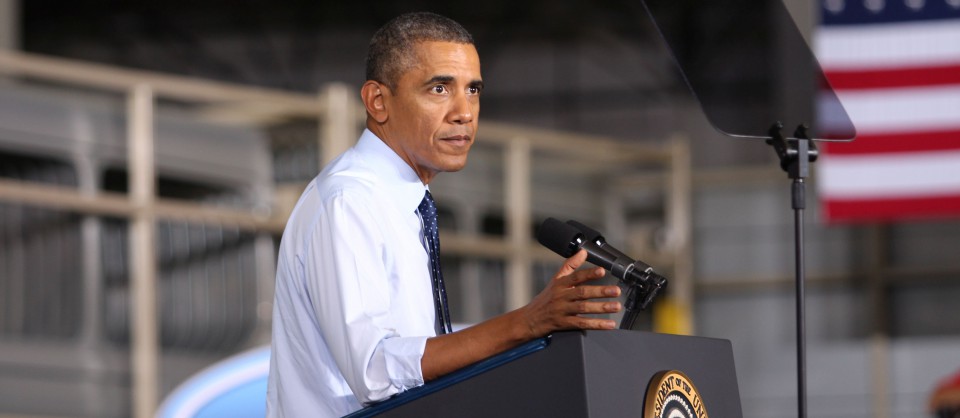
President Obama’s speech (transcript provided by the White House):

THE WHITE HOUSE

Office of the Press Secretary

____________________________________________________________

For Immediate Release                                          

April 13, 2011

REMARKS BY THE PRESIDENT

ON FISCAL POLICY

George Washington University

Washington, D.C.

1:48 P.M. EDT

THE PRESIDENT:  Thank you very much.  (Applause.)  Please have a seat.  Please have a seat, everyone.

It is wonderful to be back at GW.  I want you to know that one of the reasons that I worked so hard with Democrats and Republicans to keep the government open was so that I could show up here today.  I wanted to make sure that all of you had one more excuse to skip class.  (Laughter.)  You’re welcome.  (Laughter.)  

I want to give a special thanks to Steven Knapp, the president of GW.  I just saw him — where is he?  There he is right there.  (Applause.)

We’ve got a lot of distinguished guests here — a couple of people I want to acknowledge.  First of all, my outstanding Vice President, Joe Biden, is here.  (Applause.)  Our Secretary of the Treasury, Tim Geithner, is in the house.  (Applause.)  Jack Lew, the Director of the Office of Mangement and Budget.  (Applause.) Gene Sperling, Chair of the National Economic Council, is here.  (Applause.)  Members of our bipartisan Fiscal Commission are here, including the two outstanding chairs — Erskine Bowles and Alan Simpson — are here.  (Applause.)

And we have a number of members of Congress here today.  I’m grateful for all of you taking the time to attend.

What we’ve been debating here in Washington over the last few weeks will affect the lives of the students here and families all across America in potentially profound ways.  This debate over budgets and deficits is about more than just numbers on a page; it’s about more than just cutting and spending.  It’s about the kind of future that we want.  It’s about the kind of country that we believe in.  And that’s what I want to spend some time talking about today.

From our first days as a nation, we have put our faith in free markets and free enterprise as the engine of America’s wealth and prosperity.  More than citizens of any other country, we are rugged individualists, a self-reliant people with a healthy skepticism of too much government.

But there’s always been another thread running through our history — a belief that we’re all connected, and that there are some things we can only do together, as a nation.  We believe, in the words of our first Republican President, Abraham Lincoln, that through government, we should do together what we cannot do as well for ourselves.

And so we’ve built a strong military to keep us secure, and public schools and universities to educate our citizens.  We’ve laid down railroads and highways to facilitate travel and commerce.  
We’ve supported the work of scientists and researchers whose discoveries have saved lives, unleashed repeated technological revolutions, and led to countless new jobs and entire new industries.  Each of us has benefitted from these investments, and we’re a more prosperous country as a result.    

Part of this American belief that we’re all connected also expresses itself in a conviction that each one of us deserves some basic measure of security and dignity.  We recognize that no matter how responsibly we live our lives, hard times or bad luck, a crippling illness or a layoff may strike any one of us.  “There but for the grace of God go I,” we say to ourselves.  And so we contribute to programs like Medicare and Social Security, which guarantee us health care and a measure of basic income after a lifetime of hard work; unemployment insurance, which protects us against unexpected job loss; and Medicaid, which provides care for millions of seniors in nursing homes, poor children, those with disabilities.  We’re a better country because of these commitments.  I’ll go further.  We would not be a great country without those commitments.        

Now, for much of the last century, our nation found a way to afford these investments and priorities with the taxes paid by its citizens.  As a country that values fairness, wealthier individuals have traditionally borne a greater share of this burden than the middle class or those less fortunate.  Everybody pays, but the wealthier have borne a little more.  This is not because we begrudge those who’ve done well — we rightly celebrate their success.  Instead, it’s a basic reflection of our belief that those who’ve benefited most from our way of life can afford to give back a little bit more.  Moreover, this belief hasn’t hindered the success of those at the top of the income scale.  They continue to do better and better with each passing year.

Now, at certain times — particularly during war or recession — our nation has had to borrow money to pay for some of our priorities.  And as most families understand, a little credit card debt isn’t going to hurt if it’s temporary.

But as far back as the 1980s, America started amassing debt at more alarming levels, and our leaders began to realize that a larger challenge was on the horizon.  They knew that eventually, the Baby Boom generation would retire, which meant a much bigger portion of our citizens would be relying on programs like Medicare, Social Security, and possibly Medicaid.  Like parents with young children who know they have to start saving for the college years, America had to start borrowing less and saving more to prepare for the retirement of an entire generation.

To meet this challenge, our leaders came together three times during the 1990s to reduce our nation’s deficit — three times.  They forged historic agreements that required tough decisions made by the first President Bush, then made by President Clinton, by Democratic Congresses and by a Republican Congress.  All three agreements asked for shared responsibility and shared sacrifice.  But they largely protected the middle class; they largely protected our commitment to seniors; they protected our key investments in our future.

As a result of these bipartisan efforts, America’s finances were in great shape by the year 2000.  We went from deficit to surplus.  America was actually on track to becoming completely debt free, and we were prepared for the retirement of the Baby Boomers.

But after Democrats and Republicans committed to fiscal discipline during the 1990s, we lost our way in the decade that followed.  We increased spending dramatically for two wars and an expensive prescription drug program — but we didn’t pay for any of this new spending.  Instead, we made the problem worse with trillions of dollars in unpaid-for tax cuts — tax cuts that went to every millionaire and billionaire in the country; tax cuts that will force us to borrow an average of $500 billion every year over the next decade.

To give you an idea of how much damage this caused to our nation’s checkbook, consider this:  In the last decade, if we had simply found a way to pay for the tax cuts and the prescription drug benefit, our deficit would currently be at low historical levels in the coming years.

But that’s not what happened.  And so, by the time I took office, we once again found ourselves deeply in debt and unprepared for a Baby Boom retirement that is now starting to take place.  When I took office, our projected deficit, annually, was more than $1 trillion.  On top of that, we faced a terrible financial crisis and a recession that, like most recessions, led us to temporarily borrow even more.

In this case, we took a series of emergency steps that saved millions of jobs, kept credit flowing, and provided working families extra money in their pocket.  It was absolutely the right thing to do, but these steps were expensive, and added to our deficits in the short term.

So that’s how our fiscal challenge was created.  That’s how we got here.  And now that our economic recovery is gaining strength, Democrats and Republicans must come together and restore the fiscal responsibility that served us so well in the 1990s.  We have to live within our means.  We have to reduce our deficit, and we have to get back on a path that will allow us to pay down our debt.  And we have to do it in a way that protects the recovery, protects the investments we need to grow, create jobs, and helps us win the future.

Now, before I get into how we can achieve this goal, some of you, particularly the younger people here — you don’t qualify, Joe.  (Laughter.)  Some of you might be wondering, “Why is this so important?  Why does this matter to me?”

Well, here’s why.  Even after our economy recovers, our government will still be on track to spend more money than it takes in throughout this decade and beyond.  That means we’ll have to keep borrowing more from countries like China.  That means more of your tax dollars each year will go towards paying off the interest on all the loans that we keep taking out.  By the end of this decade, the interest that we owe on our debt could rise to nearly $1 trillion.  Think about that.  That’s the interest — just the interest payments.  

Then, as the Baby Boomers start to retire in greater numbers and health care costs continue to rise, the situation will get even worse.  By 2025, the amount of taxes we currently pay will only be enough to finance our health care programs — Medicare and Medicaid — Social Security, and the interest we owe on our debt.  That’s it.  Every other national priority — education, transportation, even our national security — will have to be paid for with borrowed money.

Now, ultimately, all this rising debt will cost us jobs and damage our economy.  It will prevent us from making the investments we need to win the future.  We won’t be able to afford good schools, new research, or the repair of roads — all the things that create new jobs and businesses here in America.  Businesses will be less likely to invest and open shop in a country that seems unwilling or unable to balance its books.  And if our creditors start worrying that we may be unable to pay back our debts, that could drive up interest rates for everybody who borrows money — making it harder for businesses to expand and hire, or families to take out a mortgage.

Here’s the good news:  That doesn’t have to be our future.  That doesn’t have to be the country that we leave our children.  We can solve this problem.  We came together as Democrats and Republicans to meet this challenge before; we can do it again.

But that starts by being honest about what’s causing our deficit.  You see, most Americans tend to dislike government spending in the abstra
ct, but like the stuff that it buys.  Most of us, regardless of party affiliation, believe that we should have a strong military and a strong defense.  Most Americans believe we should invest in education and medical research.  Most Americans think we should protect commitments like Social Security and Medicare.  And without even looking at a poll, my finely honed political instincts tell me that almost nobody believes they should be paying higher taxes.  (Laughter.)

So because all this spending is popular with both Republicans and Democrats alike, and because nobody wants to pay higher taxes, politicians are often eager to feed the impression that solving the problem is just a matter of eliminating waste and abuse.  You’ll hear that phrase a lot.  “We just need to eliminate waste and abuse.”  The implication is that tackling the deficit issue won’t require tough choices.  Or politicians suggest that we can somehow close our entire deficit by eliminating things like foreign aid, even though foreign aid makes up about 1 percent of our entire federal budget.

So here’s the truth.  Around two-thirds of our budget — two-thirds — is spent on Medicare, Medicaid, Social Security, and national security.  Two-thirds.  Programs like unemployment

insurance, student loans, veterans’ benefits, and tax credits for working families take up another 20 percent.  What’s left, after interest on the debt, is just 12 percent for everything else.  That’s 12 percent for all of our national priorities — education, clean energy, medical research, transportation, our national parks, food safety, keeping our air and water clean — you name it — all of that accounts for 12 percent of our budget.

Now, up till now, the debate here in Washington, the cuts proposed by a lot of folks in Washington, have focused exclusively on that 12 percent.  But cuts to that 12 percent alone won’t solve the problem.  So any serious plan to tackle our deficit will require us to put everything on the table, and take on excess spending wherever it exists in the budget.

A serious plan doesn’t require us to balance our budget overnight — in fact, economists think that with the economy just starting to grow again, we need a phased-in approach — but it does require tough decisions and support from our leaders in both parties now.  Above all, it will require us to choose a vision of the America we want to see five years, 10 years, 20 years down the road.

Now, to their credit, one vision has been presented and championed by Republicans in the House of Representatives and embraced by several of their party’s presidential candidates.  It’s a plan that aims to reduce our deficit by $4 trillion over the next 10 years, and one that addresses the challenge of Medicare and Medicaid in the years after that.

These are both worthy goals.  They’re worthy goals for us to achieve.  But the way this plan achieves those goals would lead to a fundamentally different America than the one we’ve known certainly in my lifetime.  In fact, I think it would be fundamentally different than what we’ve known throughout our history.

A 70 percent cut in clean energy.  A 25 percent cut in education.  A 30 percent cut in transportation.  Cuts in college Pell Grants that will grow to more than $1,000 per year.  That’s the proposal.  These aren’t the kind of cuts you make when you’re trying to get rid of some waste or find extra savings in the budget.  These aren’t the kinds of cuts that the Fiscal Commission proposed.  These are the kinds of cuts that tell us we can’t afford the America that I believe in and I think you believe in.

I believe it paints a vision of our future that is deeply pessimistic.  It’s a vision that says if our roads crumble and our bridges collapse, we can’t afford to fix them.  If there are bright young Americans who have the drive and the will but not the money to go to college, we can’t afford to send them.

Go to China and you’ll see businesses opening research labs and solar facilities.  South Korean children are outpacing our kids in math and science.  They’re scrambling to figure out how they put more money into education.  Brazil is investing billions in new infrastructure and can run half their cars not on high-priced gasoline, but on biofuels.  And yet, we are presented with a vision that says the American people, the United States of America — the greatest nation on Earth — can’t afford any of this.

It’s a vision that says America can’t afford to keep the promise we’ve made to care for our seniors.  It says that 10 years from now, if you’re a 65-year-old who’s eligible for Medicare, you should have to pay nearly $6,400 more than you would today.  It says instead of guaranteed health care, you will get a voucher.  And if that voucher isn’t worth enough to buy the insurance that’s available in the open marketplace, well, tough luck — you’re on your own.  Put simply, it ends Medicare as we know it.

It’s a vision that says up to 50 million Americans have to lose their health insurance in order for us to reduce the deficit.  Who are these 50 million Americans?  Many are somebody’s grandparents — may be one of yours — who wouldn’t be able to afford nursing home care without Medicaid.  Many are poor children.  Some are middle-class families who have children with autism or Down’s syndrome.  Some of these kids with disabilities are — the disabilities are so severe that they require 24-hour care.  These are the Americans we’d be telling to fend for themselves.      

And worst of all, this is a vision that says even though Americans can’t afford to invest in education at current levels, or clean energy, even though we can’t afford to maintain our commitment on Medicare and Medicaid, we can somehow afford more than $1 trillion in new tax breaks for the wealthy.  Think about that.

In the last decade, the average income of the bottom 90 percent of all working Americans actually declined.  Meanwhile, the top 1 percent saw their income rise by an average of more than a quarter of a million dollars each.  That’s who needs to pay less taxes?

They want to give people like me a $200,000 tax cut that’s paid for by asking 33 seniors each to pay $6,000 more in health costs.  That’s not right.  And it’s not going to happen as long as I’m President.  (Applause.)

This vision is less about reducing the deficit than it is about changing the basic social compact in America.  Ronald Reagan’s own budget director said, there’s nothing “serious” or “courageous” about this plan.  There’s nothing serious about a plan that claims to reduce the deficit by spending a trillion dollars on tax cuts for millionaires and billionaires.  And I don’t think there’s anything courageous about asking for sacrifice from those who can least afford it and don’t have any clout on Capitol Hill.  That’s not a vision of the America I know.

The America I know is generous and compassionate.  It’s a land of opportunity and optimism.  Yes, we take responsibility for ourselves, but we also take responsibility for each other; for the country we want and the future that we share.  We’re a nation that built a railroad across a continent and brought light to communities shrouded in darkness.  We sent a generation to college on the GI Bill and we saved millions of seniors from poverty with Social Security and Medicare.  We have led the world in scientific research and technological breakthroughs that have transformed millions of lives.  That’s who we are.  This is the America that I know.  We don’t have to choose between a future of spiraling debt and one where we forfeit our investment in our people and our country.

To meet our fiscal challenge, we will need to make reforms. We will all need to make sacrifices.  But we do not have to sacrifice the Americ
a we believe in.  And as long as I’m President, we won’t.

So today, I’m proposing a more balanced approach to achieve $4 trillion in deficit reduction over 12 years.  It’s an approach that borrows from the recommendations of the bipartisan Fiscal Commission that I appointed last year, and it builds on the roughly $1 trillion in deficit reduction I already proposed in my 2012 budget.  It’s an approach that puts every kind of spending on the table — but one that protects the middle class, our promise to seniors, and our investments in the future.

The first step in our approach is to keep annual domestic spending low by building on the savings that both parties agreed to last week.  That step alone will save us about $750 billion over 12 years.  We will make the tough cuts necessary to achieve these savings, including in programs that I care deeply about, but I will not sacrifice the core investments that we need to grow and create jobs.  We will invest in medical research.  We will invest in clean energy technology.  We will invest in new roads and airports and broadband access.  We will invest in education.  We will invest in job training.  We will do what we need to do to compete, and we will win the future.

The second step in our approach is to find additional savings in our defense budget.  Now, as Commander-in-Chief, I have no greater responsibility than protecting our national security, and I will never accept cuts that compromise our ability to defend our homeland or America’s interests around the world.  But as the Chairman of the Joint Chiefs, Admiral Mullen, has said, the greatest long-term threat to America’s national security is America’s debt.  So just as we must find more savings in domestic programs, we must do the same in defense.  And we can do that while still keeping ourselves safe.

Over the last two years, Secretary Bob Gates has courageously taken on wasteful spending, saving $400 billion in current and future spending.  I believe we can do that again.  We need to not only eliminate waste and improve efficiency and effectiveness, but we’re going to have to conduct a fundamental review of America’s missions, capabilities, and our role in a changing world.  I intend to work with Secretary Gates and the Joint Chiefs on this review, and I will make specific decisions about spending after it’s complete.      

The third step in our approach is to further reduce health care spending in our budget.  Now, here, the difference with the House Republican plan could not be clearer.  Their plan essentially lowers the government’s health care bills by asking seniors and poor families to pay them instead.  Our approach lowers the government’s health care bills by reducing the cost of health care itself.

Already, the reforms we passed in the health care law will reduce our deficit by $1 trillion.  My approach would build on these reforms.  We will reduce wasteful subsidies and erroneous payments.  We will cut spending on prescription drugs by using Medicare’s purchasing power to drive greater efficiency and speed generic brands of medicine onto the market.  We will work with governors of both parties to demand more efficiency and accountability from Medicaid.

We will change the way we pay for health care — not by the procedure or the number of days spent in a hospital, but with new incentives for doctors and hospitals to prevent injuries and improve results.  And we will slow the growth of Medicare costs by strengthening an independent commission of doctors, nurses, medical experts and consumers who will look at all the evidence and recommend the best ways to reduce unnecessary spending while protecting access to the services that seniors need.  

Now, we believe the reforms we’ve proposed to strengthen Medicare and Medicaid will enable us to keep these commitments to our citizens while saving us $500 billion by 2023, and an additional $1 trillion in the decade after that.  But if we’re wrong, and Medicare costs rise faster than we expect, then this approach will give the independent commission the authority to make additional savings by further improving Medicare.  

But let me be absolutely clear:  I will preserve these health care programs as a promise we make to each other in this society.  I will not allow Medicare to become a voucher program that leaves seniors at the mercy of the insurance industry, with a shrinking benefit to pay for rising costs.  I will not tell families with children who have disabilities that they have to fend for themselves.  We will reform these programs, but we will not abandon the fundamental commitment this country has kept for generations.

That includes, by the way, our commitment to Social Security.  While Social Security is not the cause of our deficit, it faces real long-term challenges in a country that’s growing older.  As I said in the State of the Union, both parties should work together now to strengthen Social Security for future generations.  But we have to do it without putting at risk current retirees, or the most vulnerable, or people with disabilities; without slashing benefits for future generations; and without subjecting Americans’ guaranteed retirement income to the whims of the stock market.  And it can be done.

The fourth step in our approach is to reduce spending in the tax code, so-called tax expenditures.  In December, I agreed to extend the tax cuts for the wealthiest Americans because it was the only way I could prevent a tax hike on middle-class Americans.  But we cannot afford $1 trillion worth of tax cuts for every millionaire and billionaire in our society.  We can’t afford it.  And I refuse to renew them again.

Beyond that, the tax code is also loaded up with spending on things like itemized deductions.  And while I agree with the goals of many of these deductions, from homeownership to charitable giving, we can’t ignore the fact that they provide millionaires an average tax break of $75,000 but do nothing for the typical middle-class family that doesn’t itemize.  So my budget calls for limiting itemized deductions for the wealthiest 2 percent of Americans — a reform that would reduce the deficit by $320 billion over 10 years.

But to reduce the deficit, I believe we should go further.  And that’s why I’m calling on Congress to reform our individual tax code so that it is fair and simple — so that the amount of taxes you pay isn’t determined by what kind of accountant you can afford.

I believe reform should protect the middle class, promote economic growth, and build on the fiscal commission’s model of reducing tax expenditures so that there’s enough savings to both lower rates and lower the deficit.  And as I called for in the State of the Union, we should reform our corporate tax code as well, to make our businesses and our economy more competitive.  

So this is my approach to reduce the deficit by $4 trillion over the next 12 years.  It’s an approach that achieves about $2 trillion in spending cuts across the budget.  It will lower our interest payments on the debt by $1 trillion.  It calls for tax reform to cut about $1 trillion in tax expenditures — spending in the tax code.  And it achieves these goals while protecting the middle class, protecting our commitment to seniors, and protecting our investments in the future.

Now, in the coming years, if the recovery speeds up and our economy grows faster than our current projections, we can make even greater progress than I’ve pledged here.  But just to hold Washington — and to hold me — accountable and make sure that the debt burden continues to decline, my plan includes a debt failsafe.  If, by 2014, our debt is not projected to fall as a share of the economy — if we haven’t hit our targets, if Congress has failed to act — then my plan will require us to come together and make up the ad
ditional savings with more spending cuts and more spending reductions in the tax code.  That should be an incentive for us to act boldly now, instead of kicking our problems further down the road.  

So this is our vision for America — this is my vision for America — a vision where we live within our means while still investing in our future; where everyone makes sacrifices but no one bears all the burden; where we provide a basic measure of security for our citizens and we provide rising opportunity for our children.  

There will be those who vigorously disagree with my approach.  I can guarantee that as well.  (Laughter.)  Some will argue we should not even consider ever — ever — raising taxes, even if only on the wealthiest Americans.  It’s just an article of faith to them.  I say that at a time when the tax burden on the wealthy is at its lowest level in half a century, the most fortunate among us can afford to pay a little more.  I don’t need another tax cut.  Warren Buffett doesn’t need another tax cut.  Not if we have to pay for it by making seniors pay more for Medicare.  Or by cutting kids from Head Start.  Or by taking away college scholarships that I wouldn’t be here without and that some of you would not be here without.

And here’s the thing:  I believe that most wealthy Americans would agree with me.  They want to give back to their country, a country that’s done so much for them.  It’s just Washington hasn’t asked them to.

Others will say that we shouldn’t even talk about cutting spending until the economy is fully recovered.  These are mostly folks in my party.  I’m sympathetic to this view — which is one of the reasons I supported the payroll tax cuts we passed in December.  It’s also why we have to use a scalpel and not a machete to reduce the deficit, so that we can keep making the investments that create jobs.  But doing nothing on the deficit is just not an option.  Our debt has grown so large that we could do real damage to the economy if we don’t begin a process now to get our fiscal house in order.  

Finally, there are those who believe we shouldn’t make any reforms to Medicare, Medicaid, or Social Security, out of fear that any talk of change to these programs will immediately usher in the sort of steps that the House Republicans have proposed.  And I understand those fears.  But I guarantee that if we don’t make any changes at all, we won’t be able to keep our commitment to a retiring generation that will live longer and will face higher health care costs than those who came before.

Indeed, to those in my own party, I say that if we truly believe in a progressive vision of our society, we have an obligation to prove that we can afford our commitments.  If we believe the government can make a difference in people’s lives, we have the obligation to prove that it works — by making government smarter, and leaner and more effective.

Of course, there are those who simply say there’s no way we can come together at all and agree on a solution to this challenge.  They’ll say the politics of this city are just too broken; the choices are just too hard; the parties are just too far apart.  And after a few years on this job, I have some sympathy for this view.  (Laughter.)

But I also know that we’ve come together before and met big challenges.  Ronald Reagan and Tip O’Neill came together to save Social Security for future generations.  The first President Bush and a Democratic Congress came together to reduce the deficit.  President Clinton and a Republican Congress battled each other ferociously, disagreed on just about everything, but they still found a way to balance the budget.  And in the last few months, both parties have come together to pass historic tax relief and spending cuts.

And I know there are Republicans and Democrats in Congress who want to see a balanced approach to deficit reduction.  And even those Republicans I disagree with most strongly I believe are sincere about wanting to do right by their country.  We may disagree on our visions, but I truly believe they want to do the right thing.

So I believe we can, and must, come together again.  This morning, I met with Democratic and Republican leaders in Congress to discuss the approach that I laid out today.  And in early May, the Vice President will begin regular meetings with leaders in both parties with the aim of reaching a final agreement on a plan to reduce the deficit and get it done by the end of June.

I don’t expect the details in any final agreement to look exactly like the approach I laid out today.  This a democracy; that’s not how things work.  I’m eager to hear other ideas from all ends of the political spectrum.  And though I’m sure the criticism of what I’ve said here today will be fierce in some quarters, and my critique of the House Republican approach has been strong, Americans deserve and will demand that we all make an effort to bridge our differences and find common ground.

This larger debate that we’re having — this larger debate about the size and the role of government — it has been with us since our founding days.  And during moments of great challenge and change, like the one that we’re living through now, the debate gets sharper and it gets more vigorous.  That’s not a bad thing.  In fact, it’s a good thing.  As a country that prizes both our individual freedom and our obligations to one another, this is one of the most important debates that we can have.

But no matter what we argue, no matter where we stand, we’ve always held certain beliefs as Americans.  We believe that in order to preserve our own freedoms and pursue our own happiness, we can’t just think about ourselves.  We have to think about the country that made these liberties possible.  We have to think about our fellow citizens with whom we share a community.  And we have to think about what’s required to preserve the American Dream for future generations.

This sense of responsibility — to each other and to our country — this isn’t a partisan feeling.  It isn’t a Democratic or a Republican idea.  It’s patriotism.

The other day I received a letter from a man in Florida.  He started off by telling me he didn’t vote for me and he hasn’t always agreed with me.  But even though he’s worried about our economy and the state of our politics — here’s what he said — he said, “I still believe.  I believe in that great country that my grandfather told me about.  I believe that somewhere lost in this quagmire of petty bickering on every news station, the ‘American Dream’ is still alive…We need to use our dollars here rebuilding, refurbishing and restoring all that our ancestors struggled to create and maintain… We as a people must do this together, no matter the color of the state one comes from or the side of the aisle one might sit on.”

“I still believe.”  I still believe as well.  And I know that if we can come together and uphold our responsibilities to one another and to this larger enterprise that is America, we will keep the dream of our founding alive — in our time; and we will pass it on to our children.  We will pass on to our children a country that we believe in.

Thank you.  God bless you, and may God bless the United States of America.  (Applause.)

                                        END                         2:31 P.M.

A transcript(s) of the questions and answers during the conference call will follow on subsequent post(s).

Iowa Road Trip! – photos and press availability

13 Monday Sep 2010

Posted by Michael Bersin in Uncategorized

≈ Leave a comment

Tags

2010, Chet Culver, David Axelrod, David Plouffe, Harkin Steak Fry, Iowa, Tom Harkin

On the stage (from left to right) sign language interpreter, David Plouffe, David Axelrod, Senator Tom Harkin (D), Ruth Harkin, Governor Chet Culver (D), Lieutenant Governor Patty Judge, Roxanne Conlin.

A television reporter doing a stand up before the start of the event. Note that they provided their own shade. Also note attire (jeans and tennis shoes) out of the camera’s view.

There were a large number of Democratic and progressive t-shirts worn by people attending – this one takes issue with Arizona’s SB 1070.

The volunteers helping to feed the crowd have the logistics of doing so down to a science. They are efficient and the food service is fast.

The dining tents are a must for any weather, rain or shine.

The media gathered and waited for the photo-op/press availability. And waited, and waited…

(from left to right) Governor Chet Culver (D), Senator Tom Harkin (D), David Axelrod, David Plouffe.

The guests at the grill. At one point several photographers stuck their cameras (and expensive telephoto lenses) in the other side of grill attempting to get shots through the grill. I kid you not. At one point during the press availability I was standing next to the grill – you could really feel the heat. My audio recorder picked of the Q and A, wind noise, and sizzling steaks…

(left to right, foreground) David Plouffe, David Axelrod, Senator Tom Harkin (D), Governor Chet Culver (D).

…David Axelrod: …Senator Harkin’s absolutely right, I remember. I don’t know who’s here from the Register, but the headline in the Des Moines Register about the third week of September, you can look it up in your archives, was Political Experts [inaudible] Vilsack Faces Impossible Odds. And we ended up winning that race by five points. He became the first Democratic governor in thirty-two years. and it just really speaks to what happens when people get engaged and start focusing on the choice. you know, Vice President Biden is fond of quoting [inaudible] White of Boston, the old Mayor of Boston, saying, don’t, don’t compare me to the almighty, compare me to the alternative. And for the next fifty days we’re gonna make sure that people are very focused on the choice, the choice here in Iowa, the choice around the country because there’s a very stark choice between a Democratic Party that’s trying to lift this country out of the disaster that was created by the last [inaudible] and the folks who want to take us right back to that disaster. And when people focus on that choice you’re gonna see a much different result and you’re gonna see more headline writers and more pundits have to scratch their head on the day after the election and say, why did I write that story…

David Plouffe: …This is gonna be a choice between two people, districts and states. I think that we can win that argument effectively because the Republican experiment is very recent in people’s minds. The Republican policies were the chief reason we face this recession. They wouldn’t have done the things we did to avert a great depression. And they are gonna be a party of and by the big special interests. We’re gonna win this by also increasing Democratic turnout. Right now Republicans are coming out [inaudible] in big numbers. I don’t think we should expect that to diminish. Some of them may be wearing tinfoil hats, but they’re coming out. And we need to get Democrats excited and enthused and that’s what we’re doing…Democratic enthusiasm is ticking up. People’s expression of likelihood of voting is picking up. We have the numbers here in Iowa and in so many states…

Question: Is the rest of the first term on hold if you get hammered in November?

David Axelrod: Well, first of all, we’re not gonna get hammered in, in November. I, I feel like the results are gonna be different than, than, you know, the prognostications now. You know, and I caution everybody not to call the race in the beginning of September.

But, you know, we are going to continue to move this country forward and fight the fights [inaudible] fought. We will work with anybody who wants to work with us, on either side of the aisle, to get that done.

Uh, you know, in the last twenty months the Republican Party has made a decision to sit on the sidelines and give us the entire responsibility and root for failure because they thought that was a prescription for a successful election. I think they’ll be disabused of that and perhaps everybody will come back to Washington after November with more of a sense of responsibility for the future of this country. We look forward to that….

Question: ….Could you help me with that disconnect with what you know on the ground versus what we’re reading in the paper?

David Plouffe: Well, listen, I’d say right now I think a lot of polls out there do show the Republicans at kind of their high water mark….a lot of the undecided independents are definitely getable for us. And you’ve got Republican enthusiasm at very high levels. And I think as a party we better not make that mistake to think that might abate. They’re coming out and they’re coming out in strong numbers. In state after state and district after district if we can just get Democratic vote totals up a little bit we’re gonna win some close races. And the good news is, you know, we’re not creating something out of whole cloth…. The most important thing in my view is, you know, a neighbor talking to a neighbor about the election. And that’s what we’re beginning to see in Iowa and elsewhere, is Democratic volunteerism picking up and Democrats saying they’re more likely to vote….

….So we’ve got to go out there and convince those Democrats of the stakes in this election, that there’s a [inaudible] choice, and if they don’t come out to vote they’re handing the keys back over to the folks that got us in this mess in the first place….

….Senator Tom Harkin (D): …I’ve thought a lot about this. Throughout history, throughout history those who have been opposed to progress have been imbued with a passionate intensity. Let me repeat that. Throughout history those who have been opposed to progress have had passionate intensity. What do I mean by that? A couple of weeks ago on of the Little Rock nine passed away. I was watching this and, and clips of these kids going into the school and the mobs around them, spitting at them, and how vicious they were. They had intensity. They were passionate. I think about George Wallace when he ran for president. They had passionate intensity. I even think about Goldwater. When he ran in sixty four, they were passionate. Extremism in the defense of liberty is no vice? They had passion. You know, groups can have passion. There were passionate people against the New Deal. The Father Coughlins and the Huey Longs and others. Throughout history this has been true. But these are the passions of the moment. What the Republicans are doing is they’re playing to those passions. Yes, there are some disconnects in our society. Yes, some people are out of work. We have been laying the groundwork under President Obama to move us into the future. The Republicans are taking advantage of this passion people have momentarily. I will tell you, I’ve been in this business a long time. I will trade passionate intensity for determination and commitment and a willingness to go out and…do that nitty gritty work. And that’s what we’re doing in Iowa. They can have the passion because their passion is opposed to progress. And in the final result people will get that…      

Francis Thicke, the Democratic candidate for Iowa Secretary of Agriculture.

Roxanne Conlin, the Democratic candidate challenging Chuck Grassley (r-what health care reform bill?), addresses the crowd.

Iowa Road Trip! – on the way back

13 Monday Sep 2010

Posted by Michael Bersin in Uncategorized

≈ 2 Comments

Tags

Chet Culver, David Axelrod, David Plouffe, Harkin Steak Fry, Iowa, Tom Harkin

Previously:

Iowa Road Trip! – the 2010 Harkin Steak Fry

Iowa Road Trip! – Interstate highway rest stops

Foreground, left to right: David Plouffe, David Axelrod, Senator Tom Harkin (D), and Governor Chet Culver (D) at the press availability at the the Harkin Steak Fry in Indianola, Iowa.

A sunny almost cloudless sky, temperature in the eighties, fifteen hundred Democrats, statewide candidates, Congressional candidates, good food, and plenty of good speechifying. That’s the Harkin Steak Fry we’ve come to know over the past few years.

We had good conversations with folks new to us and, believe it or not, we saw friends from last year’s event and caught up on each other’s activities over the past year.

We spoke at length with Francis Thicke, the Democratic candidate for Iowa Secretary of Agriculture. He had a thing or two to say about CAFOs (he’s written a book about agriculture in Iowa, he’s a farmer, and he has a PhD). We’re hoping the wind and crowd noise didn’t overwhelm the audio recording. That interview’s for you, hotflash.

This post courtesy of the public WiFi at an Iowa Department of Transportation highway rest stop.

More to follow as we sort through the hundreds of photographs and several hours of audio from the road trip.

Iowa Road Trip! – the 2010 Harkin Steak Fry

11 Saturday Sep 2010

Posted by Michael Bersin in Uncategorized

≈ Leave a comment

Tags

David Axelrod, David Plouffe, Harkin Steak Fry, Iowa

It’s that time of year again. Blue Girl and I scored some media credentials so tomorrow we’ll be making the four hour drive from west central Missouri to the Warren County Fairgrounds in Indianola, Iowa for the 33rd Annual Harkin Steak Fry.

From 2009 – the entrance to the Harkin Steak Fry at the Warren County Fairgrounds in Indianola, Iowa.

The featured speakers this year are David Axelrod and David Plouffe.

In previous years:

(2009)

Senator Al Franken (D) at the 2009 Harkin Steak Fry – part 1

Senator Al Franken (D) at the 2009 Harkin Steak Fry – part 2

Senators Harkin (D) and Franken (D) in Indianola, Iowa – there will be a strong public option

The 2009 Harkin Steak Fry in Indianola, Iowa – photos

Before anyone gets a shovel and digs a grave for the Public Option, read this

We didn’t attend in 2008. We were covering other stuff in Missouri.

(2007) Our first ever media credential.

Road Trip! – The Harkin Steak Fry in Indianola, Iowa – What? No mud?

Road Trip! – The Harkin Steak Fry in Indianola, Iowa – The speechifying

The weather is supposed to be fantastic. That’s a good thing because the event is held outdoors.

Obama campaign: a place for Missouri in their plan

27 Friday Jun 2008

Posted by Michael Bersin in Uncategorized

≈ 2 Comments

Tags

David Plouffe, missouri, Obama

Yesterday afternoon I participated in an Obama campaign conference call briefing for media. Campaign manager David Plouffe spoke at length about “where the campaign stands” and their “path to victory in November”. Understandably Missouri fits prominently into their electoral equation and strategy. Plouffe stated that the campaign will not be relying on just one electoral scenario. They believe that they are competitive in all of the comprehensive list of states he mentioned.

At the end of his remarks he took a number of questions. Jo Mannies of the St. Louis Post-Dispatch got in the last one:


Voice: We’ve got time for one more question.

Operator: Thank you. And now for our last question. Caller, your line is open. Please go ahead.

Reporter: Yes, Joe Mannies, St. Louis Post-Dispatch. Is there anything particular about Missouri that makes you feel optimistic about Missouri? As you know Bush carried Missouri in ’04 by, by about two hundred thousand votes. Gore lost it by about eighty thousand. Is there something particular about Missouri that is giving Obama confidence?

David Plouffe: Well Jo, we think first of all that if you look at voters in Missouri, very unhappy about the direction of the economy. Very unhappy about the direction in the way Washington works. And so we think sort of foundationaly people in Missouri are looking for change. And, if you, in the rural areas and the smaller town areas, real economic hardship. And so we think we have an opportunity to perform well with these voters. Secondly, we do think that in terms of turnout, we think we can really, in Missouri create an optimal turnout scenario. We were able to do that in the primary where we won narrowly, but it’s important in a state like Missouri that is so competitive to make sure that every single voter that is supportive of Senator Obama is registered and turns out. And so we’re obviously going to have to do a very good job of maximizing the Democratic base in Missouri. And we think we’re gonna do that. We have a terrific organization there. It’s one of our strongest organizations, on February 5th. Senator McCaskill is obviously helped to guide our strategy there and, and understands the state as well as anyone. So, you know, we think that it’s gonna be close. We think it’ll be a lot closer than it was in two thousand four. And we think it’s highly competitive. And so, you know, we’re sending some of our best field operatives to Missouri to try and build a terrific grassroots organization. And we spend quite a bit of time there, Senator Obama has in the last couple of months, and will continue to do so because we thinks it’s an area of opportunity. You know, we, we have real strength throughout the Midwest. I mentioned the upper Midwest, Iowa, Minnesota, and Wisconsin. Again. it’s early, but we start out with strength there. Indiana and Missouri. Both, we think, are prime opportunities and, and big states, eleven electoral votes in each. So we’re gonna mount, as campaign as we can in the State of Missouri…


Recent Posts

  • Just one more sign that we’re all living in an empire in rapid decline
  • How it started…
  • Somebody should probably tell him
  • Thank you, Joe Biden (D)!
  • Early this morning

Recent Comments

Uh, in case you were… on Some right wingnuts with money…
Winning at losing… on Passing the gas – Donald…
TACO Tuesday | Show… on TACO or Mushrooms?
TACO Tuesday | Show… on So much winning
So much winning | Sh… on Passing the gas – Donald…

Archives

  • May 2026
  • April 2026
  • March 2026
  • February 2026
  • January 2026
  • December 2025
  • November 2025
  • October 2025
  • September 2025
  • August 2025
  • July 2025
  • June 2025
  • May 2025
  • April 2025
  • March 2025
  • February 2025
  • January 2025
  • December 2024
  • November 2024
  • October 2024
  • September 2024
  • August 2024
  • July 2024
  • June 2024
  • May 2024
  • April 2024
  • March 2024
  • February 2024
  • January 2024
  • December 2023
  • November 2023
  • October 2023
  • September 2023
  • August 2023
  • July 2023
  • June 2023
  • May 2023
  • April 2023
  • March 2023
  • February 2023
  • January 2023
  • December 2022
  • November 2022
  • October 2022
  • September 2022
  • August 2022
  • July 2022
  • June 2022
  • May 2022
  • April 2022
  • March 2022
  • February 2022
  • January 2022
  • December 2021
  • November 2021
  • October 2021
  • September 2021
  • August 2021
  • July 2021
  • June 2021
  • May 2021
  • April 2021
  • March 2021
  • February 2021
  • January 2021
  • December 2020
  • November 2020
  • October 2020
  • September 2020
  • August 2020
  • July 2020
  • June 2020
  • May 2020
  • April 2020
  • March 2020
  • February 2020
  • January 2020
  • December 2019
  • November 2019
  • October 2019
  • September 2019
  • August 2019
  • July 2019
  • June 2019
  • May 2019
  • April 2019
  • March 2019
  • February 2019
  • January 2019
  • December 2018
  • November 2018
  • October 2018
  • September 2018
  • August 2018
  • July 2018
  • June 2018
  • May 2018
  • April 2018
  • March 2018
  • February 2018
  • January 2018
  • December 2017
  • November 2017
  • October 2017
  • September 2017
  • August 2017
  • July 2017
  • June 2017
  • May 2017
  • April 2017
  • March 2017
  • February 2017
  • January 2017
  • December 2016
  • November 2016
  • October 2016
  • September 2016
  • August 2016
  • July 2016
  • June 2016
  • May 2016
  • April 2016
  • March 2016
  • February 2016
  • January 2016
  • December 2015
  • November 2015
  • October 2015
  • September 2015
  • August 2015
  • July 2015
  • June 2015
  • May 2015
  • April 2015
  • March 2015
  • February 2015
  • January 2015
  • December 2014
  • November 2014
  • October 2014
  • September 2014
  • August 2014
  • July 2014
  • June 2014
  • May 2014
  • April 2014
  • March 2014
  • February 2014
  • January 2014
  • December 2013
  • November 2013
  • October 2013
  • September 2013
  • August 2013
  • July 2013
  • June 2013
  • May 2013
  • April 2013
  • March 2013
  • February 2013
  • January 2013
  • December 2012
  • November 2012
  • October 2012
  • September 2012
  • August 2012
  • July 2012
  • June 2012
  • May 2012
  • April 2012
  • March 2012
  • February 2012
  • January 2012
  • December 2011
  • November 2011
  • October 2011
  • September 2011
  • August 2011
  • July 2011
  • June 2011
  • May 2011
  • April 2011
  • March 2011
  • February 2011
  • January 2011
  • December 2010
  • November 2010
  • October 2010
  • September 2010
  • August 2010
  • July 2010
  • June 2010
  • May 2010
  • April 2010
  • March 2010
  • February 2010
  • January 2010
  • December 2009
  • November 2009
  • October 2009
  • September 2009
  • August 2009
  • July 2009
  • June 2009
  • May 2009
  • April 2009
  • March 2009
  • February 2009
  • January 2009
  • December 2008
  • November 2008
  • October 2008
  • September 2008
  • August 2008
  • July 2008
  • June 2008
  • May 2008
  • April 2008
  • March 2008
  • February 2008
  • January 2008
  • December 2007
  • November 2007
  • October 2007
  • September 2007
  • August 2007

Categories

  • campaign finance
  • Claire McCaskill
  • Congress
  • Democratic Party News
  • Eric Schmitt
  • Healthcare
  • Hillary Clinton
  • Interview
  • Jason Smith
  • Josh Hawley
  • Mark Alford
  • media criticism
  • meta
  • Missouri General Assembly
  • Missouri Governor
  • Missouri House
  • Missouri Senate
  • Resist
  • Roy Blunt
  • social media
  • Standing Rock
  • Town Hall
  • Uncategorized
  • US Senate

Meta

  • Log in
  • Entries feed
  • Comments feed
  • WordPress.org

Blogroll

  • Balloon Juice
  • Crooks and Liars
  • Digby
  • I Spy With My Little Eye
  • Lawyers, Guns, and Money
  • No More Mister Nice Blog
  • The Great Orange Satan
  • Washington Monthly
  • Yael Abouhalkah

Donate to Show Me Progress via PayPal

Your modest support helps keep the lights on. Click on the button:

Blog Stats

  • 1,047,008 hits

Powered by WordPress.com.

Loading Comments...