• About
  • The Poetry of Protest

Show Me Progress

~ covering government and politics in Missouri – since 2007

Show Me Progress

Monthly Archives: July 2013

Campaign Finance: $10,000.00 here, $10,000.00 there, pretty soon you’re talking serious money

27 Saturday Jul 2013

Posted by Michael Bersin in Uncategorized

≈ Leave a comment

Tags

campaign finance, missouri, Missouri Ethics Commission

The past few days, at the Missouri Ethics Commission:

C071094 07/23/2013 MISSOURI SENATE CAMPAIGN COMMITTEE James McDonnell III 40 Glen Eagle Dr. Saint Louis MO 63124 Retired 7/22/2013 $10,000.00

C031159 07/23/2013 MISSOURIANS FOR KOSTER The Accurso Law Firm 4646 Roanoke Parkway Kansas City MO 64112 7/22/2013 $10,000.00

C000619 07/24/2013 MO STATE TEACHERS ASSOC LEGISLATIVE IMPACT CO Southwest Region PO Box 227 Rogersville MO 65745 7/24/2013 $10,000.00

C071094 07/26/2013 MISSOURI SENATE CAMPAIGN COMMITTEE The Doe Run Company Suite 300 1801 Park 270 Drive St Louis MO 63146 7/25/2013 $10,000.00

C031159 07/26/2013 MISSOURIANS FOR KOSTER Blue Cross & Blue Shield of Kansas City PAC For Missouri 2301 Main Street Kansas City MO 64108 7/25/2013 $10,000.00

C081066 07/26/2013 CLINT ZWEIFEL FOR MISSOURI Davis, Ketchmark, McCreight & Ivers 11161 Overbrook Road Suite 210 Leawood KS 66211 7/26/2013 $10,000.00

[emphasis added]

What is it with $10,000.00 contributions?

Rep. Vicky Hartzler (r): It’s okay of we spy on our own people through microchip infested toasters.

27 Saturday Jul 2013

Posted by Michael Bersin in Uncategorized

≈ Leave a comment

Tags

missouri, NSA, Vicky Hartzler

Previously:

Rep. Vicky Hartzler (r): the black helicopters will be dropping microchip infested toasters on us (April 8, 2012)

Representative Vicky Hartzler (r) [file photo].

On July 24th Representative Vicky Hartzler (r) voted to defeat an amendment which would have dialed back on NSA surveillance of American citizens’ phone records.

Lawmakers Who Upheld NSA Phone Spying Received Double the Defense Industry Cash

By David Kravets

07.26.13

4:14 PM

The numbers tell the story – in votes and dollars. On Wednesday, the house voted 217 to 205 not to rein in the NSA’s phone-spying dragnet. It turns out that those 217 “no” voters received twice as much campaign financing from the defense and intelligence industry as the 205 “yes” voters….

….The House voted 205-217 Wednesday and defeated an amendment to the roughly $600 billion Department of Defense Appropriations Act of 2014 that would have ended authority for the once-secret spy program the White House insisted was necessary to protect national security….

The House vote (a “no” vote is to continue the NSA program):

FINAL VOTE RESULTS FOR ROLL CALL 412

     H R 2397      RECORDED VOTE      24-Jul-2013      6:51 PM

     AUTHOR(S):  Amash of Michigan Amendment No. 100

     QUESTION:  On Agreeing to the Amendment

—- AYES    205 —

Clay

Cleaver

Smith (MO)

—- NOES    217 —

Graves (MO)

Hartzler

Long

Luetkemeyer

Wagner

—- NOT VOTING    12 —

[emphasis added]

It all depends on who is doing the spying, eh?

The GOP spin machine refocuses on the economy in the wake of President Obama

26 Friday Jul 2013

Posted by Michael Bersin in Uncategorized

≈ Leave a comment

Tags

Barack Obama, Economic Growth, economic policy, Medicaid cuts, Medicare cuts, missouri, Roy Blunt, Social Security cuts, Tim Jones, Warrensburg speech

Yesterday in Warrensburg President Obama tried to raise once again the issue of economic growth and its corollaries such as infrastructure investment, education and energy. The response from Missouri’s GOP politicians can only have been inspired by the fact that they’re secretly trying out their stand-up comedy routines before getting together and hitting open-mike night at some comedy club:

Back in Washington, Sen. Roy Blunt, R-Mo., said on the Senate floor that he was glad the president is visiting Missouri. “But these speeches sound an awful lot like the 2012 campaign speeches. I think we need to move beyond that. We need to not just pivot to the economy, but we need to stick with the economy.”

And:

“Our nation would be in a better place if, instead of spending all his time giving speeches filled with unrealized rhetoric about a better America, President Obama would actually work with Republicans to address the enormous problems facing our nation,” Missouri House Speaker Tim Jones, R-Eureka, said in a statement.

Somebody needs to remind Senator Blunt about the priorities of his GOP congressional colleagues. Although perhaps he’s aware of some big economic impact that adheres to outlawing all abortions at 20 weeks; votes to ban gender-based abortion (which is not a problem in the U.S.); 38 (I believe that’s the current count) purely symbolic votes in the House to defund Obamacare, numerous set-to’s over shutting the down the government over such a routine matter as raising the debt limit to cover the nations already incurred obligations (all spending approved by congress, by the way); this summer’s unending hearings over poorly manufactured and managed non-scandals, etc. and etc. (And, by the way, don’t forget, all this useless activity costs us money.)

As for Speaker Jones, he actually has the right of it. Of course, God himself couldn’t “work with” Republicans. After all, as we have learned over the course of the past few years, working with Republicans to achieve almost any goal means meekly bowing your head and meeting their every demand, and, God forbid, never, ever criticizing them for acting like thugs – all while ignoring the druthers of the folks who elected President Obama with a rather resounding majority to do just those things that throw the excitable GOPers into a frenzy of tantrums.

Both Senator Blunt and Rep. Jones seem to want us to think that the President is all talk and no action. However, I do seem to remember numerous initiatives that the president has put forward while the GOP has done nothing at all but obstruct and fulminate. Specifically in response to columnist Josh Kraushaar, Economist Jared Bernstein managed to point out the weakness of these types of GOP talking points when used to counter the President’s new offensive on the economy:

There’s no hint in Kraushaar’s column about the Jobs Act that Obama proposed in September 2011. Nothing about the economic plan he pushed in fall 2010, either. Nothing about Dodd-Frank. Nothing even about the proposals Obama made in his State of the Union this year, most of which he’s still repeating (and House Republicans are still ignoring). For that matter, nothing about Obama’s deficit-cutting over the last couple of years. […]

Not to mention that there’s a very screwy giving-speeches-and-passing-things focus here. What Obama did for the economy in 2009-2010 was mainly implementing the stimulus passed in early 2009. That’s really not ignoring the economy.

I don’t think any sane person could deny that we’re recovering from the Bush recession  – and from where I stand the President deserves the credit. And also from where I stand, the folks who deserve the blame for the fact that this same recovery is less vigorous than it could be are the folks who insisted on a series of stupid budget cuts that culminated in the sequester – which all by itself is costing us plenty in terms of growth:

Forecasting firm MacroEconomic Advisers has lowered its second-quarter forecast for GDP growth from 1.8% to 1.3%. That’s very weak growth that will probably hold back hiring and spending, and depress confidence. “The sequester is expected to slow growth this year, and largely accounts for the weak second-quarter growth and lackluster third-quarter growth,” the firm said in a recent report.

Of course I read yesterday that Senator Blunt thinks he has the solution to all our economic problems. While – to his credit – speaking out against a mind-numbingly stupid GOP threat to hold the debt limit hostage to an effort to defund Obamacare, he added:

… Where we ought to be now is – we need more spending cuts. They need to be probably on the mandatory side rather than the discretionary side. I think that’s the formula that obviously allows us to move forward most easily here.

You know what that means. If the President decides, apropos Speaker Jones wishes, to “work with” Republicans, it will mean cuts to Medicare, Medicaid and Social Security. Just what the GOP has wanted all along.

President Obama in Warrensburg: remarks

26 Friday Jul 2013

Posted by Michael Bersin in Uncategorized

≈ 1 Comment

Tags

missouri, Obama, Warrensburg

Previously:

President Obama will be visiting Warrensburg, Missouri next week (July 19, 2013)

President Obama in Warrensburg: lining up for tickets (July 22, 2013)

President Obama in Warrensburg: media preset (July 24, 2013)

President Obama in Warrensburg: photos (July 24, 2013)

Rep. Vicky Hartzler (r): “He’s not in my party and I’ll spout if I want to.” (July 24, 2013)

Would you like fries with that? (July 24, 2013)

The White House transcript of President Obama’s speech in Warrensburg yesterday:

The White House

Office of the Press Secretary

For Immediate Release

July 25, 2013

Remarks by the President on the Economy — Warrensburg, Missouri

University of Central Missouri

Warrensburg, Missouri

5:09 P.M. CDT

THE PRESIDENT:  Hello, Warrensburg!  (Applause.)  Hello, Mules!  (Applause.)  Hello, Jennies!  (Applause.)  Well, I know it’s hot.  (Laughter.)  That’s why I took off my jacket.  If you’ve still got yours on feel free to take it off.  It is great to be back in Missouri.  It’s great to be back in the Midwest.  It’s great to be here at UCM.  (Applause.)

I want to thank your outstanding president, Dr. Chuck Ambrose, for having me here today.  (Applause.)  Give Brian a big round of applause for the introduction.  (Applause.)  You’ve got your outstanding governor, Jay Nixon, in the house.  (Applause.)  Your mayor, Charlie Rutt, is here.  (Applause.)  And I brought a special guest with me who is celebrating her birthday today — your senator, Claire McCaskill.  (Applause.)  I figured the least I could do is give her a ride on Air Force One for her birthday.  (Laughter.)

So we’ve got Mules in the house.  We’ve got Jennies in the house.  We’ve got governors, we’ve got senators, and now we’ve probably got some very confused people watching at home, because who is Jennie?  (Laughter.)

I want to thank all the students who came out on a summer afternoon.  I know that summer is — especially a day as pretty as today, it’s tempting to be outside.  I know classes don’t start for a few more weeks.  You could be over on Pine Street beating the heat.  (Applause.)  Now that I think about it, it may be good that you’re here instead of getting into trouble.  (Laughter.)

I’ve just come from Knox College in Galesburg, Illinois, where I gave a pretty long speech on the economy.  I will not repeat the whole thing here.  (Applause.)  But what I did want to talk about today is what I’ve talked about when I gave my first big speech as a senator eight years ago, and that’s where we as a country need to go to give every American a chance to get ahead in the 21st century.  And UCM understands how important that is.  (Applause.)

Just a little context here — in the period after World War II, you had a growing middle class that was the engine of our prosperity.  The economy did well in part because everybody was participating.  And whether you owned a company, or you swept the floors of that company, or you worked anywhere in between, America offered a basic bargain:  If you work hard, then you will be rewarded with fair wages and benefits.  You’ll have the chance to buy your own home.  You’ll have the chance to save for retirement.  You’ll have the protection of decent health insurance.  But most of all, you’ll have the chance to pass on a better life to your kids.

And then what happened was that engine began to stall.  The bargain began to fray.  So technology made some jobs obsolete — nobody goes to a bank teller anymore.  You want to schedule a trip somewhere, you get online.  Global competition sent some jobs overseas.  When I was in Galesburg, we talked about the Maytag plant that used to make household brands there and people — thousands of people used to work in the plant and it went down to Mexico.  Then Washington doled out bigger tax cuts to folks at the top income brackets, smaller minimum wage increases for people who were struggling.  You combine all this and the income of the top 1 percent quadrupled from 1979 to 2007, but the typical family’s incomes barely budged.

So a lot of middle-class families began to feel that the odds were stacked against them — and they were right.  And then for a while, this was kind of papered over because we had a housing bubble going on, and everybody was maxing out on their credit cards, everybody was highly leveraged, there were a lot of financial deals going around.  And so it looked like the economy was going to be doing okay, but then by the time I took office, the bottom had fallen out.  And it cost, as we know, millions of Americans their jobs or their homes or their savings.  And that long-term erosion of middle-class security was evident for everybody to see.

Now, the good news is, five years later, five years after the crisis first hit, America has fought its way back.  So together, we saved an auto industry.  We took on a broken health care system.  We invested in new American technologies to reverse our addiction to foreign oil.  We doubled the production of clean energy.  Natural gas took off.  We put in place tough new rules on big banks and mortgage lenders and credit card companies.  We changed the tax code so it was fair for middle-class folks and didn’t just benefit folks at the very top like me.  (Laughter.)  No, it’s true, because things were skewed too much towards folks who were already blessed, already lucky.  And you take all that together and now you add it all up.

What we’ve seen is over the past 40 months, our businesses have created more than 7.2 million new jobs.  This year, we’re off to our strongest private sector job growth since 1999.  (Applause.)  Our exports have surged, so we sell more products made in America to the rest of the world than ever before.  (Applause.)  We produce more natural gas than any country on Earth.  We’re about to produce more of our own oil than we buy from overseas, and that’s the first time that’s happened in nearly 20 years.  (Applause.)  The cost of health care is growing at its slowest rate in 50 years, so we’re slowing the growth of health care costs.  (Applause.)  And our deficits are falling at the fastest rate in 60 years.  (Applause.)  Deficits have been cut by almost half from the time I took office.

So we did this together, because Americans are gritty and resilient and work hard.  We’ve been able to clear away the rubble of the financial crisis.  We’re starting to lay a new foundation for more durable economic growth.  And with the new revolutions in energy and technology and manufacturing and health care, we’re actually poised — we’re in a position to reverse all those forces that battered middle-class families for too long.  We can start building now an economy where everybody who works hard can get ahead.  That’s all good.  That’s the good news.

But, Missouri, I’m here to tell you what you already know, which is we’re not there yet.  In some ways, the trends that have been building for decades — this winner-take-all economy where a few do better and better, but everybody else just treads water — all those trends were made worse by the recession.  And reversing these trends has to be Washington’s number one priority.  (Applause.)  It has to be Washington’s number one priority.  (Applause.)

Putting people back to work, making sure the economy is working for everybody, building the middle class, making sure they’re secure — that’s my highest priority.  That’s what I’m interested in.  (Applause.)  Because when the economy is working for middle-class families, it solves an awful lot of other problems.  Now the poor start having ladders of opportunity they can climb into if they work hard.  A lot of the social tensions are reduced, because everybody is feeling pretty good.  

Now, unfortunately, over the past couple of years in particular, Washington hasn’t just ignored this problem — they’ve actually made it worse.  And I am interested in working with everybody, and there are a bunch of not just Democrats, but also Republicans who recognize that Washington is not working.  But we’ve also seen a group of folks, particularly in the House, a group of Republicans in Congress that — they suggested they wouldn’t vote to pay the bills that Congress had already run up.  And that fiasco harmed a fragile recovery back in 2011.

We’ve got a growing number of Republican senators who are trying to get things done with their Democratic counterparts — just passed an immigration bill that economists say is going to boost our economy by more than a trillion dollars.  (Applause.)  But so far, at least, there’s a faction of House Republicans who won’t let the bill go to the floor for a vote.  And if you ask them, well, okay, what’s your economic agenda for the middle class, how are we going to grow our economy so everybody prospers, they’ll start talking about out-of-control government spending — although, as I said, government spending has actually gone down and deficits are going down — or they’ll talk about Obamacare, the whole idea that somehow if we don’t provide health insurance to 50 million Americans that’s going to improve the economy.  Never mind the fact that our jobs growth is a lot faster now than it was during the last recovery when Obamacare wasn’t around.

So we’ve got some basic challenges that we’re just going to have to meet.  We’ve cut our deficit.  We’re creating jobs at nearly twice the pace.  We are providing health care for Americans that need it.  But we now have to get back and focus on what’s important.  An endless parade of distractions and political posturing and phony scandals can’t get in the way of what we need to do.  (Applause.)  And I’m here to say it’s got to stop.  We’ve got to focus on jobs and the economy, and helping middle-class families get ahead.  And if we do that, we’re going to solve a whole lot of problems.  (Applause.)

And as we’re thinking about these issues, we can’t get involved in short-term thinking.  We can’t have all the same old debates.  That’s not what the moment requires.  We’ve got to focus on the core economic issues that matter to you.  And as Washington is now preparing for another debate about the budget, the stakes could not be higher.  If we don’t make the investments America needs to make this country a magnet for good jobs, if we don’t make investments in education and manufacturing and science and research and transportation and information networks, we will be waving the white flag while other countries forge ahead in a global economy.  (Applause.)  If we just stand by and do nothing, we’re saying it’s okay for middle-class folks to keep taking it on the chin.  And I don’t think it’s okay.

And that’s why I came here to Warrensburg today.  I need you involved in this debate to remind Washington what’s at stake.  And over the next several weeks, in towns just like this one, I’m going to lay out my ideas for how we build on the cornerstones of what it means to be middle class, what it takes to work your way into the middle class — a good job with good wages in durable, growing industries; a good education for our kids and our workers; a home to call your own; affordable health care that’s there for you when you or your family members get sick — (applause) — a secure retirement even if you’re not rich — (applause) — more ladders of opportunity for people who want to earn their way into the middle class as long as they’re willing to work for it.

And what we need what we need is not a three-month plan, or even a three-year plan — we need a long-term plan based on steady, persistent effort to reverse the forces that have conspired against middle-class families for decades.  And I am confident — I know — there are members of both parties who understand what’s at stake.

So I welcome ideas from anybody across the political spectrum.  But I’m not going to allow gridlock or inaction or willful indifference to get in this country’s way.  We’ve got to get moving.  (Applause.)

So where I can act on my own, I’m going to.  I’m not going to wait for Congress.  (Applause.)  Because the choices that we make now aren’t just going to determine what happens to the young people here at this school, it’s going to determine what happens to your kids and your grandkids.  So one thing I really want to focus on here, because UCM is doing some extraordinary things, I want to focus on just briefly that second cornerstone — an education that prepares our kids and our workers for the global competition that you’ll face.  That is why I wanted to highlight what’s happening here at the University of Central Missouri, because you guys are doing some things right.  (Applause.)

In an age where business knows no borders, jobs are going to seek out the countries that have the most talented, skilled citizens, and those are the folks who are going to make a good living.  The days when the wages for a worker with a high-school degree could keep pace with the earnings of somebody with a college degree — those days are over.  You can see it all throughout the Midwest, where you’ve got folks who a generation ago could just walk into a factory or a plant, didn’t have a lot of skills, get trained on the job, make a good living, live out a middle-class life.  That’s not going to happen anymore.  Technology, global competition — those things are not going away.

So we can either throw up our hands and resign ourselves to lower living standards, or we can do what America has always done — we can adapt, we can pull together, we can fight back, we can win.  (Applause.)  And if we don’t invest in American education, then we’re going to put our kids, our workers, our countries, our businesses at a competitive disadvantage.  Because if you think it’s — if you think education is expensive, you should see how much ignorance is going to cost in the 21st century.  It’s going to be expensive.  (Applause.)

So what do we need to do on education?  Number one, it’s got to start in the earliest years.  And that means working with states to make high-quality preschool available for every four-year-old in America.  (Applause.)  Every study shows this is a smart investment, encourages healthy behaviors, increases our kids’ success in the classroom, increases their earning power as they grow up, reduces rates of teen pregnancy, reduces criminal behavior.  It’s really important.  And any working parent will tell you that knowing your kid is in a safe place to learn is a big relief, so it’s also important for the parents.

This idea of early childhood education, it shouldn’t be partisan.  States with Republican governors are doing it just like a lot of Democratic governors are doing it.  Our kids don’t care about politics.  We should prove that we care about them and make this thing happen.  And I am going to keep on pushing, as long as I am President, until we have a situation where every kid is getting a good, healthy start in life and are prepared when they go to school.  (Applause.)

We’re going to take action on proven ideas to upgrade our schools that don’t require Congress.  So for example, last month, I announced a goal of connecting 99 percent of America’s students to high-speed Internet within five years.  We’re going ahead and taking steps for that to happen right now.  Now, some of you may have gone to schools where you had internet in every classroom, but a lot of schools right now, they’ve got maybe a computer lab, but if you go in the classroom, kids, they don’t have it.  In America, in this country, every child at every desk should have access to the entire world’s information, and every teacher should have the cutting-edge technology to help their kids succeed and learn.  We’re going to make that happen.  (Applause.)

We’ve got to rethink our high schools so that our kids graduate with the real-world skills that this new age demands.  We’ve got to reward the schools that forge partnerships with local colleges and businesses, and that focus on the fields of the future like science and technology and math and engineering.

And I’m going to use the power of my office over the next few months to highlight a topic that affects probably everybody here, and that is the soaring cost of higher education.  (Applause.)

Now, three years ago, I worked with Democrats to reform the student loan system so that taxpayer dollars weren’t going to pad the pockets of big banks, and instead were going to help students get a college education.  So millions of students were helped by that.  We took action to cap loan repayments at 10 percent of monthly incomes for responsible borrowers.  A lot of young people don’t know this, but if you’ve taken out federal loans, then if you choose a job, let’s say, that doesn’t pay as much as you’d like or you deserve, if you’re a teacher or some other profession, you only have to pay 10 percent of your income, which means that you can afford to go to college and know that you’re not going to be broke when you graduate — which is important.  And not enough young people are using this.  (Applause.)

As we speak — and then, as we speak, we’re working with both parties to reverse the doubling of student loan rates that happened a few weeks ago because Congress didn’t get its act together.  We’ve got to get student loan rates — interest rates back down.  (Applause.)

So these are all good steps, but here’s the problem — and this is where what’s happening at University of Central Missouri is so important.  We can put more and more money into student loans, we can put more and more money into grants, but if college costs keep on going up, then there’s never going to be enough money.  I can keep student loan rates low, but if you’re borrowing $80,000 for college, or $100,000 and you get out, it doesn’t matter whether interest rate is 3.5 or 8.5, you’re still going to have trouble repaying it.  It’ll take you longer to buy a house.  If you’ve got an idea for a business, it’s going to take you longer to invest in starting your business.

So we’ve got to do something about college costs.  Families and taxpayers can’t just keep paying more and more into an undisciplined system.  We’ve got to get a better bang for our buck.  (Applause.)  So states have to do their part by prioritizing higher education in their budgets — (applause) — because part of the reason tuition has been skyrocketing is colleges aren’t — state-funded colleges aren’t getting as much funding, and so then tuition is going up on the backs of students and families.  But we’ve also got to test new ways of funding based not just on how many students enroll, but how well they do.  And colleges have to do their part by keeping costs from going up.

So here at Central Missouri, you are a laboratory for this kind of innovation.  I had a great discussion with not only the president of this university but also the superintendent of schools here, the head of the community colleges.  What’s happened at UCM is you’ve partnered with the Lee’s Summit School District, with the Metropolitan Community College, with local health care, engineering, energy, and infrastructure firms — all industries that are going to drive job growth in the future — and everybody is now working together to equip students with better skills, allow them to graduate faster with less debt, and with the certainty of being able to get a job at the other end.  (Applause.)  That’s a recipe for success over the long term.

So we’ve got students at Summit Technology Academy — (applause) — there we go.  Those students, they’re beginning to accrue credits towards an associate’s degree while they’re still in high school, which means they can come here to earn a bachelor’s degree in two years and graduate debt free.  (Applause.)  Debt free, on a fast track.  (Applause.)

And because the community colleges and industries are involved, students are making quicker decisions about the industries that are going to create jobs, and the businesses are helping to design the programs to make sure that they have the skills for those jobs so that not only are you graduating debt free, but you also know that you’ve got a job waiting for you on the other end.  (Applause.)

Now, that is exactly the kind of innovation we need when it comes to college costs.  That’s what’s happening right here in Warrensburg.  And I want the entire country to notice it, and I want other colleges to take a look at what’s being done here.  And I’ve asked my team to shake the trees all across the country for some of the best ideas out there for keeping college costs down, so that as students prepare to go back to school, I’m in a position to lay out what’s going to be an aggressive strategy to shake up the system to make sure that middle-class students, working-class students, poor kids who have the drive and the wherewithal and want to get a good college education, they can get it without basically mortgaging their entire future.  We can make this happen but this is an example of the kind of thing we’ve got to focus on instead of a bunch of distractions in Washington.  (Applause.)

Tackling college costs, creating more good jobs, establishing a better bargain for middle-class families and everybody trying to work to join into it, an economy that grows not from the top down but from the middle out — that’s not just what I’m going to focus on for the next few months, that’s what I’m going to be focused on for the remainder of my presidency.  And I’m going to take these plans all across the country, and I’m going to ask folks for help because, frankly, sometimes I just can’t wait for Congress.  It just takes them a long time to decide on stuff.  (Applause.)

So we’re going to reach out to CEOs and we’re going to reach out to workers, and we’re going to reach out to college presidents and we’re going to reach out to students.  We’ll talk to Democrats and independents — and, yes, I will be asking Republicans to get involved because this has to be our core project for the next decade.

I want to lay out my ideas to give the middle class a better shot in the 21st century.  And look, I want Republicans to lay out their ideas.  If they’ve got a better idea to bring down college costs that we haven’t thought of, let’s hear them.  I’m ready to go.  If they’ve got a better plan to make sure that every American knows the security of affordable health care, then please share it with the class.  Raise your hand.  (Applause.)  But what you can’t do is just manufacture another crisis because you think it might be good politics, just as our economy is getting some traction.  What you can’t do is shut down our government just because I’m for opening the government.  (Applause.)  You can’t threaten not to pay the bills this country racked up or to cut investments in education and science and basic research that are going to help us grow.

If we’re going to manage deficits and debt, let’s do it in a sensible way.  We can do this if we work together.  And it may seem hard right now, but if we’re willing to take a few bold steps — if Washington will just shake off its complacency, set aside the kind of slash-and-burn partisanship that we’ve seen over the past few years — I promise you, our economy will be stronger a year from now, just like it’s stronger now than it was last year.  And then it will be stronger five years from now, and then it will be stronger 10 years from now.  (Applause.)  And more Americans will have the pride of a first paycheck.  And more Americans will have the satisfaction of starting their own business and flipping that sign that says “open”.  More folks will have the thrill of marching across the stage to earn a diploma from a university like this, and then know that they’ve got a job waiting for them when they graduate.

What makes us special — a lot of times we talk about American exceptionalism and how much we love this country, and there are so many wonderful things about our country.  But what makes us the envy of the world has not just been our ability to generate incredible wealth for a few people; it’s the fact that we’ve given everybody a chance to pursue their own true measure of happiness.  (Applause.)  That’s who we are.

We haven’t just wanted success for ourselves; we want it for our neighbors.  We want it for our neighborhoods.  That’s why we don’t call it Bob’s dream or Barbara’s dream or Barack’s dream — we call it the American Dream.  (Applause.)  It’s one that we share.  That’s who we are — the idea that no matter who you are, what you look like, where you come from, who you love, you can make it here in America if you’re trying hard.  (Applause.)

That’s what a college education can be all about.  That’s what inspires your President, that’s what inspires the faculty.  That’s why when we see young people like you, we’re inspired — because you’re an expression of that idea.  And we’ve got to make sure that that continues — not just for this generation, but for the next generation.

And I’ve got a hundred — I’ve got 1,267 days left in my presidency.  And I’m going to spend every minute, every second, as long as I have the privilege of being in this office, making sure that I am doing every single thing that I can so that middle-class families, working families, people who are out there struggling every single day — that they know that that work can lead them to a better place.  And we’re going to make sure that that American Dream is available for everybody, not just now, but in the future.  (Applause.)

So thank you, Missouri.  Thank you, UCM.  Thank you, Mules.  Thank you, Jennies.  God bless you.  God bless the United States of America.  Let’s get to work.  (Applause.)

END

5:41 P.M. CDT
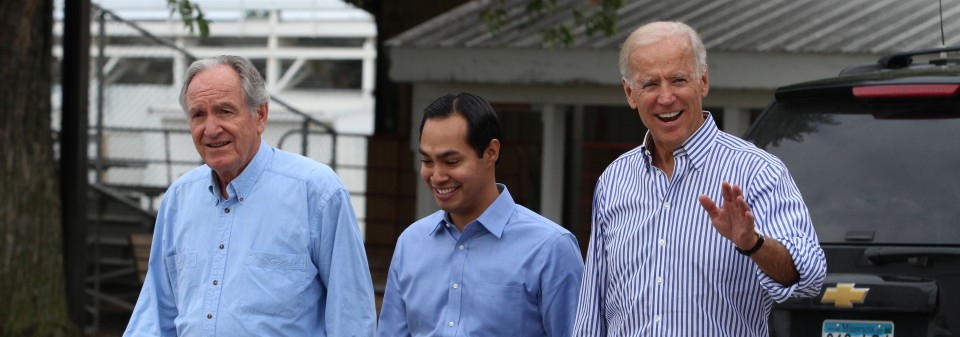
Would you like fries with that?

25 Thursday Jul 2013

Posted by Michael Bersin in Uncategorized

≈ Leave a comment

Tags

burgers, missouri, Obama, Warrensburg

Today, at a fast food establishment in Warrensburg:

Photo: RBH, Show Me Progress

Previously:

President Obama will be visiting Warrensburg, Missouri next week (July 19, 2013)

President Obama in Warrensburg: lining up for tickets (July 22, 2013)

President Obama in Warrensburg: media preset (July 24, 2013)

President Obama in Warrensburg: photos (July 24, 2013)

Rep. Vicky Hartzler (r): “He’s not in my party and I’ll spout if I want to.” (July 24, 2013)

Rep. Vicky Hartzler (r): “He’s not in my party and I’ll spout if I want to.”

25 Thursday Jul 2013

Posted by Michael Bersin in Uncategorized

≈ Leave a comment

Tags

4th Congressional District, missouri, Obama, Vicky Hartzler, Warrensburg

Today President Obama spoke on the economy and education on the campus of the University of Central Missouri in Warrensburg. The University of Central Missouri is in Representative Vicky Hartzler’s (r) district. She chose to comment on Twitter:

Rep. Vicky Hartzler ‏@RepHartzler 4h

President’s ‘economic recovery’ has produced 3.95 million fewer jobs than the average recover. #SpeechesDontHire 3:21 PM – 24 Jul 13

Interesting. Representative Hartzler left out the stuff about job creation during the previous administration of George W. Bush. From little over a year ago:

CHART: Bush Vs. Obama On Private And Public Sector Job Creation

….40 months into his presidential term, there are currently more private sector jobs in the economy than when Obama came into office. At the same point in President Bush’s term, the total number of private sector jobs was still down 1.7 percent from where it began.

The numbers are even starker when measuring each president’s record from the moment job creation returned. Private sector job creation returned in February of 2010, the 13th month of President Obama’s term. Since then, the economy has added 4.3 million private sector jobs, a 4 percent increase.

Under President Bush, the economy stopped shedding private sector jobs in July of 2003, fully 30 months into his administration. From that point until May of 2004, the economy added just 1.5 million private sector jobs, an increase of only 1.4 percent.

But there is one area of job creation where President Bush clearly outshines President Obama: the public sector. Public sector employment is now down 608,000 workers since January 2009, a 2.7 percent decline. At the same point in President Bush’s term, public sector employment was up 3.7 percent. If, over the past 40 months, public sector employment had grown at the same pace as it did in President Bush’s first term, there would be 1.4 million additional people at work right now. That’d be enough to bring the unemployment rate down by nearly a full percentage point….

From this past April:

Obama’s Numbers (Quarterly Update)

[….]

April 16, 2013 at 5:14 pm

[….]

The economy has added more jobs since Obama took office than it did in his predecessor’s entire eight years in office.

[….]

Oopsie.

And, of course, the Speaker of the Missouri House had to parrot the same party line, also forgetting about George W. Bush:

Tim W. Jones ‏@SpeakerTimJones

Facts are tough: @RepHartzler: President’s ‘economic recovery’ has produced 3.95 million fewer jobs than average recovery. #SpeechesDontHire 3:50 PM – 24 Jul 13

Yes, indeed, facts are tough.

President Obama in Warrensburg: photos

25 Thursday Jul 2013

Posted by Michael Bersin in Uncategorized

≈ Leave a comment

Tags

Jerry Schmidt, missouri, Obama, Warrensburg

Previously:

President Obama will be visiting Warrensburg, Missouri next week (July 19, 2013)

President Obama in Warrensburg: lining up for tickets (July 22, 2013)

President Obama in Warrensburg: media preset (July 24, 2013)

President Obama spoke on education and the economy today on the campus of the University of Central Missouri in Warrensburg.

Photo: Jerry Schmidt, Show Me Progress

Photo: Jerry Schmidt, Show Me Progress

Photo: Jerry Schmidt, Show Me Progress

Photo: Jerry Schmidt, Show Me Progress

From the White House transcript of the press gaggle aboard Air Force One on the way to the first event of the day in Illinois:

Press Gaggle by Press Secretary Jay Carney aboard Air Force One en route to Galesburg, IL, 7/24/13

Aboard Air Force One

En Route Galesburg, Illinois

11:16 A.M. EDT

[….]

….I wanted to let you know that later in the day when he travels to the University of Central Missouri, home to the Missouri Innovation Campus, he will note that the Missouri Innovation Campus prepares students with the education and skills they need to succeed at an accelerated pace while lowering costs and without student debt.  Established in 2012, the Missouri Innovation Campus was developed through a partnership between the University of Central Missouri, Lee’s Summit School District, Metropolitan Community College, and local companies in order to drive growth in critical areas for the regional economy, including health care, engineering, energy and infrastructure.

The Missouri Innovation Campus provides an integrated academic experience that combines real-world, on-the-job experience with rigorous academics to graduate students from high school with a diploma as well as an associate’s degree, and then allowing them to earn a bachelor’s degree in only two years.  This partnership provides students with a well-aligned education and prepares them with the skills they need to succeed in the Missouri economy and graduate with sought-after skills for high-paying careers, creating a pipeline for high school students to earn their diploma and degrees and get hired by local companies.

And I think it reflects the President’s firm belief that education is a cornerstone to the foundation we need to build economically.  And that’s why ensuring that as many Americans have access to higher education as possible and can afford that higher education is so important to the President….

[….]

President Obama in Warrensburg: media preset

24 Wednesday Jul 2013

Posted by Michael Bersin in Uncategorized

≈ Leave a comment

Tags

meta, missouri, Obama, Warrensburg

This morning, the media preset in Warrensburg before President Obama’s visit:

The media preset on the campus of the University of Central Missouri. photo: Jerry Schmidt, Show Me Progress

We’ll have coverage of President Obama’s afternoon speech in Warrensburg from three of our number in attendance.

Cynthia Davis: How racism and the gun culture go hand-in-hand

23 Tuesday Jul 2013

Posted by Michael Bersin in Uncategorized

≈ Leave a comment

If you remember former state representative Cynthia Davis and her proclivity for weirdly entertaining rightwing mental rambling, you might want to check out The Turner Report to read her explanaton of how “the media is responsible for racial unrest” – specifically in regards to the Trayvon Martin/George Zimmerman travesty. Cynthia starts with the classic “I’m not a racist- some of my best friends are black” gambit, noting that she grew up in a mixed neighborhood, played with black children and, in college, performed with black gospel groups:

To this day, if an emergency were to break out and someone needed a pianist capable of playing “Black Gospel”, “Southern Gospel” or the music of Andre Crouch, I could come to the rescue.

Of course this is also the woman who, in a GOP effort to cut nutrition support to lower income individuals, questioned an African-American witness by referencing the supposedly bad “nutrition habits of ‘your people’ and ‘your community.'” I wonder if she was just this tone deaf during her college “black gospel” performing days.

Davis’ big news flash: there were no riots in her mixed nieghborhood and the folks she performed with seemed appreciative. I think that she’s trying to imply through these comments that racial resentment had to be instilled in African-Americans by artificial means, which is to say – gasp!- by the media. Apropos the Zimmerman case, she exclaims:

The Martin-Zimmerman story is still dominating the news because the media outlets are obsessing over the race question instead the facts of the case.

For Davis, the facts of the Martin/Zimmerman encounter have been settled by a jury and we all know that juries always get it right. Zimmerman is not guilty of anything. Never mind that the jury was instructed to disregard any considerations of race, and were only instructed in the intricacies of the stand-your-ground law in ways that would necessarily bias their considerations favorably towards Zimmerman.

Davis doesn’t seem to appreciate the fact that the verdict leaves lots of questions unanswered. Numerous legal commentators haven noted that inherent in the legal application of Florida’s Stand-Your-Ground law to this incident are questions of who was the initial aggressor and who, Zimmerman or Martin, should have been allowed to exercise deadly force under the terms of Florida law. If the jury had been so instructed, the verdict might have been very different. Davis, however doesn’t wonder about how why we allow questions of life-and-death to be adjudicated through ambiguous, poorly conceived laws?

However, she is on a tear because folks like Missouri’s Democratic Senator Claire McCaskill are calling for a candid conversation about “stand-your-ground” laws. McCaskill has observed that “I think whatever we do to encourage the use of deadly force in non-lethal situations is not a good idea.” Cynthia, however, counters the idea that arming unauthorized, inexperienced and possibly racist vigilantes is dangerous by declaring:

The anti-gun proponents never seem to miss one opportunity to strip away self-defense rights.  Waiting for the police is a great strategy, but what if they don’t show up in time to help?

Of course, what the Zimmerman case suggests is the exact opposite. There would have been no crime had Zimmerman done as the police had instructed him and waited for the police. In addition Trayvon Martin, a sixteen year old boy, would most likely still be alive.

Why didn’t Zimmerman wait? Could it have been the worry, fear, anger – take your pick – excited by the fact that Martin was African-American? In spite of the efforts of the judge to scrub questions of race from the testimony, it seems plausible. Maybe, in spite of Davis’ happy, riot-free childhood, the media’s concern with racism is justified.

Maybe the rush to enact Stand-Your-Ground laws beginning in 2005 itself suggests that the question of race is not, if left to itself without the intervention of a sensationalistic media, so easily resolved. Funny isn’t it that the 2nd amendment, although always a favorite of the fringe right, became the holy-of-holies at around the time of the election of the first black president.

The 2nd amendment itself does not escape the taint of our troubled racial history. There are those who hold that it was included in the Bill of Rights at least partly to placate Southern slaveholders who wished to arm themselves in order to put down potential slave insurrections (see here, here and [here. As historian and legal scholar, Charles T. Bogus, observes:

The Second Amendment takes on an entirely different complexion when instead of being symbolized by a musket in the hands of the minuteman, it is associated with a musket in the hands of the slave holder.

Nor does self-defense


#badforMO

23 Tuesday Jul 2013

Posted by Michael Bersin in Uncategorized

≈ Leave a comment

Tags

Missouri GOP, Obama, Warrensburg

On Wednesday, President Obama will be on the University of Central Missouri to talk about the initiative to get students through their college program in three years.  

Today, the Missouri GOP tweeted the following with #BadforMO

<

We look forward to welcoming @BarackObama to #MO with pal @GovJayNixon in tow. #BadforMO #BadforUS

— Missouri GOP (@missourigop) July 23, 2013

It sure is good to know the Missouri GOP thinks it is bad for Missouri that the President of the United States comes to a regional university in the state to praise on innovative program.

If that is bad for Missouri, why did the GOP controlled General Assembly support this initiative?

Oh wait….I think I know the answer to that.

Actually we really know what is bad for Missouri. We can begin by talking about passing a tax cut bill that will severely cut support to public education at all levels and put a sales tax on prescription drugs.

← Older posts
Newer posts →

Recent Posts

  • He can’t think we’re all this stupid, can he?
  • Can’t think, can’t write, can gaslight a little.
  • Anything else going on?
  • Cass County Democrats – Back to Blue Dinner – Belton, Missouri – April 25, 2026
  • About that ratio

Recent Comments

Uh, in case you were… on Some right wingnuts with money…
Winning at losing… on Passing the gas – Donald…
TACO Tuesday | Show… on TACO or Mushrooms?
TACO Tuesday | Show… on So much winning
So much winning | Sh… on Passing the gas – Donald…

Archives

  • April 2026
  • March 2026
  • February 2026
  • January 2026
  • December 2025
  • November 2025
  • October 2025
  • September 2025
  • August 2025
  • July 2025
  • June 2025
  • May 2025
  • April 2025
  • March 2025
  • February 2025
  • January 2025
  • December 2024
  • November 2024
  • October 2024
  • September 2024
  • August 2024
  • July 2024
  • June 2024
  • May 2024
  • April 2024
  • March 2024
  • February 2024
  • January 2024
  • December 2023
  • November 2023
  • October 2023
  • September 2023
  • August 2023
  • July 2023
  • June 2023
  • May 2023
  • April 2023
  • March 2023
  • February 2023
  • January 2023
  • December 2022
  • November 2022
  • October 2022
  • September 2022
  • August 2022
  • July 2022
  • June 2022
  • May 2022
  • April 2022
  • March 2022
  • February 2022
  • January 2022
  • December 2021
  • November 2021
  • October 2021
  • September 2021
  • August 2021
  • July 2021
  • June 2021
  • May 2021
  • April 2021
  • March 2021
  • February 2021
  • January 2021
  • December 2020
  • November 2020
  • October 2020
  • September 2020
  • August 2020
  • July 2020
  • June 2020
  • May 2020
  • April 2020
  • March 2020
  • February 2020
  • January 2020
  • December 2019
  • November 2019
  • October 2019
  • September 2019
  • August 2019
  • July 2019
  • June 2019
  • May 2019
  • April 2019
  • March 2019
  • February 2019
  • January 2019
  • December 2018
  • November 2018
  • October 2018
  • September 2018
  • August 2018
  • July 2018
  • June 2018
  • May 2018
  • April 2018
  • March 2018
  • February 2018
  • January 2018
  • December 2017
  • November 2017
  • October 2017
  • September 2017
  • August 2017
  • July 2017
  • June 2017
  • May 2017
  • April 2017
  • March 2017
  • February 2017
  • January 2017
  • December 2016
  • November 2016
  • October 2016
  • September 2016
  • August 2016
  • July 2016
  • June 2016
  • May 2016
  • April 2016
  • March 2016
  • February 2016
  • January 2016
  • December 2015
  • November 2015
  • October 2015
  • September 2015
  • August 2015
  • July 2015
  • June 2015
  • May 2015
  • April 2015
  • March 2015
  • February 2015
  • January 2015
  • December 2014
  • November 2014
  • October 2014
  • September 2014
  • August 2014
  • July 2014
  • June 2014
  • May 2014
  • April 2014
  • March 2014
  • February 2014
  • January 2014
  • December 2013
  • November 2013
  • October 2013
  • September 2013
  • August 2013
  • July 2013
  • June 2013
  • May 2013
  • April 2013
  • March 2013
  • February 2013
  • January 2013
  • December 2012
  • November 2012
  • October 2012
  • September 2012
  • August 2012
  • July 2012
  • June 2012
  • May 2012
  • April 2012
  • March 2012
  • February 2012
  • January 2012
  • December 2011
  • November 2011
  • October 2011
  • September 2011
  • August 2011
  • July 2011
  • June 2011
  • May 2011
  • April 2011
  • March 2011
  • February 2011
  • January 2011
  • December 2010
  • November 2010
  • October 2010
  • September 2010
  • August 2010
  • July 2010
  • June 2010
  • May 2010
  • April 2010
  • March 2010
  • February 2010
  • January 2010
  • December 2009
  • November 2009
  • October 2009
  • September 2009
  • August 2009
  • July 2009
  • June 2009
  • May 2009
  • April 2009
  • March 2009
  • February 2009
  • January 2009
  • December 2008
  • November 2008
  • October 2008
  • September 2008
  • August 2008
  • July 2008
  • June 2008
  • May 2008
  • April 2008
  • March 2008
  • February 2008
  • January 2008
  • December 2007
  • November 2007
  • October 2007
  • September 2007
  • August 2007

Categories

  • campaign finance
  • Claire McCaskill
  • Congress
  • Democratic Party News
  • Eric Schmitt
  • Healthcare
  • Hillary Clinton
  • Interview
  • Jason Smith
  • Josh Hawley
  • Mark Alford
  • media criticism
  • meta
  • Missouri General Assembly
  • Missouri Governor
  • Missouri House
  • Missouri Senate
  • Resist
  • Roy Blunt
  • social media
  • Standing Rock
  • Town Hall
  • Uncategorized
  • US Senate

Meta

  • Log in
  • Entries feed
  • Comments feed
  • WordPress.org

Blogroll

  • Balloon Juice
  • Crooks and Liars
  • Digby
  • I Spy With My Little Eye
  • Lawyers, Guns, and Money
  • No More Mister Nice Blog
  • The Great Orange Satan
  • Washington Monthly
  • Yael Abouhalkah

Donate to Show Me Progress via PayPal

Your modest support helps keep the lights on. Click on the button:

Blog Stats

  • 1,044,081 hits

Powered by WordPress.com.


Loading Comments...