• About
  • The Poetry of Protest

Show Me Progress

~ covering government and politics in Missouri – since 2007

Show Me Progress

Tag Archives: No Child Left Behind

Promoting critical thinking and academic symbiosis in education

05 Wednesday Oct 2011

Posted by Michael Bersin in Uncategorized

≈ Leave a comment

Tags

abstract thinking, art education, critical thinking, No Child Left Behind, public schools

“Bring me into the company of men who seek the truth, and deliver me from those who have found it.” ~ Cletus Young

One of the characteristics of our educational system has different subjects put into neat separate boxes. Math, reading, art, science. Today, we see much more blurriness and convergence between subjects like science, religion, philosophy.

This “Gnostic syncretism”-the combining of knowledge-is especially apparent when teasing out the details surrounding revolutionary innovations. The inspiration that leads to breakthroughs in technology, science-even cultural breakthroughs-many times involve a bringing together and merging of ideas formally not associated.

Many pivotal inventions, ideas, concepts have been birthed through a sort of revelatory experience breaking down barriers and opening up the mind to new ways of doing things.

For example, Nobel Prize winner Charles Hard Townes describes the unconstrained interplay of “how” and “why”-questions that both religion and science seek answers for-as he developed the principles for masers sitting on a park bench in Washington, D.C. in 1951. Masers led to lasers and an amazing plethora of inventions and discoveries in medicine, telecommunications, electronics, and computers in common use throughout the world today. Townes describes the genesis of his idea as an “epiphany”, and “revelation as real as any revelation described in the scriptures.”

Are there ways to prepare student’s minds to have revelations such as Townes had?

How do we germinate and spur on the kind of abstract thinking that leads to innovation, entrepreneurial creativity, and solutions to the larger challenges facing humankind?

The “teaching to the test” approach that initiatives like No Child Left Behind (NCLB) created, encouraged a rote and mechanistic memorization of answers to questions that a multiple choice test would ask. What gets left behind in this approach is attention toward abstract and critical thinking, depth of knowledge-the exact seeds that need to be planted to develop innovators and inventors. The bulwarks upon which whole economies are built.

Take Apple and Steve Jobs for example. When Wozniak and Jobs built their revolution in their garage the difference was in the synthesis of different disciplines together to make a truly unique product in the hobbyist computer industry. Jobs demanded that all the chips inside the Apple line up in neat little rows, blending an artistic and aesthetic perspective into what was, before, the equivalent of geeky electronic erector sets. Fast forward to the design elegance of iPods and iPads and you see the shift that has now emerged into an entire economy. Point being, the assembly line repetition that “teaching to the test” engenders does not foster the cross-disciplinary tools used in innovation.

In a recent article published on Science 2.0-“Join the Revolution”-a defense is made for NCLB, and that it’s concerted and imminent exit, possibly premature.

Hank Campbell makes statements like,

“If you teach kids critical thinking, they are not going to do as well on standardized tests, plain and simple.”-or- “Teaching ‘thinking’ means you have to teach both sides, teaching facts means young people have a lot less confusion and they can learn the subtleties in college.”

Campbell lays out the conflict between NCLB-based education on one hand and teaching critical thinking on the other as fact vs. fiction.

In other words, if we teach critical thinking, kids will have to look at all sides of a particular subject (imagine that!). For example, he warns global warming as a “fiction” will have to be seriously considered, or even evolution debunked. I understand the point, but this is a straw man argument. Critical thinking does not mean embracing falsehoods, but rather, in the finest traditions of science, examining all the evidence available to arrive at a more refined and informed perspective-a higher order of truth composed of nuances. And I’ll make the argument that in a hyper-interconnected world full of an exponentially larger set of data, information, and differing points of view, sending kids out in the world armed with only the mastery of dogmatic facts (and a lack of critical thinking) is, intellectually, sending lambs to the slaughter, so-to-speak.

We need critical thinking because in this generation we are processing more information than ever before. We have to learn to separate the wheat from the chaff from the beginning of our education-not only when students move past high school, as Campbell suggests, “…they can learn the subtleties in college.”

Hank Campbell continues in Teach Facts Or Teach Thinking? Why NCLB’s Demise Could Hurt Science Classes,

“Progressives are less likely than conservatives to dispute global warming. Progressives are less likely than conservatives to dispute evolution.   But progressives are far more likely to object to a standardized national program like NCLB, because the education unions instead want the status quo of 60 years ago, except with more money each year, and progressives don’t want to anger education unions any more than conservatives want to anger the military.  The fact that NCLB had more improvement in education in its first five years than had occurred in the previous 28 years, along with an all-time high for black and Hispanic grade schoolers, was declared unimportant.”

“It hasn’t been declared unimportant,” stated St. Louis Parkway School Board member and attorney Tom Appelbaum.

“Early on in NCLB there was a push to focus on the lower performing students, how they performed on standardized tests, and highlighting achievement gaps-but the fact remains NCLB is in the process of creating a crisis in education as fallacious and artificial as the debt-ceiling crisis was,” explained Appelbum, St. Louis Public Schools Examiner. “Because according to NCLB, by 2014, every school has been mandated that 100% of students reach the level of proficiency on standardized tests-an impossible task. Meanwhile, schools are often severely penalized for not being able to do the impossible.”

So facts versus thinking.

It really seems like you can’t have one without the other-and a comprehensive and thorough education will involve both. NCLB ratchets down the critical thinking piece and replaces it with assembly line precision. But the prize of the American economy is not fact regurgitation, nor even professional classes like engineers (China and India are cranking out engineers at a rate we’ll never match)-the prize of the American economy is creativity, entrepreneurialism, and innovation.

The prize is intellectual property-an industrial sector that has performed at a trade surplus since its inception. Publishing, software, technology. And all this goes down in a realm not defined by neat boxes, it happens in the nether world where ideas and disciplines collide freely and emerge as new things. In a recent appearance on the Daily Show, New York Times columnist and author Tom Friedman gave a vision for an America re-discovering its former heritage of success and becoming the place in the world where new projects are launched. If ideas flourish here, they’ll have a good chance of having global legs. It makes sense, and points toward the need to embrace creativity, entrepreneurialism, and innovation as the chief characteristics of what we teach to our children-and what we support through public policy, research, and reducing barriers for new talent to have access to our marketplace.

The study of
crossing disciplines has increasing pertinence in fostering abstract and creative thinking and problem solving. Promoting “academic symbiosis” in student’s minds-as they metabolize each individual subject-will build a higher order appreciation and capacity to utilize their total educational experience in productive and creative endeavors in the real world.

The idea for this piece came from a TED talks group discussion held on Linked-In. The question that was posed:

“What are the most important topics or things which should be taught at school, and currently aren’t, and which would give the best possible tools to children for life?”

Senator Claire McCaskill (D): town hall in Concordia, Missouri – Q and A, part 1

14 Saturday Aug 2010

Posted by Michael Bersin in Uncategorized

≈ Leave a comment

Tags

budget, Cap and Trade, Claire McCaskill, Concordia, earmarks, energy, health care, missouri, No Child Left Behind, PAYGO, town hall

Senator Claire McCaskill (D) held a town hall in Concordia, Missouri at the Community Center Gymnasium on Tuesday, August 10th. Approximately sixty people attended.

Previously:

Senator Claire McCaskill (D): town hall in Concordia, Missouri (August 11, 2010)

Senator Claire McCaskill (D): town hall in Concordia, Missouri – media availability (August 11, 2010)

The first part of the transcript for the audience question and answer session follows:

….Question: Hi, Senator McCaskill. Thanks so much for coming out today. I was just wondering, with oil spill wreaking havoc in the Gulf, what do you propose to do to make sure that a disaster like this never happens to us again?

Senator Claire McCaskill Um, there will be a, um, the question was, uh, with the oil that has spilled into the Gulf, what are you gonna do to make sure that a disaster like the BP disaster never happens again? Um, you, I see your t-shirt. You probably aren’t gonna like this answer, some parts of it. Uh, we will not be considering a bill this year to place a price on carbon. And these ladies in the green t-shirt are almost as unhappy with me as [redacted] in that I have disappointed them because I refuse to be supportive of a, a price on carbon. I’ve, I’ve been, I have been, um, reluctant to support a price on carbon, um, for a cap and trade bill. On the other hand there is gonna be an energy bill that we will debate when we get back in September that will do three things. The first is accountability for BP, making sure that there’s not an artificial lid on what they would be responsible for in terms of the clean up. My job is to make sure taxpayers do not pay for their mistake. And so we want to make sure we remove the lid so BP has no artificial limit on what they would be required to pay to clean up the Gulf, to make those business whole, to make sure the families down there have not suffered because of their carelessness and negligence. Uh, it does some other things, like making sure that the companies that are doing offshore drilling have relief wells before they begin. Um, this problem was, it was never a relief well required. Truth be known, the oversight of oil and gas drilling in this country kinda was in a coma. Uh, and this goes for both administrations. They had not really been doing an aggressive job. And there has been a complete housecleaning over at that, in that regulatory area in the Department of Interior. So, we’ll be happy to get you all, you probably have it, as active as you are, you may have all the details of what’s in that bill as it relates to oils company accountability for negligence in offshore drilling that’s in the bill. The other thing that’s in the bill is a incentive to convert eighteen wheelers from, uh, diesel to natural gas. And the final part of it is a homestar provision which provides incentives for homeowners to weatherize their homes. Allow them to do things that will make their homes more efficient and spend less on their utility bills which is a win-win, uh, in terms of carbon emissions and also win-win, obviously, for homeowners in their electricity costs. Those are the three things that will be in the energy bill that we will debate before the end of the year. But I do not believe that the price on carbon will be coming up.

Question: Thanks for your time.

Senator McCaskill: Thank you.

[….]

…Senator McCaskill: [reading the question] Are you, as you cut spending in education, what will you do with No Child Left Behind provisions?

Um, education traditionally in this country has been a state and local responsibility. About forty years ago the federal government began helping with state and local education. And then during the Bush administration passed probably the most seeping requirements from Washington [inaudible crosstalk] as relates to No Child Left Behind.

[inaudible crosstalk] Sir, we’re not gonna do this, we really aren’t. [inaudible crosstalk] We’re not gonna debate the, we’re not here to debate. [inaudible crosstalk] I’m here to answer people’s questions. [inaudible crosstalk] And I don’t want to be rude to you. [voice: “That was, that was Carter, was it not?”] That, actually, the first funding for local education was not under Carter, it was before Carter. But I’m not here to try to say it was a D or an R, sir, I’m not here, I’m trying just to answer the woman’s question. [inaudible crosstalk] It is not gonna be fair if you keep interrupting.  [inaudible crosstalk] No Child Left Behind was a mandate from Washington that frankly I think that just about everybody I’ve talked to in the education community, parents, teachers, superintendents don’t like, uh, teaching to a test, uh, an arbitrary number that people have to reach. So, it will not be authorized as it is.

The other thing that’s beginning to happen is I don’t think there’ll be as much money coming from Washington for state and local education. Now keep in mind, um, how many of you are aware that, um, there was eight hundred million dollars cut out of the state budget, a lot of, some of which is going to education in terms of education cuts? Okay. Keep in mind that had the stimulus not been at the state level that figure would have been three point two billion that would have been cut. They have been balancing the budget for the last two years with the stimulus money that we sent from Washington. Because we were clearly not excited about the idea of a whole lot of teachers and other public sector jobs being laid off, especially the teachers. There is another bit of help that’s coming if the House votes for it today. I didn’t vote for it the first time ’cause it wasn’t fully paid for, but we voted on it last week and it was fully paid for. And that will bring another four hundred million to help, to, to try to keep teachers from being laid off in Missouri at the state and local level. But this is a warning. For all of the federal programs, whether it’s CDDG, whether it’s state and local education, all of that, I think over the next twenty years there will be less and less money coming out of Washington and more and more reliance will have to come from the state and local governments. Because we cannot continue on the trajectory we’ve been on for the last twenty or thirty years in terms of the increase in spending for functions that were originally designed and traditionally have been borne by the states and local governments. [inaudible crosstalk]

Absolutely. And that’s the problem. No Child Left Behind was a federal mandate that didn’t have a lot of money with it, that frankly, I mean I bet if I asked everybody in here who your favorite teacher was you can remember. Right? And my favorite teacher that I remember, that really motivated me, they did it with imagination. They did it by being creative in the classroom. And the people who were the best teachers go into it because they want to be creative in the classroom. And the problem is [inaudible] No Child Left Behind was squeezing that creativity right out of the classrooms and forcing everyone just to teach to a test. That’s not how we’re going to compete globally in terms of bringing up our education standards. So, there is a very, very [applause] wide support for doing away with the way, and what we should be doing is measuring progress, not doing apples to oranges. Um, making sure that kids are making progress and that we are and that [inaudible] give credit that we do have a President who, and you’re probably a teacher.  Are you a teacher?  Yeah, superintendent. Yeah, you know, we have somebody who’s beginning to take on some of the teachers unions as it relates to performance pay, um, you know, not ninety percent of the teachers, a few of the teachers may not be as good as the others. And we’v
e been very bad in the education system in terms of weeding them out. And we need to do better at that. I mean the vast majority are wonderful, but the ones that aren’t great, uh, we need to have a way we can not keep them in the classroom, um, because that’s really gypping our kids.

So, next question.

[….]

Senator McCaskill: [reading the question] Have you read the entire O, Obamacare bill?

Yes, I have.  [voice: “Two thousand nine hundred pages.”] I have. In fact, I’ve read parts of it twice. [voice: “Really?”] Yes, I have.  [inaudible crosstalk] And I read the financial reg bill, too. In fact, I’m co-sponsoring with Tom Coburn in the Senate, Dr. Tom Coburn, a bil, um, that will require all of the bills before we can vote on anything to be on the Internet for a minimum of seventy-two hours. [inaudible crosstalk] [inaudible] On the health care bill… [inaudible crosstalk] Okay. Section nine zero zero six in the Patient Protection Affordable Care Act amends section three forty-one of the Internal Revenue Code to require businesses to send Form 1099 to each vendor which they buy goods valued at more than six hundred dollars annually. [reading the question] How will health, health care be improved by this requirement?

Well, it was an attempt, which I disagree with, by the way, and there is a move to change this and I will make a prediction that will be removed by the end of the year ’cause there is wide support to remove it. It was put in there to help collect taxes that were owed. It wasn’t put in there to increase taxes, frankly, people are supposed to have taxes owed when they get reimbursed on business expenses over that amount. [inaudible crosstalk] Yeah. [inaudible crosstalk] Well, um, I hope you’re not surprised by them. Um, you know, the bill is public. [inaudible crosstalk] Well, and this is, you know, as I’ve said many, many times, the bill is not perfect, obviously. The bill is gonna need changes and tweaks along the way, it’s one of the reasons why all the provisions don’t go in all at once. They, they are, they are gradually gone in. I worry that some small businesses don’t know that they can get thirty-five percent of their health care premiums back as a tax credit this year. I’m worried that they don’t know that. I’m worried they don’t know that they get fifty percent of it back the following year. So, there’s both good news and bad news in this bill that people may not be aware of. As time goes on I hope they become more aware. This is something that I think is gonna cause more confusion than it is good. It is technically an effort to collect taxes that are owed. But the amount of paperwork that it’s gonna generate doesn’t make sense to me for the amount of taxes that we’re trying to, to collect. You know, all of us want anybody to pay the taxes they owe. I mean, I bet you most of you in this room pay your taxes like clockwork, but there’s a whole bunch of people out there that cheat. [inaudible crosstalk] And so part of this is trying to make sure everybody pays what is owed. [voice: “How about Timothy Geithner…he owed a whole bunch of back taxes? He still got nominated to be Secretary of the Treasury. How do we get by with people like that?”] Well, he paid all those before he was nominated. You’re right, he made mistakes. [voice: “There was six people in the Obama administration who were tax cheats. And there…”] There were definitely some people that were nominated who made mistakes on their taxes…  [inaudible crosstalk] have been repaid. [inaudible] I’m sure if you went through every administration you would find some of those. And it’s unfortunate. And I, I hope people don’t make mistakes on their taxes, but it is a problem that people make mistakes and some people intentionally make mistakes. [inaudible crosstalk]

[….]

Senator McCaskill: [reading the question] What impact will Proposition C have on the health care initiative nationwide, and two, financially on the State of Missouri, mainly because of the long court battle.

I don’t know that there’ll be long court battle on this. Um, I, I don’t think there will. And it is, uh, basically what the referendum it doesn’t probably have much legal impact. Um, it was, uh, I think, largely political. Um, but, and I don’t think that it will have a huge amount of impact on what actually happens as it relates to the changes in health care that will begin to occur. I mean, people are still gonna get their checks in Missouri this year to help fill in the donut hole. The small business in Missouri will still get their tax credits this year if they’re paying for health insurance. They’ll get it next year. There’ll be a bigger check to help fill in with the donut hole next year. By the way, all that’s being paid for by the pharmaceutical companies who are paying back the government some of the excess profits we gave them on that Medicare D. They’re going to be paying the federal government back three and a half billion dollars next year alone to help pay for some of these things because we bucked them up a lot of excess profits of taxpayer money on Medicare D.

[….]

Senator McCaskill: [reading the question] Promoting fiscal responsibility, why pass another bill to cap spending? Several have passed in the past fifty years and none have been adhered to.

Well, actually, that’s not true. Um, there was a cap on spending during the nineties and there was also Paygo. And if you remember during the nineties we actually balanced the budget. [inaudible crosstalk] You know what happened? They let it expire. [inaudible crosstalk] Because the people who voted for it [inaudible crosstalk] the [inaudible crosstalk] I, you know that’s a really good question. I wasn’t there. If I would have been there I would have said, this is a bad idea to let this expire [inaudible crosstalk] ever. [inaudible crosstalk] Well, I, I’m trying to get one passed that’s good for three years. If I said it’s forever I don’t know I could get it passed. But I’m trying, I’m trying, but you keep in mind when these things expired. They had both Paygo and a cap on spending in the nineties and we balanced the budget. And then in the two thousands, in the two thousands they let ’em go. And they took earmarking to a new art form and they never vetoed any spending and they took spending out of control. I don’t know why because we actually had a surplus at the beginning of the Bush administration. [inaudible crosstalk] Boy, me, too. [inaudible crosstalk] I’m one of two Democrats that do not take earmarks in the entire Senate. One of two. [applause] And, um, and I’ll tell you what you ought to watch for. Watch for somebody who’s runnin’ who says they won’t take earmarks this year, but they won’t promise anything about next year. Now that’s insulting. That’s insulting to voters that someone would actually say, you know, in an election year I’m not gonna take earmarks, but I’m not making any promises beyond the election year. Watch out for that. Watch out for that. Um, you can’t, either earmarks are a wonderful thing and you ought to fight for ’em and arm wrestle for ’em and get all of ’em you can, or they’re a bad thing and you shouldn’t do it at all. This is something you can’t be half pregnant on. You’ve got to either decide that you think it’s a good way to pay the taxpayer money or it’s a bad way. I think it’s a ridiculous way to spend taxpayer money because it’s not based on merit. I’m not saying there aren’t meritorious projects that have been funded. I’m sure they’re things within the crow flies ten miles from here, I know things at Whiteman [AFB] that paid for with earmarks that have been helpful to the community. Some of the projects that have been funded are good. But it’s the process by which they’re funded. Because you know how you get to decide how much money you get? I don’t either. It’s some kind of deal that if you’re like on a certain committee you get more. If you’re more senior you get more. If you’re an appropriator you get a lot more. If you’re not on the Appropriations you don’t get as much. If you’re in political trouble you get mo
re. This notion that somehow you’re gonna have people at home vote for you if you’re in trouble and not gonna get elected if you get more earmarks. The way in which the decisions are made on how the earmarks are decided are fundamentally wrong with public money. We should only spend money on projects that have competed on their merit, not on who you know. And the vast majority of earmarks that occur have lobbyists attached to ’em. The vast majority. [inaudible crosstalk] [laughter] Well, they’re not taking personal money, they’re not taking personal money. [inaudible crosstalk] Well, I would just say [inaudible crosstalk] regardless of whether, I mean, in every bushel basket there is a bad apple. In every bushel basket. But I will tell you that the vast majority of the people in Washington, whether they’re Republicans or Democrats, are honest people. They’re honest people. They’re not feathering their own nest. I think they’re doing things they shouldn’t be doing in the way they spend the public money, but the vast majority of, I’m not saying they’re all perfect, we’ve go, I’m sure they’re bad apples there, too, but, um, most of my colleagues that are Republican are trustworthy and most of my colleagues that are Democrats are trustworthy in terms of being politically corrupt or graft. [applause]…

Transcript(s) of the remainder of the question and answer session will follow in subsequent posts.
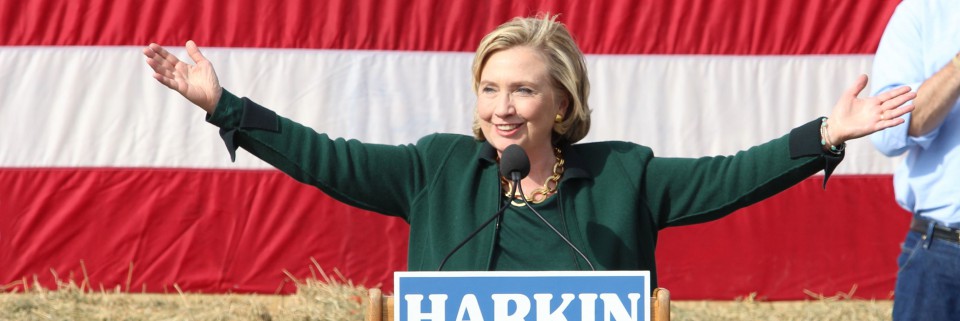
Why Cynthia Davis fumes about educational reform.

14 Sunday Mar 2010

Posted by Michael Bersin in Uncategorized

≈ 3 Comments

Tags

Cynthia Davis, Educational Reform, missouri, No Child Left Behind, Texas State Board of Eduction, The Race to the Top

Earlier in the week I wrote about State Rep. Cynthia Davis’ diatribe about the Department of Education’s Race to the Top grant program. Two events today, however, have helped me to better understand the source of Davis’, and, I think, general conservative hysteria about public education.

The first of these events was the decision of the The Texas State Board of Education to revise American history text books in order to better indoctrinate children in right-wing dogma. The second event was the news of the President’s proposed reform of Bush’s odious No Child Left Behind legislation in order to better address desired skill sets and insure that they are taught effectively.

The contrast couldn’t have been any sharper. On the one hand, the Texas board conceives of educational standards as a propaganda tool; on the other, educational standards are meant to insure that individuals have basic skills, as wide a frame of reference as possible, and the critical skills to use it properly.

Which brings me back to Davis, a politician who exudes the paranoid world-view of the far right. She, along with the majority of the members of the Texas State Board of Education, seem to believe that the goal of education is to teach belief systems, not objective facts and critical reasoning skills. Since her conception of appropriate educational goals is so debased, she, of course reacts with panic when she thinks that her perceived adversaries in the great cultural war might be able to do to her children the very thing she would gladly to do the rest of our children.

Which then brings me to the obvious question – how could we have ever permitted someone with such a warped approach to education as Davis to occupy a position where she regularly attempts to influence educational policy for Missouri?  

Cynthia Davis doesn’t want us to race to the top – she likes the view from the bottom

11 Thursday Mar 2010

Posted by Michael Bersin in Uncategorized

≈ Leave a comment

Tags

Cynthia Davis, Educational Reform, missouri, No Child Left Behind, Race to the Top

I wait with the proverbial baited breath for each and every one of State Rep. Cynthia Davis’ (R-19th) Capitol Reports; I am filled with anticipation to learn just how absurd her latest effort to deal with the complexities of government will be. Her most recent effort (printed here at The Turner Report) does not disappoint. It brings us Davis’ musings on educational reform, specifically the Race to the Top federal grants program which Davis condemns as a manifestation of:

… the insatiable appetite the federal government has for controlling every element of our lives. There really is no reason for congress or the executive branch to be meddling in how we educate our children or how we administrate health care. …  We are trading away our freedom on how to manage our own schools for a set of federal standards that will be defined by those in Washington, not those closest to the students like the parents and the teachers.

Quelle horreur! Federal standards that reflect an informed, national consensus about what an educated individual should know and the best ways to teach it, rather than the prejudices of small-minded state legislators like Cynthia Davis! You may want your children taught creationism, among other questionable tenets, but most people I know certainly do not.

According to Davis, a national reform effort is not needed:

There is nothing “Race to the Top” can give us that we cannot already give ourselves. If we want school reform, we can simply vote for the reforms the voters want, not what is mandated from on high

Tell that to school administrators in St. Louis, Kansas City, and, I suspect, some of the poorer rural districts and see how they react. Following Davis’ logic, one has to conclude that many Missouri parents actually want a mediocre or poor education for their children – or else, surely, they would have voted for just the right reforms long ago – and figured out how to fund them, too – something that our current legislature doesn’t seem to be able to manage.

Davis is right that the No Child Left Behind program is a failure; it was always underfunded and excessively rigid – partly to placate conservative beliefs about education, or, as some suspect, to force failure and eventual privatization of our educational system. It did, however, reflect the growing recognition that we need national educational achievement standards and an equitable approach to delivering education if we are to be successful as a nation.

This time, however we are being offered an incremental approach to reform that reflects the real world rather than slogans, which is why the effort to spur  practical innovation via the Race to the Top could be an important step. And this terrifies poor Cynthia Davis? Quelle horreur!

Of All the Nerve

04 Tuesday Sep 2007

Posted by Michael Bersin in Uncategorized

≈ 4 Comments

Tags

Missouri schools, No Child Left Behind

It must be close to twenty years ago now that the teachers at the high school where I taught English were presented with a glitzy PR packet that the administration, under our new superintendent, had put together.  Three-color laminated sheets in a laminated folder with pockets explained that in five years, 100 percent of the students in our district would be working at grade level.

Right.  We rolled our eyes and got back to the business of educating kids as well as we knew how.  A lot of us were pretty good at that, but when the five year target date rolled around–and the superintendent had two years since moved on to suckering some other district–some of us pulled out that laminated packet and had to admit we’d failed.  One hundred percent of students working at grade level?  Every kid?  Not gonna happen.  You’d stand a better chance of planting 5,000 seeds and having every one of them germinate perfectly.

Now, in 2007, that laminated packet has taken on a macabre life in the No Child Left Behind Act.

Schools must improve students’ reading and math scores every year.  That doesn’t sound so macabre.  That’s a good goal.  Even the special ed and minority students must improve at the same pace as the other students.  That’s tougher.  By 2014, all of them will be proficient in reading and math.  Or else.  Now we’ve moved into the realm of the impossible. 

You’d stand a better chance of turning George Bush into an intelligent, articulate, empathetic human being. What’s next?  Will we require all parents to raise perfectly behaved children so that no felonies or even misdemeanors are committed and the prisons empty out?

Penalties for not achieving the impossible are severe.  Sure, they start mild and reasonable.  Transfers to better performing schools must be offered and so must individual tutoring.  But even these fairly mild consequences are basically unfunded.  The federal government is laying the load on states, including poor schools that have no money for tutoring.  Talk about all stick and no carrot.

But those poor schools–the ones most likely to need tutoring and struggling to find the funds for it–ain’t seen nuthin’ yet.  If they fail to improve five years in a row–without additional funding from the federal government that’s demanding this extraordinary performance–consequences can range from replacing staff and administrators to closing down the school and opening charter schools. 

And bingo.  Now we’re getting down to it.  Closing public schools has been the agenda of this act all along.  The neoconservatives want to shrink government down to the size where they can drown it in a bathtub, as Grover Norquist famously said.  That starry-eyed vision of a country where the government does nothing for its citizenry includes savaging the public school system.

Time Magazine summed up the frustration educators feel:

Some offer comments like this one from a former superintendent of schools in Ohio: “NCLB is like a Russian novel. That’s because it’s long, it’s complicated, and in the end, everybody gets killed.”

Missouri is starting to feel the pain, according to the article in this morning’s Post-Dispatch, “Missouri lets schools slide, U.S. report says”.  The subheading says, “Dozens of problems found.”  No doubt. 

I’m not saying Missouri’s schools are grand, that there’s no room for improvement.  I’m saying that whatever our faults, we shouldn’t have to take any guff from one of “heckuva job” Bush’s bureaucrats.  Katrina was only the most obvious instance of the incompetence W. has fostered in every government agency.  Trust me, the bureaucrats who are criticizing Missouri schools wouldn’t do any better job of running them than Brownie did in New Orleans.  It’s unlikely that any one of them could run a classroom effectively.

Now there’s a tough job.  And here’s a small carrot for those still doing it:  Keep on truckin’.

Recent Posts

  • Stormy Weather
  • Read the country, Mark (r)
  • Winning at losing…again
  • What were they thinking?
  • Reality bites Mark Alford (r)

Recent Comments

What good is the 25t… on We are the only people on the…
Michael Bersin on Wholly War
Campaign Finance: Ju… on Campaign Finance: Isn’t…
No Kings – War… on Warrensburg, Missouri – No Kin…

Archives

  • April 2026
  • March 2026
  • February 2026
  • January 2026
  • December 2025
  • November 2025
  • October 2025
  • September 2025
  • August 2025
  • July 2025
  • June 2025
  • May 2025
  • April 2025
  • March 2025
  • February 2025
  • January 2025
  • December 2024
  • November 2024
  • October 2024
  • September 2024
  • August 2024
  • July 2024
  • June 2024
  • May 2024
  • April 2024
  • March 2024
  • February 2024
  • January 2024
  • December 2023
  • November 2023
  • October 2023
  • September 2023
  • August 2023
  • July 2023
  • June 2023
  • May 2023
  • April 2023
  • March 2023
  • February 2023
  • January 2023
  • December 2022
  • November 2022
  • October 2022
  • September 2022
  • August 2022
  • July 2022
  • June 2022
  • May 2022
  • April 2022
  • March 2022
  • February 2022
  • January 2022
  • December 2021
  • November 2021
  • October 2021
  • September 2021
  • August 2021
  • July 2021
  • June 2021
  • May 2021
  • April 2021
  • March 2021
  • February 2021
  • January 2021
  • December 2020
  • November 2020
  • October 2020
  • September 2020
  • August 2020
  • July 2020
  • June 2020
  • May 2020
  • April 2020
  • March 2020
  • February 2020
  • January 2020
  • December 2019
  • November 2019
  • October 2019
  • September 2019
  • August 2019
  • July 2019
  • June 2019
  • May 2019
  • April 2019
  • March 2019
  • February 2019
  • January 2019
  • December 2018
  • November 2018
  • October 2018
  • September 2018
  • August 2018
  • July 2018
  • June 2018
  • May 2018
  • April 2018
  • March 2018
  • February 2018
  • January 2018
  • December 2017
  • November 2017
  • October 2017
  • September 2017
  • August 2017
  • July 2017
  • June 2017
  • May 2017
  • April 2017
  • March 2017
  • February 2017
  • January 2017
  • December 2016
  • November 2016
  • October 2016
  • September 2016
  • August 2016
  • July 2016
  • June 2016
  • May 2016
  • April 2016
  • March 2016
  • February 2016
  • January 2016
  • December 2015
  • November 2015
  • October 2015
  • September 2015
  • August 2015
  • July 2015
  • June 2015
  • May 2015
  • April 2015
  • March 2015
  • February 2015
  • January 2015
  • December 2014
  • November 2014
  • October 2014
  • September 2014
  • August 2014
  • July 2014
  • June 2014
  • May 2014
  • April 2014
  • March 2014
  • February 2014
  • January 2014
  • December 2013
  • November 2013
  • October 2013
  • September 2013
  • August 2013
  • July 2013
  • June 2013
  • May 2013
  • April 2013
  • March 2013
  • February 2013
  • January 2013
  • December 2012
  • November 2012
  • October 2012
  • September 2012
  • August 2012
  • July 2012
  • June 2012
  • May 2012
  • April 2012
  • March 2012
  • February 2012
  • January 2012
  • December 2011
  • November 2011
  • October 2011
  • September 2011
  • August 2011
  • July 2011
  • June 2011
  • May 2011
  • April 2011
  • March 2011
  • February 2011
  • January 2011
  • December 2010
  • November 2010
  • October 2010
  • September 2010
  • August 2010
  • July 2010
  • June 2010
  • May 2010
  • April 2010
  • March 2010
  • February 2010
  • January 2010
  • December 2009
  • November 2009
  • October 2009
  • September 2009
  • August 2009
  • July 2009
  • June 2009
  • May 2009
  • April 2009
  • March 2009
  • February 2009
  • January 2009
  • December 2008
  • November 2008
  • October 2008
  • September 2008
  • August 2008
  • July 2008
  • June 2008
  • May 2008
  • April 2008
  • March 2008
  • February 2008
  • January 2008
  • December 2007
  • November 2007
  • October 2007
  • September 2007
  • August 2007

Categories

  • campaign finance
  • Claire McCaskill
  • Congress
  • Democratic Party News
  • Eric Schmitt
  • Healthcare
  • Hillary Clinton
  • Interview
  • Jason Smith
  • Josh Hawley
  • Mark Alford
  • media criticism
  • meta
  • Missouri General Assembly
  • Missouri Governor
  • Missouri House
  • Missouri Senate
  • Resist
  • Roy Blunt
  • social media
  • Standing Rock
  • Town Hall
  • Uncategorized
  • US Senate

Meta

  • Log in
  • Entries feed
  • Comments feed
  • WordPress.org

Blogroll

  • Balloon Juice
  • Crooks and Liars
  • Digby
  • I Spy With My Little Eye
  • Lawyers, Guns, and Money
  • No More Mister Nice Blog
  • The Great Orange Satan
  • Washington Monthly
  • Yael Abouhalkah

Donate to Show Me Progress via PayPal

Your modest support helps keep the lights on. Click on the button:

Blog Stats

  • 1,038,888 hits

Powered by WordPress.com.


Loading Comments...