Tags
A billboard along U.S. Highway 50 in west central Missouri:

Heh. It isn’t.
And here I thought it was all about getting a boat loan…

26 Wednesday Jun 2013
Posted in Uncategorized
Tags
A billboard along U.S. Highway 50 in west central Missouri:
Heh. It isn’t.
And here I thought it was all about getting a boat loan…
24 Thursday Jun 2010
Posted in Uncategorized
Employees at Goldman Sachs and Citigroup weren’t outraged by the $700 billion bailout in 2008. Everybody else was. It grinds your grits to give those scumsuckers that kind of money. And aside from the question of whether that money kept the economy from slipping into a coma, the fact is that most voters would like to spit on the big banks and the politicians who bestowed all those benjamins on them. Maybe the government got that money back with interest or maybe it really didn’t. Depends on how you figure it. But politically? Especially in Missouri? It’s a no brainer for Robin Carnahan to handcuff Roy Blunt to the bailout.
And that’s exactly what she’s doing in her “Stop the bull” stump speech. She starts by shackling him to his 1999 vote for the Gramm-Leach-Bliley Act that allowed traditional banks to merge with investment houses. When the inevitable result of that law hit the fan nine years later, Roy Blunt was in the forefront, crafting the deal that saved AIG’s and Goldman Sucs’ bacon. He was the lead negotiator for the GOP.
Carnahan sort of doesn’t mention that the Democrats–including Claire–were just as intent on bailing out the banks as the Republicans were. But the implication that she wouldn’t have voted for it is clear. Some of you may approve of that stand; some not. But we’ll all nod our heads vigorously when she berates Blunt for voting against the regulatory reform bill last December; for voting against the bill that required the bailed out banks to prove they were using the money to increase lending to consumers and small businesses; and for voting against capping executive compensation and bonuses at the bailed out companies.
“[Blunt] didn’t just [vote for the bailout], he twisted arms to get other people to bail them out as well. I call that bull. And Congressman Blunt-you might not know this–he sits on the Energy and Commerce Committee. That’s the committee that oversees the oil companies, supposed to investigate what went wrong in the Gulf. Trouble is, he’s one of the top ten recipients of all time of BP money in Congress. He’s taken over a million dollars from oil and gas interests and, of all the people on that committee, he’s taken more money from oil and gas interests than any other member of the committee. So it shouldn’t be a big surprise that he’s stood every step of the way on the side of oil and gas companies. (…)
Congressman Blunt says he’s looking out for us in his fourteen years in Washington. So I ask this question: Why is it you’ve taken more money–listen to this–more money from lobbyists than any other member of Congress? There are 535 members of Congress. USA Today says Congressman Blunt has taken more campaign contributions from them than anybody else. (…)
Lobbyists aren’t the only way these big corporate special interests try to influence politicians. The other way is through PAC contributions, and I’ll tell you that’s another chart where Congressman Blunt comes in at the top. So when it comes to PAC contributions, he’s the number two recipient in the entire House of Representatives. In PAC contributions, this is the other way. Lobbyists and PAC contributions, that’s how these big interests influence congressmen. And Congressman Blunt is at the top of both of these lists. I think it’s bull.
By the way, it’s not as if Carnahan receives no PAC money. Blunt gets 27% of his contributions from PACs. Carnahan gets 14% of hers that way. No, what’s important to note is which PACs prefer which candidates. And I’ll analyze that in the next posting.
Apologies for almost leaving Carnahan out of the video picture. I was furiously taking notes and didn’t notice that the tripod had been moved.
08 Wednesday Oct 2008
Posted in Uncategorized
Tags
The DCCC is running ads in several battleground districts, including in Missouri’s Sixth Congressional District, where Kay Barnes is challenging Republican incumbent Sam Graves.
01 Wednesday Oct 2008
Posted in Uncategorized
Tags
According to Brett Penrose the Spandex brand just took a big hit.

As for the anti-heroine? Choose wisely, grasshopper.
01 Wednesday Oct 2008
Posted in Uncategorized
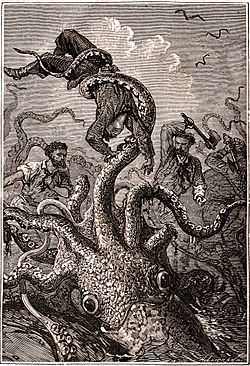 After describing Monday’s stomach-in-your-throat, topple-off-the-edge-of-the-building stock market plunge, Tuesday’s Post-Dispatch editorial said:
Worse could be in store. Or maybe not. The financial markets are in uncharted waters, off the edge of the map where it reads, “Here there be monsters.”
Some of our Dems are braving those waters: Lacy Clay and Emanuel Cleaver voted no on the bailout. Cleaver’s take on it was: “‘If you feed pigs a great deal, they’ll become hogs.'”
And apparently, the public is against raising hogs:
“There is no reason for us to go in there and bail out George Bush,” Missouri Democrat Emanuel Cleaver said. “I don’t think anyone is going to step out on a limb,” he said, because “there is no way to sell this” to voters.
Indeed. Lacy Clay’s office tells me that 98 percent of the calls they got opposed the bailout, and that he opposed it because there were no provisions for bankruptcy judges to rule in ways that could help out the little guy. Both Cleaver and Clay, who represent districts with high proportions of black voters, no doubt understand that those deceptive mortgages were marketed in large part to the poor–to many blacks, in other words.
Jerry Costello, a Democrat across the river from St. Louis in Belleville, IL, brought up another factor for the “No” voters:
“I have not been convinced that it is imperative we act right now, or that this proposal will solve the problem as indicated. In fact, numerous economists insist that the Paulson approach will not work. And I resent being told by the investment bankers in the Bush administration and on Wall Street — the very people that have railed against government oversight in the financial industry for years — that the taxpayers must come to their rescue.”
Michael Moore, who opposed the bailout as it was written, does more than just agree with Costello. He gives all the Democrats the benefit of the doubt:
Here’s my guess: The Democratic leadership in the House secretly hoped all along that this lousy bill would go down. With Bush’s proposals shredded, the Dems knew they could then write their own bill that favors the average American, not the upper 10% who were hoping for another kegger of gold.
But Moore gives Republicans no credit for their no votes. He sees them as cynically putting distance between themselves and a toxic lame duck president in this election year:
There they were, one Republican after another who had backed the war and sunk the country into record debt, who had voted to kill every regulation that would have kept Wall Street in check — there they were, now crying foul and standing up for the little guy! One after another, they stood at the microphone on the House floor and threw Bush under the bus, under the train (even though they had voted to kill off our nation’s trains, too), heck, they would’ve thrown him under the rising waters of the Lower Ninth Ward if they could’ve conjured up another hurricane.
To Todd Akin, who averred that many who voted for the bailout were being too hasty and giving up principles (“You never save principle by giving it up”), Moore would probably ask, “What principle might that be? The principle of self preservation?”
David Sirota is no way so harsh on Republicans who voted no:
it’s clear that Congress is facing a full on revolt from both the Right and Left – the very revolt that I predicted in my book, The Uprising. No longer is this a populist revolt merely scaring Wall Street and Washington – this is a populist revolt that has, to quote Markos, crashed the gate, and it represents a real victory for the progressive movement and voices who said Hell No.
Those who are surprised by this turn of events just haven’t been paying attention to what’s going on out in the country – they haven’t been paying attention to, for instance, the social survey research showing rising rage against both our corrupt government and Corporate America. During my 3 month book tour, I faced a wave of skepticism from the Establishment media about my thesis. This earthquake on the floor of the U.S. House should end that skepticism once and for all.
I can imagine some populist revolt from the right, but … from Todd Akin? Nah.
Whatever Republican motivation was, though, the bottom line is that the bailout vote failed. Look, I don’t want to be gobbled up by a monster in uncharted waters, but I’m inclined to listen to progressives who are advocating alternative solutions.
Sirota abhors the bailout as it was written, provides five reasons to oppose it, and offers some alternatives. Here are three of them:
In the Washington Post last week, Galbraith outlined a multi-pronged plan shoring up and expanding the FDIC, creating a Home Owners Loan Corporation, resurrecting Nixon’s federal revenue sharing, and taxing stock transactions (a tax that would fall mostly on speculators) to finance the whole deal.
The Service Employees International Union has drafted a plan based around a massive investment in public services and national health care, and regulatory reforms preventing foreclosures and forcing banks to renegotiate the predatory terms of their bad mortgages.
Sirota also suggests giving the money to struggling homeowners to pay off part of their mortgage.
Paul Krugman, who says he might have voted for the bailout in the name of temporary relief, advises–now that it’s failed–that we temporarily nationalize the banks:
Brad DeLong says that Swedish-style temporary nationalization is the right answer to a financial crisis; he’s right. I haven’t been clear enough about this, it seems, but it’s where my basic diagnosis leads: the problem is insufficient capital, you want to inject capital, but you don’t want it to be a windfall to existing stockholders – hence, take over and recapitalize the failing firms. By the way, that’s what we did with AIG 10
yearsdays ago.
Any time you have Emanuel Cleaver and Todd Akin making common cause against the House leadership, you and Alice are in Wonderland. The question is whether Clay, Cleaver and Akin can unite around one of these alternatives. Or, failing that, whether enough of the Dems can be united around one them to pass it.
30 Tuesday Sep 2008
Posted in Uncategorized
Tags
I would.
…Question: Uh, at the Republican press conference…specifically pointed to your speech on the floor, saying that they thought they had an extra dozen Republican votes…held up your speech, said this is the reason why they lost those votes…
Speaker Nancy Pelosi (D): …Um hmm…
Question: …could you address that?
Representative Barney Frank (D): I will address that. I am appalled. Frankly that’s an accusation against my Republican colleagues I would never have thought of making. Here’s the story – there’s a terrible crisis affecting the American economy. We have come together on a bill to alleviate the crisis. And because somebody hurt their feelings they decide to punish the country. I mean, I would not have imputed that degree of pettiness and hypersensitivity. I mean, we also have, as the leader will tell you, been working with them. We don’t believe they had the votes and I think they are covering up the embarrassment of not having the votes. But think about this, “Somebody hurt my feelings, so I will punish the country.” I mean that’s hard to be plausible. And there were twelve Republican members who were ready to stand up for the economic interests of America, but not if anybody insulted them. I’ll make a, I’ll make an offer. Give me those twelve people’s names and I will go talk uncharacteristically nicely to them. [laughter] And tell them what wonderful people they are. And maybe they’ll now think about the country…
21 Sunday Sep 2008
Posted in Uncategorized
Tags
So where do Missouri’s representatives stand on the bailout as proposed by Bush? How about candidates running to represent Missouri? I haven’t seen any statements yet from any of them on the Bush proposal.
If you see anything before I’ve posted it here, put it in comments and I’ll update.
UPDATE: Finally, someone steps up to the plate.
Judy Baker, Democratic candidate for Congress in the 9th District:
Judy would support a plan that provides for everyday people that have invested their retirement and life savings in Wall Street. She would make stronger regulatory monitoring part of the bill to prevent this from happening again. Judy would not support any bill that includes compensation for corporate executives that are responsible for this meltdown.
From comments, Republican Senator Kit Bond:
U.S. Senator Kit Bond today urged bold action through bipartisan cooperation to address our nation’s financial crisis, while emphasizing that any plan Congress adopts must ensure accountability, oversight, and transparency.
“This is an emergency crisis. We all believe the free market is the best system in the world, but there are times when we must take temporary emergency action to get us through the rare crisis,” said Bond. “In acting we must demand accountability so that we do not reward those who made bad decisions, greater oversight so that taxpayers and the overall economy are protected, and transparency so that people can have trust in our financial system and know that their money is safe.”